Author Archives: Murad

TfL wasting £1.5m a month on staff to run the non-existent night tube


TfL is spending £1.5m a month on staff to run the non-existent night tube which is an outrageous waste of money. It’s farcical that whilst ticket office staff are being asked to consider voluntary redundancy, TfL have chosen to employ additional people to deliver a service that doesn’t even exist.

We’re seeing a huge amount of money going down the drain, money that should be going towards delivering the projects Londoners actually need, such as boosting the capacity of our overcrowded tubes, trains and buses.

This latest farce shows that Boris Johnson’s decision to announce the Night Tube, without any real plan for how he would deliver it, was completely ill-judged. We need a Mayor who can crack on with getting the Night Tube up and running. Instead we’ve got Boris Johnson who’s content to sit back and accept millions of pounds being wasted before a single night tube train has even left the station.

Boris condemns commuters to another 1% rise in fares next year

rail for 5 -12 yr oldsBoris condemns commuters to another 1% rise in fares next year

The Mayor of London has today (Thursday) announced another 1% rise in fares from January 2016. The latest fares hike means that since he was elected in 2008 fares will have gone up by 42%, which is 13% above inflation, by the time he stands down next year.

Alongside the fares hike the Mayor also announced the extension of free travel for under 11s to include rail services in the capital, currently travel is only free on TfL run buses, tubes and overground lines. The policy comes after Val Shawcross AM called for its introduction earlier this year.

As a result of the Mayor’s announcement fares from next year will rise as follows:

  • Bus and Tram Pay as You Go – up 67% to £1.50 – a £0.60 rise since 2008
  • PAYG TfL Rail Services Zone 1 – up 60% to £2.40 – a £0.90 rise since 2008
  • Zone 1-2 monthly travel card – up 34% to £124.50 – a £31.50 rise since 2008
  • Zone 1-3 monthly travel card – up 34% to £146 – a £36.90 rise since 2008
  • Zone 1-4 annual travel card – up 34% to £178.60 – a £45.70 rise since 2008
  • Zone 1-6 monthly travel card – up 33% to £227 – a £55.70 rise since 2008

By increasing adult fares yet again Boris Johnson has dealt a parting blow to Londoners who have already had to contend with astronomical fare rises during his mayoralty. We’ve witnessed astonishing levels of hypocrisy from a Mayor who once said he’d lower fares in the long term, but has bumped them up by over 40% during his time in office.

Commuters in the capital will be left bewildered as to why they have seen their fares rise year after year whilst there has been so little investment in the transport projects that London actually needs. Prices may have gone up but our buses remain overcrowded and the Tube upgrade is lagging significantly behind schedule.

Boris Johnson has repeatedly brushed off calls to freeze fares, and by doing so has subjected hard pressed commuters to years of rising travel costs with absolutely no respite. Whilst the extension of free travel for under 11s is welcome it will do little to help hard pressed commuters in West London.

…I was always a Steve Ovett man


If you watched British athletics in the early 1980’s, you were either a Seb Coe or Steve Ovett man when it came to middle distance running. I can see why now more clearly l was a Steve Ovett man with recent events surrounding Seb Coe.

Seb Coe has been a member of the IAAF Council since 2001 and an IAAF Vice-President since 2007 but he tells us he knew nothing or suspected nothing of the matters covered by today’s report by WADA’s independent Commission. We also had him praising Diack as the spiritual leader of the IAAF and his ongoing relationship with Nike.

Seb was also Chair of FIFA’s Ethics Committee between 2006 and 2008 during which time he failed to detect any corruption at FIFA. And now his arrangements and understanding with Nike sports ware is under the microscope certainly by the BBC.

He was also one of the key actors in the successful London Olympics of 2012 but clearly got the stadium conversion wrong certainly for the London council tax payer, as he insisted the Stadium had to be retained for athletics when we all keen it was going to eventually converted into to a football stadium.

All this does make you wonder if Lord Coe is a fit and proper person to be Chair of the BOA. If nothing else he has far too much on this plate to continue with this undertaking.

Seb was always the one seeking the attention of the media in those days of his clash with Steve Ovett, as he was always available to say something to the media. I bet you now, he’s not so keen to seek their attention.

Paddington skyline needs sorting

As Simon Jenkins witters on about tall buildings in London generally like the Renzo Piano proposal for Paddington spare a thought for long suffering local folk around the Marylebone flyover.  

41

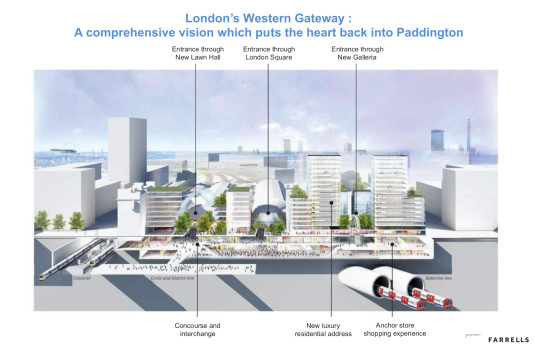
BEFORE Renzo Piano goes about planning a 65-storey tower in Paddington for his developer clients, can someone sort out the awful skyline we already have in Paddington along either sides of the Marylebone flyover with its four towers? We have here first the appalling cladding of Capital House; the derelict Burne House left empty by BT for decades; then the grey, featureless architect of Metropole Hotel and finally, and not least, Paddington Green police station which looks the best of the four towers around the Marylebone flyover. Things have been like this since the West way came into Paddington. Quite honestly any improvement on the skyline of Paddington should start here before we have any additions.

This blog has been published as a letter in the pages of the West End Extra date the 6th of November

http://www.standard.co.uk/comment/comment/simon-jenkins-west-london-could-be-getting-shafted-with-the-paddington-shard-a3142761.html

Before City of Westminster pushes through the so called Paddington Shard, could it please sort out the mess its made already with the skyline of Paddington around the Marylebone flyover, a gateway by road into Central London.  The four towers illustrate the worst of 1970’s and 1980’s architect with some grey featureless architect, awful cladding and some left unused derelict.  Its not something the council can be proud off at all and needs sorting out before adding anything else to the skyline in Paddington.  


Paddington deserves much better. Since the West way was pushed through Paddington in the 1960’s, it has not had a centre to speak off and today has not sufficient space, as the mass of tourists passing through the railway station increases exponentially. So an empty monument too luxury market speculation in the middle of Paddington such won’t do.  


A matter of religious duty?

global-warming-347499_640

The Middle East, despite being one of the worst culprits of CO2 emissions, contributes little in the fight against climate change.

So it was welcome news to hear in September an Islamic call on rich countries and oil producing nations to end fossil fuel use by 2050 with the Islamic Climate Declaration in Istanbul.

But how will the Organisation of the Islamic Conference (OIC) take a lead in combating climate change, and in supporting countries like Bangladesh that are fighting the consequences of global warming, even though they make little contribution to its causes? Up till now, the OIC’s record on this has been poor.

A 2007 study concluded that the rich Arab states in the OIC had been reluctant to take a lead on addressing climate change: “… efforts by wealthier Muslim states are imbalanced, with many of them doing very little and not acknowledging the urgency of the issue. Saudi Arabia, who holds most of the purse strings of the OIC, has long been a sceptic of climate change.”

Indeed, the response of Saudi Arabia’s lead climate change negotiator at the last significant COP meeting in Copenhagen, Mohammad Al-Sabban, said it all. In response to the leaked emails from the University of East Anglia’s Climatic Research Unit, he said: “It appears from the details of the scandal that there is no relationship whatsoever between human activities and climate change.”

If we also look at annual CO2 emissions per capita in the Gulf states (International Energy Agency figures for 2007), it is immediately apparent that the figures are much worse than even for the United States, which is usually seen as the villain of the piece.

For example, Qatar’s annual emissions stand at 58.01 tonnes per capita, the United Arab Emirates’ at 29.91 tonnes per capita, Bahrain’s at 28.23, and Kuwait’s at 25.09 tonnes per capita, whereas the figure for USA is 19.10 tonnes per capita

These emissions are even more astonishing when compared with the figure for Bangladesh, which stands at 0.25 tonnes per capita. It does make you wonder what is quite happening in these rich Arab Gulf states that they are releasing such huge amounts of CO2 emissions.

As for discussions on climate change amongst the Arab states, here again the problem is the reluctance of the ruling elites in oil-rich countries to support any measures that might reduce demand for oil and petrol. This, despite the fact that the Middle East is particularly vulnerable to rising temperatures, with vast areas of agricultural land between Egypt and Iraq expected to lose fertility as a result of global warming.

A UN Population Fund (UNFPA) report on climate change in Cairo pointed out that 15% of people in the Arab world already have limited or no access to potable water and that water scarcity induced by climate change was expected to cut food production in the region by half.

They called for more co-operation between the Arab League, UNFPA, and Arab NGOs to help governments draw up appropriate policies.

The Lebanon-based Arab Forum for Environment and Development (AFED) criticised the near complete lack of research data on climate change in Arab countries and called on Arab nations to immediately draw up adaptation and mitigation plans. One of the authors stated that “we have no data about the effects the greenhouse gas emissions in the atmosphere will have on our coastal zones, even though we know they are very vulnerable,” adding that this makes creating plans to reduce risks from climate change difficult.

Not surprisingly, we have come to expect very little from the OIC in such global environmental summits where the negotiations on behalf of the developing world are undertaken by the G77 plus China. We hear much talk about the importance of the ummah as the basis for international unity among Muslims, but the oil-rich states have so far shown little sense of unity with their co-religionists over as critical an issue for mankind as climate change and global warming.

In addition to the conference of the parties reaching an agreement on limiting global warming to 2C over pre-industrial levels, the other bone of contention at the Paris Summit is clearly money. That is, how much wealthy countries will be paying poor ones to help them deal with climate change. Given the huge sovereign funds that many of the oil-rich Muslim-majority states are sitting on, derived essentially from the sale of hydrocarbons, and given that the burning of these fuels makes a major contribution to greenhouse gases, you might think the oil producers would feel some moral obligation to the nations who suffer the consequences of global warming.

Moreover, at present, the huge funds that the oil-producers possess are usually invested into property and assets in the developed world, when investment in the developing world in green industries and the low carbon economy could well give better returns and certainly a better conscience.

Now, that is not too much of a grand idea for all those funds standing idle in bank accounts in the world’s major cities. In the meantime, some zakat to those on the front line of climate change in countries like the Maldives and Bangladesh is surely not too much to ask.

So the jury is out on whether the OIC will take the theological lead, given by the participants of the Islamic Climate Declaration in Istanbul, that the world’s 1.6 billion Muslims have a religious duty to fight climate change, as the words of the Qur’an tell us: “Not to strut arrogantly on the Earth.”

The above blog was been published in Dhaka Tribune on the 22nd of October.


Boris Johnson urged to vote against ‘devastating’ Housing Bill

imagesCA30YVO6

Provisions set out in the Housing and Planning Bill, which was published earlier this month, include plans to extend the Right to Buy to housing association tenants. The scheme would be funded by forcing councils to sell ‘higher value’ housing, with evidence from the Greater London Authority (GLA) suggesting that as many as 10,500 affordable homes in the capital could be sold each year as a result. The money made from selling these homes will go to central Government, not local councils, meaning much of the money raised in the capital could be spent elsewhere given London’s greater number of ‘high value’ homes.

In May, Mayor Boris Johnson set out four conditions which needed to be met if the policy was to work in the capital:

The money raised from council housing sales in London must be spent in London

    • The policy must preserve London’s mixed communities
    • It must deliver more housing overall
    • It must deliver more affordable housing overall

However, the Government’s decision not to include measures which would ensure sums raised in London are retained in the capital means that the current plans fall well short of the Mayor’s ‘red lines’. Mr Qureshi also highlighted that no provision is included in the Bill to guarantee the delivery of more housing and additional affordable housing, whilst concerns abound that the failure to replace social housing in equal numbers will erode London’s traditional mixed communities.

We’re left in no doubt that the Government’s policy to extend Right to Buy to housing association tenants will come at a severe cost to Londoners, with thousands of genuinely affordable homes to be lost in London each year if the Housing Bill becomes law.

Forcing London councils to sell off their housing stock and then using that money to fund new homes elsewhere in the country will devastate the capital and make the housing crisis we face far worse.

With it now abundantly clear that even the Mayor’s limited conditions will not be met, it’s time for Boris Johnson to put his money where his mouth is and oppose the Housing Bill when it next comes before Parliament. If he does not do so he will be betraying Londoners, who rightly expect their Mayor to stand up for this city. What exactly is a red line worth to Boris Johnson if he’s willing to cross it?

Residents take air pollution monitoring into their own hands

NO2 Survey locations & values

One of the most affected areas by air pollution is Marylebone, so its not surprising to see that local residents in North Marylebone have taken the monitoring of it into their own hands with the able assistance of UCL Mapping Section and some funding from Dorset Square Trust. This “citizen science” survey of NO2 level was carried out to measure the pollution experience every day as a result of traffic in North Marylebone predominately.

The main focus has been on Nitrogen dioxide (NO2) as a toxic product of combustion and a major pollutant emitted by diesel engines. The above map shows the locations sampled and the monthly mean NO2 level obtained at each location. The EU limit for NO2 is 40mcg/m3 while readings above 50 can be regarded as bad and anything above 75 as very bad for residents. The highest readings were in the middle of the Marylebone Road & Baker St junction, registering 3.6 times above the legal limit!!!!

If anything this residents survey gives us a baseline for NO2 emissions as the neighbourhood faces challenges like the proposed two-way for Baker Street and Gloucester Place, which has not been forthcoming from either City of Westminster and TfL. If both are serious about the two-way proposal along with the Baker St BID, there should acknowledge the good work of the residents and measure the impact of their proposal against this “citizen science” survey. As the residents have ownership of the results its only right and proper that the impact of the two way proposal should be measured against at this air pollution black spot already. 

Government cuts could mean significantly fewer police officers on Westminster streets admits Commissioner

met for blog

The Commissioner of the Metropolitan Police, Sir Bernard Hogan-Howe, has said that London could lose as many as 8,000 police officers if planned Government cuts and changes to the police funding formula go ahead.  This unprecedented intervention illustrates just how wrong the Home Secretary is to claim her cuts to the police force are not hitting the front line.

The Commissioner said that across the capital 8,000 police officers could be lost. If shared equally across all the Met’s frontline teams, including firearms and sexual offences specialists, borough police forces would lose about 25% of their officers, for Westminster that would mean 303 police officers lost.

If however specialist units were protected and the 8,000 officers were all lost from London boroughs Westminster would lose 534 police officers, the equivalent of 44% of the current local force. Coming alongside plans currently being discussed to axe all of London’s PCSOs the Commissioner’s comments show that another round of vicious cuts would devastate the police force.

The Commissioner went on to warn of a return to police forced to rely on funding levels not seen since the 1970s saying “I genuinely worry about the safety of London.” The Commissioner also raised questions about the Met’s ability to deal with a rerun of the 2011 London riots or a major terrorist attack if the cuts went ahead.

Since May 2010 the Met has already seen £600m slashed from its budget resulting in 721 fewer police officers and PCSOs in Westminster.


The Commissioner’s warning of a return to 1970s levels of funding show just how wrong the Home Secretary is to claim her cuts to the police force are not hitting the front line. Since 2010 Westminster has already lost 721 police officers and PCSOs with plans now afoot to scrap all the capital’s PCSOs entirely. Losing significantly more officers in Westminster, up to 8,000 in total across the whole capital, would devastate the police force.

With around £1bn of further cuts coming down the line there is a real danger we’ll see an undoing of all the progress made by London’s police force as the clock is turned back. There’s no doubt that cuts to neighbourhood policing are already having a massive impact, with violent crime in the capital already on the rise. With the Commissioner now warning about London’s ability to respond to major incidents and terrorist attacks there can be no doubt about the danger the Home Secretary’s cuts are putting the capital in.

Mayor, who’s the Luddite now?

hailo

When the Mayor insulted black cabbies at the last Mayors Question Time (MQT) by calling them luddites, he clearly did not realise the numbers of cabbies already signed up to HAILO. Its a British technology platform that matches taxi drivers and passengers through its mobile phone application, founded in London since 2011.  16,000 odd cabbies out of the 25,000 are registered with Hailo and while it may not be Uber, its most certainly a technology application. That is over 60 per cent of black cabbies registered with TfL. 

So in light of these facts, an apology from the Mayor should be forthcoming immediately.  

Percentage of burglaries solved in Westminster drops to 10% as police cuts bite

Screen Shot 2015-01-24 at 22.36.47

I am concerned about the Metropolitan Police’s ability to deal with £800m of further budget cuts without a significant impact on frontline services after Sir Bernard Hogan-Howe was forced to deny suggestions that budget cuts could stop the force investigating low level crimes such as burglaries.

Despite the Commissioner’s assurance, officers are already struggling to deal with some crimes as a result of budget cuts. Since 2010, when the Met’s budget was cut by £600m, the percentage of domestic burglaries in London which are solved by the police has halved from 12% in 2010/11 to only 6% in 2014/15.

In Westminster it is an equally concerning situation. 90% of the 3231 domestic and non-domestic burglaries reported in Westminster over the last 12 months have gone unsolved according to the latest annual figures from the Metropolitan Police. Whilst the Met has changed the way it records some crimes, the figures still mean that over 2895 burglaries went unsolved in Westminster last year. The figures showed the police were already stretched too thinly, with crimes such as burglary not given the resources they previously were.

Since 2010 the Metropolitan police force has cut £600m from its budget and is expected to face a further £800m cut in the Government’s Autumn Spending Review. Whilst the Commissioner has pledged the Met will continue to investigate burglaries he has admitted that there would have to be “a compromise somewhere” saying “we are going to struggle to do everything we used to do.” Even the Mayor of London recently admitted that “you cannot have a city growing as fast as London, with the challenges London faces, without putting more money into the MPS.”

Earlier this month it was reported that the Metropolitan Police are planning to cut all PCSOs. The move would mean the police will not have the local intelligence needed to drive down burglaries.

740 uniformed officers have already been cut from Westminster’s streets since 2010 with dedicated neighbourhood policing teams also cut from six to only two officers each. Commissioner Sir Bernard Hogan-Howe has accepted that the forthcoming cuts mean London will “end up with some less police, but I am not going to be precise.”

The Commissioner was forced to deny burglary would no longer be investigated after comments from Sara Thornton, the head of the new National Police Chiefs’ Council suggesting that in the future police officers may no longer attend burglaries as a result of strains on their time and resources.

The fact that 90% of burglaries are going unsolved in Westminster shows that London’s police service is already being stretched to the limit. With the Met’s plans to cut all PCSOs likely to undermine vital links with communities, the police simply won’t have the local intelligence needed to drive down burglaries.

For many Londoners the idea mooted by Ms Thornton that in the future the police may no longer be able to investigate some types of crime will be deeply disturbing. Whilst there is definitely a debate to be had about the role of the police in the 21st century, we cannot pretend that the Government’s cuts are not already having a profound and damaging effect on frontline policing.

With another £800m of cuts coming down the tracks, the Mayor looks set to leave London with a far thinner blue line than when he came to power in 2008. That should be a worry to all of us, particularly given the Commissioner has said this scale of cut means the Met is going to struggle to provide the service Londoners are used to.