
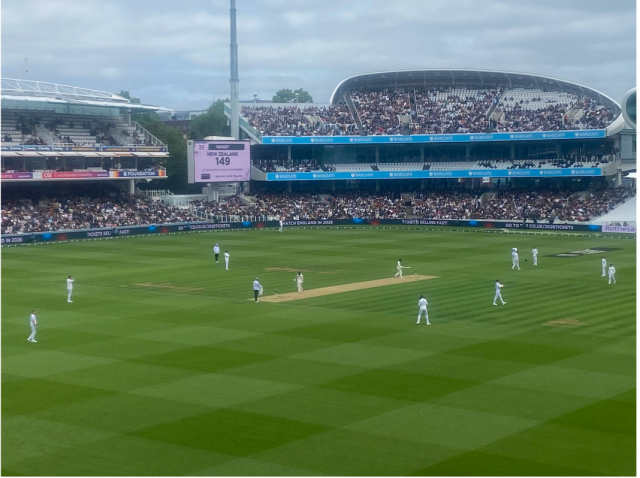
Lords @150 Test Match – case for drop-in wickets

After the end of the 150th Test match at Lords this morning against New Zealand, the state of the wicket can not be ignored anymore. Particularly when we have two other Test matches this summer in July & August. Against India and Pakistan respectively, whom we often excuse with poor wickets at their grounds in the Indian Sub-continent. 

Moreover, having Test matches finish in less than 3 days is neither good for the game or the finances at grounds!  

In the last few years the MCC has concentrated its energies on improving the facilities around the ground including the stands, it must now concentrate its time and energies on the state of the wicket itself.  There was talk of drop-in wickets like in Australia for sometime, and it maybe time now to make them operational sooner than people realise.

Drop-in wickets (or pitches) are portable, removable cricket pitches cultivated off-site,
transport via cranes or specialised trailers, and lowered into the stadium floor for
matches.  They allow multi-purpose venues to host other sports (like football or rugby)
without damaging the cricket square.
In Australia they are heavily utilised at major multi-sport arenas like the Melbourne
Cricket  Ground (MCG), Adelaide Oval, and Optus Stadium in Perth. In the USA & UK they
are utilised  during Major League Cricket (MLC) and the T20 World Cup in venues that
host baseball or American football.
The advantages are clear – Maximises stadium revenue year-round, provides
groundskeepers control over the pitch’s clay and moisture content prior to transport,
and allows curators to swap out worn pitches.  Traditionally, they were criticised for
playing flatter and offering less natural pace and  bounce compared to traditional, fixed
pitches. However, modern curators closely mimic the soil composition of local fixed
wickets to combat this.
Traditional pitches and drop-in wickets differ fundamentally in how they are
constructed, how they behave during a match, and how they handle the natural wear of
a 5-day Test match.  While both use the exact same type of soil and grass, the structural
environment surrounding the dirt drastically alters their characteristics. 
Core Structural and Behavioural Differences

Traditional Wickets Drop-In Wickets
Location Grown Built permanently into the stadium floor year-round. Cultivated off-site in large nurseries or practice fields.
Foundation Connected directly to the earth and surrounding soil block. Encased entirely in a rigid steel or concrete tray.
Pace & Bounce High & Varied: Offers distinct local bounce (e.g., historic fast WACA bounce). Uniform: Historically lower and slower, though modern curators now match old traits.
Stadium Utility Limits the stadium exclusively to cricket due to surface delicacy. Allows multi-use stadiums to host sports like rugby and football.
So the case for drop-in wickets, will be made this summer very clearly now.  Otherwise, l
fear Lords may lose its case to host test matches next year and subsequently. 

Leave a Reply

Your email address will not be published. Required fields are marked *