Author Archives: Murad

HS2 – Calculating the environmental cost to London

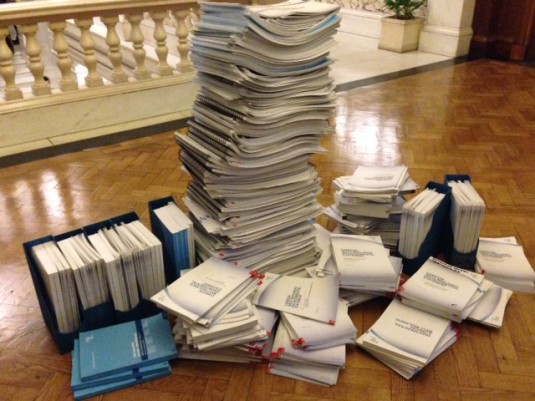
This is what HS2 sent out as the Environment Statement!

This is what HS2 sent out as the Environment Statement!

Now that the HS2 Environmental Statement submission deadline for responses has passed, the wait begins for any further news about additional environmental compensation.  At the very least, an attempt should be made to quantify the environmental and health impacts – as so many questions still remain unanswered.

According to the Collins English Dictionary, cost:benefit analysis is an accounting noun that describes the analysis that takes into account the costs of a project and its benefits to society, as well as the revenue it generates.

However, when it comes to the mammoth construction job that is HS2, there is no mention of a cost:benefit analysis for London, as we asked for a regional breakdown at the outset.  Ok, so we would get to Birmingham 30 minutes faster but from what we’ve seen so far, the government’s cost:benefit analysis does not cover, or does not cover adequately, a number of environmental issues – most of which will add up to considerably more than currently predicted and may well overturn the low cost-benefit ratio of 1:1.5 for the project anyway.

Some impacts can be costed – some cannot, as they fall into the indirect cost box – difficult to place a monetary value on. But to inform the decisions of HS2, they must be costed in order to guarantee a realistic and accountable summary of the impacts of this sprawling construction.

Central London locations like Euston already has some of the worst air pollution in Europe – it appears the extra deaths and health effects of this added pollution have been ignored. DEFRA well know this already, but does not appear to be talking to their colleagues in DfT, instead promoting HS2 despite the threat of legal action against the UK government by the EU.  As for noise, in the draft Environmental Statement, it assesses average noise levels over a period of time, yet several consultees have said this is misleading because of the impact of peak noise levels; when a high speed train goes past, peak noise levels will be considerably higher.

What about the destruction of homes, city parks, ancient woodland and wildlife habitat? You only have to look at the impact of outer London surface track of HS2 going through Hillingdon, where the viaduct in the Colne River Valley would pass through a site of special scientific interest (SSSI), including sites of national importance for bird conservation.  This stretch of track alone would destroy parts of the borough with valuable stocks of wildlife, including bats, breeding birds, terrestrial invertebrates and great crested newts. During the construction process, 0.2 hectares of ancient woodland in the SSSI including power lines and 12 hectares of vegetation from a site of metropolitan importance for Nature Conservation will be destroyed.

As for compensation for the destruction of homes, it is both unjust and obscene that far higher levels of compensation are being offered to households where HS2 will run down the bottom of long gardens in the Chilterns then the hundreds of residential homes in the Regents Park Estate, immediately West of the Euston terminus where the project will tear through the front rooms.

It may be relatively simple to calculate the value of land and homes purchased for the project, but London has a severe housing shortage!  What comparative value has been applied to reducing London’s housing stock in exchange for cutting 30 minutes off the time it takes to get to or from Birmingham?  And just as importantly, where will people whose homes have been demolished, find new homes? Private renters look set to lose their homes without help or compensation.

The loss of green and open space in central London will also be keenly felt as the area is already heavily urbanised. HS2 Ltd values the loss of urban open space at a standard £54,000 per hectare but, with the lack of other local green space and the high land values in the area, Camden Council estimates that it would cost up to £82 million to re-provide a site like St James’s Gardens and Euston Square. HS2 Ltd acknowledges that its valuation lacks robustness – it is therefore excluded from the main business case, and covered only in separate value-for-money advice provided by the Department for Transport (DfT). Parliament should be aware of this unquantified cost.

Think of the cost to local small businesses like the renowned row of restaurants to the west side of Euston, on Drummond Street, who will suffer the disruption of a construction site on their doorstep for years.  Will they be able to rebuild their clientele once the dust has settled, or will they shut up shop and walk away?

The government has not adequately added up these sums, or accounted for these costs in the final bill for HS2 and it certainly hasn’t shown enough of its working out to us. Who judges if they’ve added them up correctly?  The complexities of getting this cost:benefit analysis right are worse than a quadratic equation.

They must do the sums properly and prove that the cost:benefit analysis justifies going against the widespread public disapproval of this divisive project.

If you consider the environment cost to London alone, l suspect it would at least tip HS2 away from Euston and terminate it at Old Oak Common. Perhaps that would explain why it is that HS2 have not been forthcoming with the environmental cost figures in the first place, as the environmental sums just don’t add-up.


Dangerous crossing gets green light for change

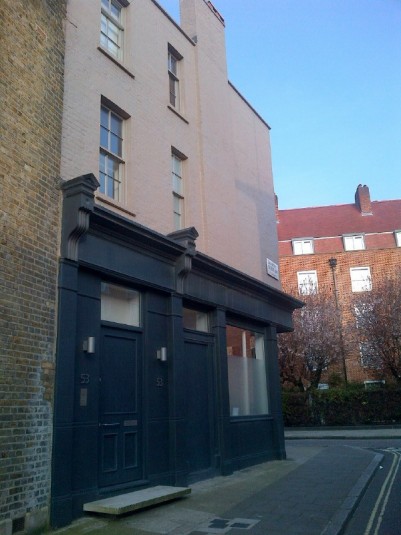
photo 2 - croppedA long standing campaign by residents to persuade TFL and the Mayor to install pedestrian traffic lights at a dangerous junction between Farringdon Road and Charterhouse Street has finally succeeded thanks to a 500 strong petition presented by Labour London Assembly Member Murad Qureshi AM. 
The news about plans to improve the crossing was sent to Murad Qureshi in a letter from the Mayor which confirmed that  “as part of the his proposed north-south cycle superhighway route, this junction is currently being studied by [the Mayor’s] engineers who intend to provide signalled crossings as part of the design”

The junction between Charterhouse Street and the A201 Farringdon Road/Farringdon Street is on the boundary of three boroughs – Camden, Islington and the City of London and in a letter to the Chair of the Assembly, the City of London confirmed its support for calls by the petitioners for pedestrian facilities stating that it had “lobbied for pedestrian facilities to be included at this junction for many years”

Rosey Taylor who championed the petition has said “This is fantastic news for this neglected corner of Smithfield. A proper crossing here will improve things greatly for the thousands of people who use the area. It is very encouraging to know that a campaign like this can be successful in bringing about change. At a time when pedestrian safety is hardly a fashionable topic I am very grateful to Murad Qureshi for championing my cause”

Murad Qureshi AM who presented the petition to the Mayor at the Plenary meeting on the 15th of January said:

“I’m delighted that the Mayor has decided to finally listen to local residents and improve this dangerous crossing. I want to say a big thank you to local residents for signing and to Rosey Taylor for organising this petition, and I was honoured to present it to the Mayor.  This crossing has been neglected because it straddles three different boroughs and so it was clear to me that this was a junction which required action by the Mayor. This is a horrendous junction to negotiate and is an accident waiting to happen.   I just hope that TFL can now get the design details right.” 

Ends 

Notes 

  1. Murad Qureshi AM is a Labour London wide Assembly Member
  2. A copy of the petition with 540 signatories is attached
  3. A copy of the letter referred to from  the City of London and the Mayor are also attached.
  4. Minutes of the meeting on the 15th of January 2014 can be found here: http://www.london.gov.uk/moderngov/documents/s32362/petitions.pdf
  5. Photo of Murad Qureshi with resident Rosey Taylor who championed the petition.


London rents to be over £1,600 by end of Mayor’s term

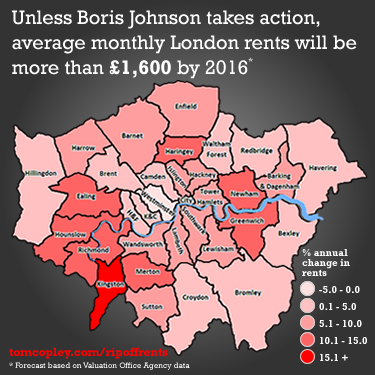
Rent Rise by 2016New research on private sector rent levels shows that, at the current rate of rent inflation, average London rents will be £1,625 a month by April 2016, and for Westminster this will be £1,950.00. The forecasts, compiled by Tom Copley AM, are based on an average of rent rises between October 2011 and October 2013 as recorded by the Valuation Office Agency. For outer London average rents will rise to £1,350, and for inner London average rents will rise to £1,805.

The analysis shows that, should the current level of rent inflation continue, high rents will become a significant problem in outer-London, where rents have tended to be lower than inner London (see map below). London rents are forecast to rise at five times the England average.

Murad Qureshi AM is backing calls for the Mayor to launch an investigation into unsustainable rent increases and establish proposals for a mechanism to stabilise rents in London. Mr Copley argues that the current rate of rent inflation is sucking demand out of the economy, and making London ever more unaffordable for people who work in the capital, which could impact on its economic growth.

Murad Qureshi, Labour London wide Assembly Member, said:
“These figures are a shocking foretaste of what residents in Westminster and across our city can expect to pay in rent by the end of Boris Johnson’s mayoralty. The current rate of rent inflation is making London unaffordable for people to live here, even those on ‘good’ salaries. With home-ownership an ever distant dream for many, it is time Boris Johnson used his position and launched an investigation into unsustainable rent rises and possible mechanisms for tackling them.

“Britain has one of the least regulated private rented markets in Europe. When more and more people have no choice but to rent we have to ensure that renting is a stable option, particularly for the growing number of families who live in this sector. There are good landlords who do right by their tenants, but there are an increasing number who do not. So far the Mayor has only adopted trivial voluntary schemes to improve standards, it is time he treated this issue with the seriousness it deserves. There are over 800,000 private rented households in London. If he doesn’t act these people will continue to be squeezed, quality of life will decline and London’s economy will be held back.”

Projected private rent increases in April 2016, (darker shade of red indicates higher increase):

Projected rent rises for London against the England average:

Ends

Notes

1. Murad Qureshi AM is a Labour London wide member of the London Assembly.
2. Full data tables for projected rent rises are attached.

Assembly calls on Mayor to crack down on basement development

basement

The London Assembly has called on Mayor Boris Johnson to establish strong London-wide planning policies to prevent inappropriate basement development. The Mayor’s draft Further Alterations to the London Plan do not include any policy on basements development. 

Sub-terranean development is a growing issue in some parts of London, where the super-rich are digging deeper and wider in an effort to cram swimming pools, cinemas, and gyms into often historic homes. These developments can cause flooding, sink holes and structural damage to neighbouring buildings, and construction is often severely disruptive to the neighbourhood.

The worst-affected boroughs have policies to limit inappropriate basement development, but without the backing of a strong policy in the London Plan they will find it difficult to enforce and can see their decisions overturn by inspectors.

A motion proposed by Murad Qureshi was agreed yesterday with unanimous cross-party support, and calls on the Mayor to introduce such a policy in his London Plan. The alterations currently being consulted on provide an opportunity to add a policy preventing inappropriate basement development. 

Murad Qureshi AM, who proposed the amended motion, said:

“Basement development is a rising problem fuelled by high land prices. It is spreading across the capital  and means prolonged disruption to residents as well as the risk of structural damage to neighbouring homes. The alterations to the London Plan currently under consultation is the perfect opportunity for the Mayor to help curb this growing problem.”

Nicky AM, Labour group planning spokesperson and who seconded the amended motion, said:

“London’s councils are desperate to tackle the growing problem of basement development, but they need to be backed up by a strong policy in the London Plan. The Mayor must take note that every single member of the Assembly of all parties supported this motion calling on him to address the issue.”

Ends 

Notes

  1. Murad Qureshi AM and Nicky Gavron AM are London-wide Labour membesr of the London Assembly.
  2. The London Plan is the spatial planning strategy for London. The draft Further Alterations to the London Plan were published 15 January for consultation concluding on 10 April. The alterations can be found here: http://www.london.gov.uk/priorities/planning/london-plan/draft-further-alterations-to-the-london-plan
  3. Most local authorities have planning policy on basement development but four of the boroughs where the problem is most acute – LB Camden, LB Haringey, RB Kensington and Chelsea, and LB Westminster – have or are developing special policies to tackle it.
  4. The full text of the amended motion agreed at today’s meeting reads as follows: “This Assembly notes that inappropriate basement development is an increasing problem within London. In the Royal Borough of Kensington and Chelsea, for example, planning applications for basements rose from just 13 in 2001, to 182 in 2010, and to 307 in 2012. Some of these renovations are turning already-large homes into massive iceberg houses, and can cause flooding, sink holes and structural damage to neighbouring buildings. Despite the rising concern, the draft Further Alterations to the London Plan (FALP) does not include a specific policy on subterranean development. Although draft Supplementary Planning Guidance and the current policy on sustainable design and construction require consideration of some issues, London must adopt stronger policies to help boroughs prevent unnecessary basement development, such as prohibiting extensions under listed buildings and limiting the size and depth of new and redeveloped basements. This Assembly therefore calls on the Mayor of London to revise the FALP to include a specific policy against inappropriate basement development.”


Does let’s rebuild Euston mean double deck, George Osborne?

The station which Osborne want and saw in HK recently

The station which Osborne want and saw in HK recently

Last friday front page headline in the Evening Standard suggested that George Osborne wants a grandeur vision for Euston terminus then the current cheapskate HS2 plan for Euston after a visit to Kowloon station in Hong Kong.

Given the enormous damage to hundreds of homes in Camden; local jobs in Drummond Street: and loss of parks & open space particularly in the immediate West Euston neighbourhood, its not surprising some have suggested that the new terminus be built within the existing footprint of the station through a double deck down option. Now that would certainly be progress if his grandeur vision involved this, so the real question would be does let’s rebuild Euston mean double deck or not? 

Interestingly what George Osborne saw was how many Chinese high speed rail integrated transport hubs in China have multi-levels, including Kowloon, Beijing South and Guangzhou, which were funnily enough all built using British architects. For them double deck or even triple deck is usually not the answer but four or five decks!

So lets see if new Chair of HS2 David Higgins under his cost review is open to such ideas.


What is the future for our A&E’s in NW London?

Public meeting at the George IV, 185 Chiswick High Road, W4 2DR

Public meeting at the George IV, 185 Chiswick High Road, W4 2DR

Last weekend, l had an opportunity to address the closures of A&E ( blue light ) in the old North-West London NHS Trust particularly Charing Cross and its impact on the residents of Chiswick.

We are losing up to 4 A&E’s in North-West London, at a time of “crisis for all seasons” across the whole of Greater London. Over the seasonal break we 2,689 ambulances delayed for over 30 minutes handing over of patients to A&E; 1,604 urgent and elective operations cancelled and some 43 patients waiting on trolley’s longer than 12 hours. These figures were highlighted to me by a friend having to wait 5 & half hours to be admitted at St Mary’s hospital in Paddington on Christmas day.

The causes for the increased demands on A&E’s are many including having a younger and more mobile population who are not registered with GP’s;migrant communities from countries without history of good primary care and finally not least the increased pressure of older people with complex problems being put up for services.

In this respect my colleagues Dr Onka Sahota AM report on “London A&E crisis & Older People” is very enlightening. He established that recently as many as 9 per cent admissions to hospital are avoidable with better care for the elderly and that this rapidly going up. This all the while, as the number of adults receiving care in their homes has dropped 27 per cent. Resulting in Hounslow, to 75 people admitted for potential avoidable conditions per 1,000 aged 65 plus in the population. Its with such statistics in mind that its quite clear major investment in out of hospital care is needed before shutting down acute capacity. And in this respect the Labour Party is offering immediate support for social care by handing over £1.2 billion of NHS underspend to support the elderly at home at the next general election.

The more immediate concern for Chiswick residents is the closure of the A&E in Charing Cross which while in the adjoining borough of Hammersmith & Fulham is the A&E of choice for them. Imperial Healthcare NHS Trust (which manages Charing Cross, Hammersmith, Queen Charlotte’s and St Mary’s, Paddington) has made a Foundation Trust application. Remember without this status its unlikely to be able to compete for business in the NHS market place. Its highly unlikely that in the Council of Governors that in the 2 local authority seats, Hounslow will get one of those seats. As both Westminster and Hammersmith & Fulham have a better claim given the hospital sites are in their boroughs. Which will mean Chiswick is not going to get itself represented unless we have public & patient governors made up of Chiswick residents. So l would strongly encourage applications by residents of Chiswick for these positions to make up for the lack of representation.

Finally we have seen how hollow the Tory pledge to call halt on all hospital closures in 2010 General Election. It is no different to the “no if’s, no but’s, no third runway” position on the expansion of Heathrow which is very much alive now with interim findings of the Howard Davies Aviation Commission. And we should remember this track record during the present flood crisis where the PM has said “money is no object”.


Boris refuses to take action on Private Rented Housing

imagesCA30YVO6At today’s (Friday) Greater London Authority final Budget meeting the Mayor of London, Boris Johnson, refused to take action to drive up standards and tackle rogue landlords in the private rented sector. The Mayor was presented with a costed plan to deliver more homes and take action to help private rented tenants – but he refused to adopt the plans and all nine Conservative members of the London Assembly used their blocking minority vote to stop the proposals. 

Labour London wide Assembly Member, Murad Qureshi AM, who supported the plan said:

“Londoners are facing a housing crisis and Boris is doing virtually nothing to help people who are struggling. We are seeing soaring house prices, soaring rents and not enough truly affordable housing being built. We need Boris to directly intervene in the broken housing market and directly built houses. He has the land and the powers to deliver significant levels of housing, it’s time he took the housing crisis seriously and got building. But he also needs to take action to drive up standards in the private rented sector, his voluntary approach simply isn’t working. 

“Today the Mayor was challenged on just how bad conditions are for some people in the private rented sector.  I have spoken to constituents, who despite working in semi-professional or professional jobs are extremely worried about the spiralling costs of housing in London. I have also been told about the prevalence of Landlords failing to return deposits to tenants.  Rising rents and rogue landlord practices have resulted in private sector tenants feeling much less secure about their housing situation. This is the face of London’s housing crisis and it is time the Mayor dropped his softly-softly voluntary approach and took action to drive up standards and tackle rogue landlords. Many boroughs in London are doing what they can, but the Mayor must use his considerable powers and funding to help them.”


Boris must give public say on Tube cuts

Underground_svg

Responding to the announcement that today’s strikes on the London Underground have been called off, Murad Qureshi, Labour London wide Assembly Member, said: 

“This announcement is very welcome and will avoid millions of Londoners facing extreme disruption this week. It is good to see the RMT and TSSA Unions and TfL talking through issues and attempting to resolve this dispute amicably. This goes to show that disputes can be resolved by sitting down and talking, it is a testament to the professionalism of both the Unions and TfL. It’s a real shame that we’ve seen no leadership from Boris on this issue. 

“We now need the Mayor to show some real leadership and launch a full public consultation on his proposed cuts to ticket offices and station staffing levels. There are some interesting ideas in TfL’s plans and modernisation is needed, but residents in Westminster should be given the chance to have their say and improve them. After all it is the public who use the Underground on a day to day basis and they will have to live with the cuts.”


24,000 London homes at risk from flooding

Flooding along the Chiswick enbankment

Flooding along the Thames in London

Last week we heard at the Environment Committee of the London Assembly that the Environment Agency has identified 24,000 homes through Greater London at risk of flooding. Flood prevention plans cover 10,000 subject to funding of £100 million being found over 10 years. Half of this might come come from central government grants. However this leaves 14,000 homes would still remain as a significant risk even if the proposed schemes can be fully implemented.

At the meeting AMs were reassured that measures in place like the Thames Barrier, will continue to protect the tidal floodplain which covers large parts of central London for at least the next 20 years. We were also told progress has been made to reduce the risk of flooding from extreme rainfall.

So it appears the recent freaky weather has been factored into flood prevention planning but this will be little comfort to those who will and have been affected by floods with a very rainy weekend ahead for London.


68% of Londoners cut back on heating as bills soar

Fuel poverty

A report published today (Friday) found that 68% of Londoners have cut back on heating their homes as energy bills continue to soar, the report surveyed over 2,000 people across the capital. The report, London Cost of Living: Cold Homes, also found that 63% of over 65s have cut back on heating. The report, written by Murad Qureshi, London Assembly Labour Group Environment spokesperson, calls on the Mayor to take action and help Londoners by: 

  • Setting up a Home Energy Advice Team, which would be a single point of contact for people needing help or assistance with fuel bills, insulation and energy efficiency, and; 
  • Establishing a de-centralised energy research project to look at setting up energy cooperatives across London. 

The report also received evidence that people have returned food to food banks as they have not been able to afford to cook it. 

Speaking ahead of the report’s publication its author, Murad Qureshi, London Assembly Labour Group Environment Spokesperson, said:

“Today’s report highlights the scale of the energy crisis facing Londoners, over two-thirds of people surveyed said they have cut back on heating their homes due to increasing bills. Gas and electricity prices continue to rise above inflation putting further pressure on household finances. In London this is made worse by the already higher cost of living, adding to the strain. 

“I am calling on the Mayor to help struggling Londoners by setting up a single point of contact where people can get help and advice on energy efficiency and their bills. This will help people get the best deal and save money on their bills. He also needs to establish a research project to kick-start de-centralised energy production across London. This will help foster competition and get Londoners a better deal.” 

Ends

Notes 

  1. Murad Qureshi is a Labour member of the London Assembly. 
  2. A copy of the report Cold Homes is attached.