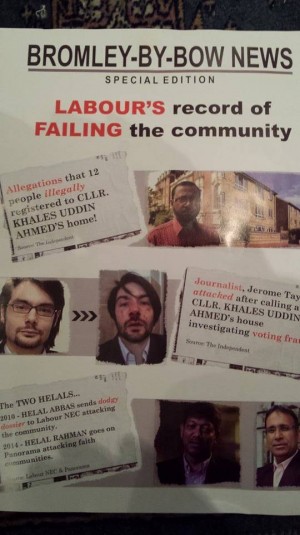
Tower Hamlets politics reaching new lows
Tower Hamlet’s politics reaching new lows!
Tower Hamlets politics reaching new lows
Tower Hamlet’s politics reaching new lows!

Local businesses threaten with CPO’s by CAPCO agents
After attending meetings both in Lillie Road and the House of Commons about the Earls Court Development, l was shocked to hear about the way in which Capco agents are allegedly dealing with small businesses within the sight lines of the proposed developments. I’ve been told that Capco (Capital & Counties Properties PLC) have made verbal threats of issuing Compulsory Purchase Orders (CPO) to local businesses. Capco are a private business which has established a joint venture with TFL to facilitate the development the Earls court “master plan”.
My understanding has always been that the power to issue a CPO is a legal function which only public bodies can exercise and therefore to hear about a private body using such an invasive and draconian power which should be the reserve of elected officials is concerning to say the least. This is why I’ve asked the Mayor whether the agreement which TFL has with Capco delegates such powers to them? The next Mayor’s Question Time is on the 11th of June and I should hear back with a reply shorty after.
If such powers have not been delegated, then TfL need to bring their partners into line as well as apologise to the many businesses affected. If Capco are doing this with TFL’s blessing, then Capco need to be clear about what their powers are and how they intend to proceed.
We always knew TfL got it wrong with this joint venture agreeing to make themselves the junior partner with a private property developer in a project which will demolish one of the most iconic buildings in London, no doubt to be replaced with yet more unaffordable housing . This example of Capco’s alleged treatment of local businesses is just another symptom of this unfortunate collaboration.
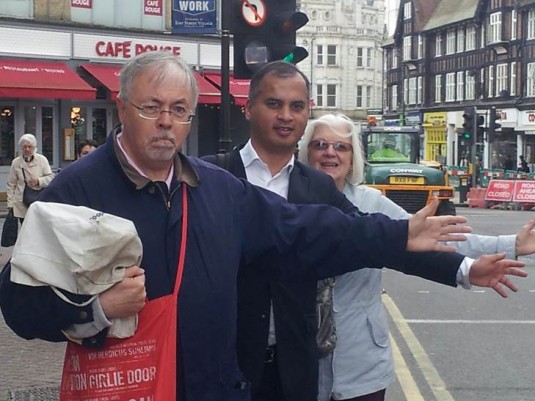
What has happened to the missing bus-stop?
Murad Qureshi shows support for local candidates in calls for Bromley bus stop re-instatement
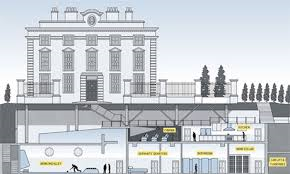
mega-basement desires?
It has emerged that the Mayor of London has ignored a unanimous call from the London Assembly to establish planning policies to prevent inappropriate basement development.
The cross-party Assembly passed a motion in March calling on the Mayor to introduce such a policy into his London Plan, but in response, the Mayor has informed the Assembly that he does not consider it necessary to introduce new rules.
Subterranean development is a growing issue in some parts of London, including Kensington and Chelsea, Westminster and Camden boroughs. Increasingly, the super-rich are digging deeper and wider in an effort to cram swimming pools, cinemas, and gyms into often historic buildings, creating so called ‘iceberg’ homes. These developments can cause flooding, sink holes and structural damage to neighbouring buildings, and construction is often severely disruptive to the neighbourhood.
The worst-affected boroughs have policies to limit inappropriate basement development, but without the backing of a strong policy in the London Plan they will may find it difficult to enforce and can see their decisions overturned by inspectors.
Murad Qureshi AM, who proposed March’s motion that received unanimous support, said:
“I find it astonishing that the Mayor is flatly refusing to stop the growing problem of subterranean development in the capital.”
“Despite the Mayor’s claims that supplementary guidance gives individual boroughs the backing they need to prevent inappropriate basement development, it is clear that these rules are just not strong enough.
“The London Plan presented the perfect opportunity for the Mayor to help curb this growing problem, but by rejecting this motion he has ignored the views of every single member of the Assembly.”
Ends
Notes
After watching this video of a demonstration by Anjem Choudary and his mob last year in May along the Edgware Rd, I was not surprised that five men have since been found guilty of violent disorder and affray. What I am sorry about is that no one faced charges of offences for religious hatred in their incitement of sectarian violence, as the banners and language used clearly indicate this intention.
The abuse was directed towards the Shi’ite Muslim community along the Edgware Rd and led to attacks on two members of the public. The victims were beaten to the floor, punched, kicked and hit with placards made of wood. I am no Assad et al supporter but l don’t want to see such sectarian politics of the Middle East brought in this way to the streets of London.
The people and businesses along the Edgware Rd are interested in the business of trade and not hatred. If anything, many of them came to the shores of the UK to get away from all of that in the Middle East.
The sentencing of the five men has been deferred until their Crown Court appearances.

Commotion outside Regent’s Park mosque after Jummah prayers on Good Friday
Last Friday while relaxing in the neighbourhood, l noticed a helicopter above Regents Park and thought very little of it thinking it must mean someone important was staying at the US ambassador’s home in the park. I later heard on the street that the EDL were there protesting outside the mosque and that the demo comprised not only of the EDL, but also Britain First, another extreme right group as well as Anjem Choudary’s mob all posturing against each other. Three groups of extremists descending onto Regents Park mosque on Good Friday during Jummah prayers is a cocktail for trouble, which is why I was surprised that the Met allowed this to go ahead.
My concern is that right wing extremists are seizing upon every opportunity to abuse and insult Muslims before, during & after their Friday prayers which is terribly disruptive, disrespectful and inflammatory. This is the second time it has occurred so far this year. How many more times is this going to happen before someone is hurt? We should not lose sight of the fact that Friday prayers are the equivalent to Sunday prayers at a church. Would we allow such abuse of worshippers after Sunday service? No we wouldn’t, and rightly so.
The local council, mosque and the Metropolitan police have over the years dedicated a lot of time and resources in deterring extremist organisations like the Jihadists from demonstrating in front of the Regents Park mosque and it is right and proper that the same level of determination and resources are expended in deterring the extreme right from doing the same right now.
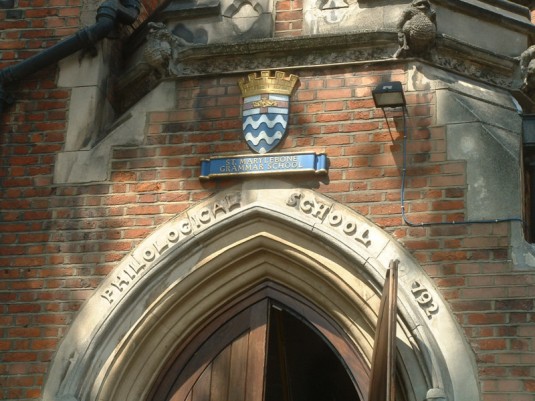
The old site of St Marylebone Grammar School on the corner of Lisson Grove & Marylebone Rd
It always seem to me that when we talk about the Free school proposal of Marylebone Boys School, the ghost of St Marylebone Grammar School returns to haunt us. I can well remember its closure in 1981 as many of its boys ended by in my own secondary school Quintin Kynaston (QK) up the road. I had earlier turned it down as a school for my secondary school, largely due to its obvious decline as the last intake went through the years with no one else coming in behind them. I felt well vindicated by my decision with my parents, when l saw the boys eventually ending up in local comprehensives like QK & Pimlico to do their A levels when the school closed.
One thing was apparent with these boys, their keeness to join co-ed schools and thus mixed intakes with girls. As a result l have never been sure that a demand exists for single sex boys schools in the same way that it does with single sex girls schools, certainly with the pupils themselves. This is of course being one of the main arguments put by the promoters of Marylebone Boys School as a free school proposal to the Department of Education. So l don’t think parental choice is such that it necessarily takes up the best interest of the students themselves.
As for the cost at some £ 50 million capital cost, thats most certainly more than the annual budgets the Council spends all the rest of the schools in Westminster under its management, helps put into context what the relative price is for this increased choice for a few parents & children in the City.
Even if you accept the idea of the need of a boys secondary school in the City of Westminster where would you locate it? Clearly the name leads itself to Marylebone on sites like Moxon Street & Cosway Street, the latter being where the Grammar schools science block used to be. Both sites till recently had educational use status as well. Alas the Council has not been terribly keen on either proposal given the values of the site as residential now with Moxon St valued at some £250 million to help the council’s finances.
Now we hear that the school has been given a site in Paddington Green to develop as a new school facility whilst being temporarily located in Kilburn at the start of the new term in September. Well thats all good and well but it strikes me that if its going to be located in Paddington, why not call it Paddington Boys School rather then Marylebone. That would at least be phyiscally accurate, as it is clearly no anyway remotely in Marylebone! How it can be suggested that its a site close to Old Marylebone Town Hall beats me.
So welcome Paddington Boys School from under the shadow of St Marylebone Grammar school!
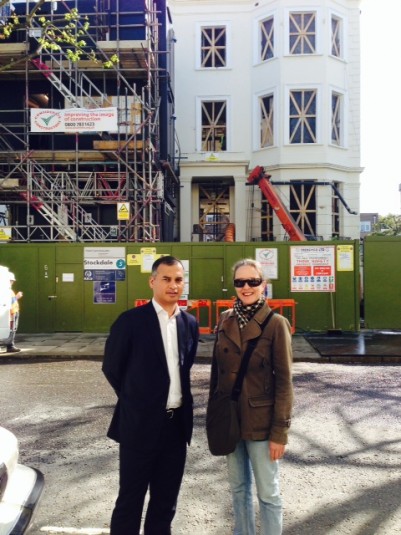
Outside a mega-basement development with concerned residents
Subterranean development is a growing issue in some parts of London, where the super-rich are digging deeper and wider in an effort to cram swimming pools, cinemas, and gyms into often historic homes. These developments can cause flooding, sink holes and structural damage to neighbouring buildings and construction is often severely disruptive to the neighbourhood. The worst-affected boroughs have policies to limit inappropriate basement development, but without the backing of a strong policy in the London Plan they will find it difficult to enforce and can see their decisions overturned by inspectors.
Most local authorities have planning policy on basement development but four of the boroughs where the problem is most acute; the London borough of Camden, Hammersmith & Fulham , City of Westminster and the Royal Borough of Kensington and Chelsea (RBKC) have or are developing special policies to tackle it. In 2013 alone, there were 1,709 applications for these mega-basements in RBKC; 1,405 in the City of Westminster; 754 in Camden; and 616 in Hammersmith & Fulham.
A recent report on the planning application for one of the largest and most opulent basements in Holland Park included a cigar room, yoga studio, two-level gymnasium and a six car stacker system. This is unashamed decadence at its worst; the super-rich shouldn’t have free reign to afflict the ground beneath us because of lax planning law in London. Restrictions on basement expansion must be tightened to avoid iceberg houses from becoming the norm and further putting upward pressure on land prices.
The damage to neighbouring houses is often devastating:
Peter Symonds, Chair of the Combined Residents’ Associations of South Hampstead highlighted the misery these developments bring about saying that ‘dozens of local residents who live close to basement excavations have seen their cellars and gardens flooded, experienced subsidence and serious destabilisation, and watched helplessly as elaborate Victorian ceilings and bay windows are bought crashing down’.
The Mayor’s draft Further Alterations to the London Plan does not include any basement development policy even though as the body which overseas strategic policy in London, the Mayor is best placed to tackle this problem. This is why I proposed a motion at the last meeting of the London Assembly on the 5th of March. The alterations currently being consulted on provide an opportunity to add a policy preventing inappropriate basement development. Some of what the motion said is as follows:
“This Assembly notes that inappropriate basement development is an increasing problem within London………………. Despite the rising concern, the draft Further Alterations to the London Plan (FALP) does not include a specific policy on subterranean development. ……………………………………London must adopt stronger policies to help boroughs prevent unnecessary basement development, such as prohibiting extensions under listed buildings and limiting the size and depth of new and redeveloped basements. This Assembly therefore calls on the Mayor of London to revise the FALP to include a specific policy against inappropriate basement development”
Karen Buck MP’s Private members Bill, the Permitted Development (Basements) Bill 2013-2014 provides some guidance on the meaning of inappropriate basement development. Her Westminster North constituency has one of the highest concentrations of planning applications for these subterranean extensions. The bill defines these as developments which include listed buildings, a depth of more than one storey and developments that cover more than 50 per cent of the garden area so this provides us with a good yard stick with which to measure.
The motion received unanimous cross-party support. Despite the recent consideration of councils over planning, we need a revision of the FALP policy by the Mayor to include planning restrictions that can then be enforced. Councils have little command against the might of architectural companies, legal teams and the super-rich without such policy. If the Mayor introduces this policy into the London Plan then we can place tighter controls on these unnecessary and ostentatious underground developments.
The Mayor’s sister Rachel Johnson recently campaigned with other residents to block a planning application which would have seen a basement being built underneath a public road in Notting Hill. So, if the Mayor does not listen to us then perhaps he should lend an ear a bit closer to home!
This piece has also been published in this week’s West End Extra.
The London Plan is the spatial planning strategy for London. The draft Further Alterations to the London Plan were published 15 January for consultation concluding on 10 April. The alterations can be found here: http://www.london.gov.uk/priorities/planning/london-plan/draft-further-alterations-to-the-london-plan

New figures have revealed the increasing strain London’s Accident and Emergency departments are facing. The increased pressure on A&Es follows the closure of wards across the capital. In the past year 199,693 people were forced to wait more than four hours at A&E in London, this is an increase of 18% on the previous year when 168,604 people waited more than four hours. In the City of Westminster and Hammersmith & Fulham the local A&E units at Charing Cross, Hammersmith and St Mary’s hospital has seen 10,246 people wait more than four hours over the past year.
So far in London two A&E units have been closed, two are to be “downgraded”, three are set to be closed and a further three are under threat of closure. In the past year all but one of London’s Hospital Trusts with A&Es failed to meet the key waiting time target of 95% of patients seen with 4 hours. In 15 out of 22 trusts this target was missed for over half of the last year. Murad Qureshi, Labour London wide Assembly Member, is calling on the Health Secretary to urgently review the situation, and for the Mayor to lobby government for the resources that London’s NHS needs.
Murad Qureshi, Labour London wide Assembly member, said:
“We were told that closing A&Es wouldn’t lead to longer waiting times, but the evidence shows that Londoners are waiting longer to be seen. In the past 12 months nearly 200,000 people across London and 10,246 people in the hospitals run by Imperial College Healthcare NHS Trust have been forced to wait for more than four hours at A&E. These figures are a damning indictment of the failure to properly plan our NHS services. 15 out of 22 Hospital Trusts have failed to meet this key target.
“Last year we all celebrated the NHS’ 65th Birthday; one year on the government’s botched top down reorganisation is putting severe pressure on our local services. Continuing to either close or downgrade London’s A&Es will make the situation even worse. NHS staff work hard to look after us all when we are at our most vulnerable, but they need the resources to be able to deliver the service we all expect. I am deeply worried that following these A&E closures, waiting times will continue to be high and Londoners will continue to suffer as a result.”
Ends
Notes

Hidden rivers of London
I return to a hobby-horse that l have had for a while – Londoners rediscovering their hidden rivers – but in a particular context, reducing the risk of floods after this winters heavy rainfall.
This week the Environment Committee at the London Assembly released its slide report of Flood risk in London with the suggestion of reviving the rivers to reduce flood risk particular when its been fluvial (river) rather then tidal. As while the Thames Barrier has been used for the record number of times, it has been closed predominately to stop river flooding in South-West London.
We had a Environment Committee in the middle of the flood crisis on the 30th of January and made this particular recommendation with a focus on the 14,000 Londoner homes which are at high risk of flooding according to figures obtained from the Environment Agency.
Interestingly we already have a river restoration programme which the London Assembly wants to see completed as soon as possible in light of the recent floods in London and wanted it incorporated within the Mayors budget priorities for 2014/2015.
Little did l expect to see something that l had backed for many years – Londoners rediscovering their hidden rivers – through a river restoration programme would also help to reduce the flood risks covering the whole of Greater London.