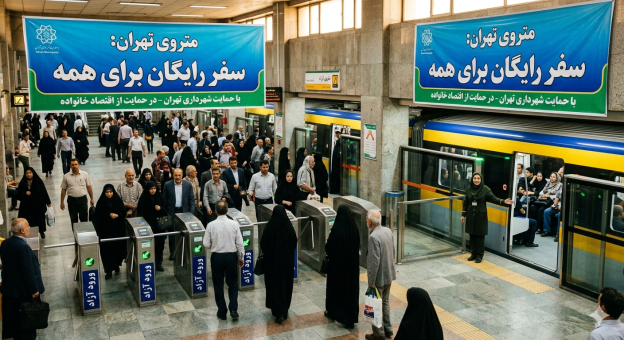
Tehran is currently moving toward making its public transport system—specifically the Metro and Bus Rapid Transit (BRT)—entirely free for its nearly 9 million residents. This is happening against a backdrop of intense regional military tension and a declared state of emergency.
Here is why and how this is being implemented right now: The primary driver is a strategic response to war and economic crisis. Following the commencement of joint military operations by the U.S. and Israel against Iran in late February 2026, the Iranian government has used free transit as a tool for “civilian defence.”
- Fuel Conservation: With the Strait of Hormuz blocked and international blockades on Iranian ports, the government is prioritising fuel for military and emergency services. Making public transport free incentivises citizens to leave their private cars at home, drastically reducing domestic petrol consumption.
- Cost-of-Living Relief: Iran has faced a plummeting currency and soaring inflation (exacerbated by the conflict). Free transit serves as a social safety net for a population struggling with the “generational destruction” of their economy.
- Social Stability: Following a wave of anti-government protests in late 2025 and early 2026, the move is seen as a way to ease public frustration and maintain urban order during a state of emergency.
The implementation has evolved from a temporary emergency measure into a potential permanent policy:
- Initial Emergency Decree: In March 2026, the Governor of Tehran announced free transit as a temporary measure during active military operations to manage the “logistical challenges” of a metropolis under fire.
- The Transition to Permanence: As of May 5, 2026, the Vice Chairman of the Tehran City Council, Parviz Sarvari, confirmed that a proposal is now under official review to make the metro and bus services permanently free.
- Financing: While the system traditionally relied on a mix of fares and government subsidies, the current model shifts the entire financial burden to the state. Officials are exploring “land value capture” (taxing the increased value of property near transit hubs) and direct military-emergency funding to bridge the budget gap left by the removal of ticket revenue.
This move coincides with a delicate diplomatic moment. While Tehran is offering “free rides” to its citizens, it is also reviewing a 14-point U.S. proposal aimed at ending the war. The “free transit” policy remains a symbol of the government’s attempt to keep the capital functioning while under the heavy weight of sanctions and military blockade.
Translation of the banners at Tehran Metro Station
Large Blue Text
Tehran Metro: Free travel for everyone (Metroy-e Tehran: Safar-e rayegan baraye hame)
Smaller Green Strip
With the support of Tehran Municipality – Supporting the family economy (Ba hemayat-e Shahrdari-e Tehran – Dar hemayat az eqtesad-e khanvade)
These banners suggest a promotion or policy where the city government has made the metro free of charge to help residents with their living expenses.