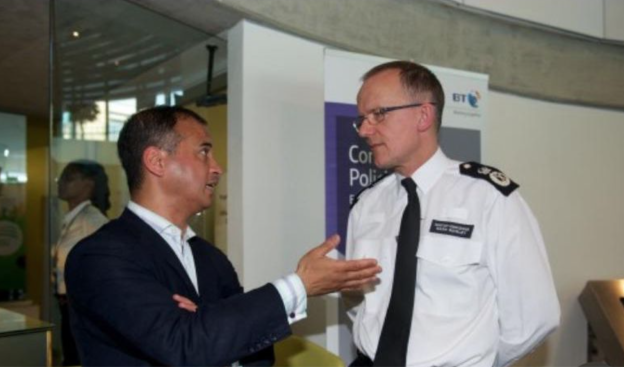
Some of us have been holding the Met to account for longer than we would like to admit. During my school days l saw the Met confrontations with the local Irish and Carribean community. As a result Ken Livingstone when he was the Mayor of London l saw fit to put me on the Metropolitan Police Authority (MPA). So l saw the Met Police at close quarters during the 7th of July bombings of London and the shooting of jean Charles de Menezes.
Naturally as a local resident of the Westminster City Council, l am concerned about the 16th of May “UK Kingdom” march. The Met Police need to tell local residents under the Public Order Act 1986, what imposition of conditions on the march (including restrictions on route, duration, or assembly) where there is a risk of serious public disorder, damage, disruption, or intimidation?
There is significant unease within the community about the nature of this event and the precedent set by previous iterations, where speakers were reported to have expressed deeply divisive and inflammatory views. Many residents are concerned that allowing such a gathering to proceed without clear safeguards risks undermining community cohesion and public safety.
Also in light of sections 4A and 5 of the Public Order Act 1986, which relate to intentional harassment, alarm or distress, what steps are being taken to ensure that the event does not facilitate unlawful hate speech?
Further, how is the Metropolitan Police meeting its Public Sector Equality Duty under section 149 of the Equality Act 2010 to have due regard to the need to eliminate discrimination, advance equality of opportunity, and foster good relations between communities, particularly where certain groups may feel directly targeted? What is the Metropolitan Police doing to ensure that any breaches of these legal standards are addressed swiftly and effectively on the day? Are there any specific conditions or assurances being required of event organisers to ensure compliance with these statutory obligations?
Given the concerns raised publicly and the potential risks involved, I would welcome the Met outlining what practical and lawful measures are being taken to safeguard residents, uphold community cohesion, and ensure that Westminster remains a safe and inclusive city for all.
Furthermore, “Purdah,” now officially referred to as the pre-election period of sensitivity, applies to senior officers in local and regional government—including Police and Crime Commissioners (PCCs) and their staff—between the announcement of an election (or notice of election) and the final result. For May 2026 elections, this period for local authorities in England generally ran from 16 April to 7 May 2026. So when handling contentious issues, officers should, where possible, delay decisions or public announcements on controversial or highly sensitive issues until after the election. This has clearly not been happening with the Met very recently.
Now the consequences of breach, while pre-election rules are largely based on convention rather than statute for national politicians, local authorities are bound by the Code of Recommended Practice on Local Authority Publicity, and breaches can lead to legal challenges for “misconduct in public office” or violation of the Local Government Act 1986