Author Archives: Murad

NOW WHAT FOR BROADLEY GARDENS?

murad-outside-broadley-gardens
Murad outside a boarded-up Broadley Gardens

Mayor Boris Johnson has now told Londoners which parks he will be funding to improve the local environment. But Broadley Gardens, on the south side of Church Street in Marylebone, is not one of them, after local expectations were raised so high. I could say l told you so, but instead l think the pressure now is on the City of Westminster to do something urgently.

We do not have many open spaces in Church Street ward, particularly one as popular with young families as Broadley Gardens. It has already been boarded up for several months, since well before Christmas. The onus is clearly on the council to get it open again as soon as possible, and local residents need to make this clear to them.

TFL PLAN FOR CIRCLE LINE WELCOME – NOW LET’S IMPROVE EDGWARE ROAD TUBE STATION

Circle_V1

Those of us who use Edgware Road tube station to travel west regularly will know full well how unreliable the Circle Line is. More often than not in order to reach destinations in West London beyond Gloucester Road you have to rely on other lines, like the District Line, even though this involves changing at Earl’s Court. It also appears that the Circle Line is stopped at the drop of a hat, when we have bad weather or the other lines are disrupted for any reason.

The new plan by Transport for London to extend the Circle Line to Hammersmith and increase the regularity of the service should mean that one of the worst lines on the tube map will get a whole lot better, but we could do with some other improvements.

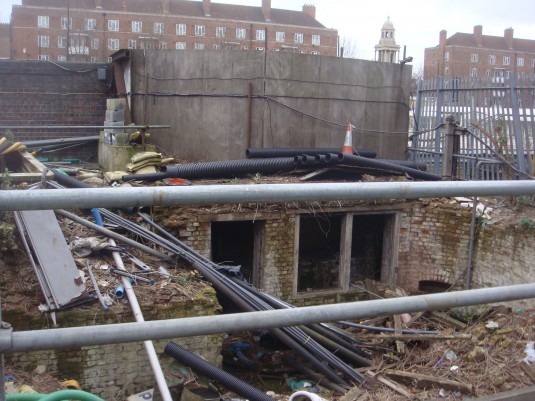
Edgware Road station is central to the new arrangement and many things need to be done in and around that particular station. It has been in a big hole in the ground for many decades and clearly neglected, with an adverse impact on both passengers and London Underground employees. There is a lot of rubbish at the back of the station that needs to be cleared immediately (see picture below). Staff are still working and resting in temporary accommodation in the form of portacabins. The entrance on the Marylebone Road should be kept open more often and the signage to the Bakerloo Line is pretty awful.

Let’s try and get this all done before the enhanced service begins in December.

edgware-road-rubbish1

TAXI RANKS GETTING LONGER?

taxi-queue2

Has anyone noticed how much longer the lines of taxis are getting on taxi ranks at rail stations? Passing through Marylebone station on a daily basis as l do, l have noticed queues of black cabs waiting for passengers going around the block. It is the same picture at Paddington station where going around the block involves passing over a bridge at the back of the station, along the Harrow Road and even up to the Edgware Road. And that’s a very big block indeed!

While this is clearly a sign of the times, we don’t want the black cab trade shooting itself in the foot. But that may well be the case with the recent increase in taxi fares announced by the Public Carriage Office. This at a time when many corporate accounts have withdrawn from hiring black cabs to send their executives around town. It was for this reason that l tabled a question to the Mayor on black cab fare rises to which I received an answer indicating that Boris has not seen the evidence on the ground. This is clearly an aspect of London life that we need to keep an eye on during the downturn of the economy.

taxi-rank

MUTINY IN BANGLADESH

bangladesh-mutiny

When “mutiny” is mentioned in the UK, the word usually conjures up images like the mutiny on the Bounty on the high seas. On the Indian sub-continent it is usually a reminder of the Sepoy mutiny of 1857, or rather the first war of independence as it is known to Indian nationalists. For Bangladeshis a mutiny sends alarm bells ringing, raising fears that the military have once again taken control of the country. Indeed it was in this vein that l initially responded to the news of the Bangladesh Rifles (border patrol) mutiny, coming as it did so soon after a successfully run election in December 2008 had brought back a civilian government with a huge mandate for change in the country.

As it turned out, this was a mutiny amongst the ranks against their officers over the terms and conditions of their employment, such as food rations and the opportunity to take UN assignments abroad as the army officers do. Nevertheless, the news is grim, with mass graves of officers and often their family members as well found in the heart of Dhaka, more bodies found in the sewerage system and many still missing. The mutiny also reflects the general alienation of public servants, though the lot of the Bangladesh Rifles living in a posh part of Dhaka is considerably better than that of civil servants, who have not risen up with them – nor, come to that, have other sections of the armed forces in the army and the navy. Far from being “underfunded”, as is claimed in the Guardian editorial of 2 March, the military has the best take of public resources in Bangladesh, as is the case in many other Asian countries. So to all intents and purposes it is a very localised conflict between the Bangladesh Rifles rank and file and the army officers. That has still has not stopped rumours going around that the mutiny could be party-political or even Islamist-inspired.

These past few days have been a real test for the civilian government led by Sheikh Hasina’s Awami League. Thankfully the army command has come out in support of the government, though differences exist over the promised amnesty for surrender and consideration of better terms and conditions of employment, while the army will push for the mutineers to be court marshalled – and we all know what the legal penalty for mutiny can be, though of course civilian courts too can impose the death sentence. While conflicts emerge around who has jurisdiction over the mutineers, it will all hang in the balance for a while yet, but a return to the barracks is the least we can expect.

BORIS – BUSY FOOL ON AIR QUALITY IN LONDON

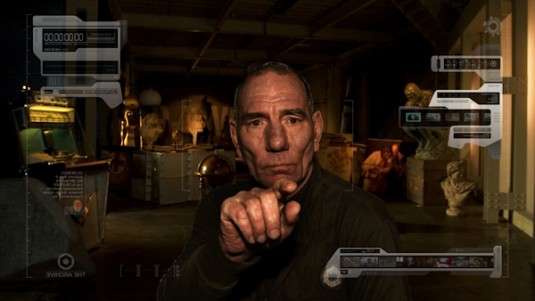
boris-puzzledAt Mayor’s Question Time at City Hall yesterday I questioned Boris Johnson on the issue of air quality and its impact on public health, which is a major issue for Londoners and one that the Mayor has a clear responsibility to consider in his decision making.

Due to poor air quality in the capital we have more than 1,000 accelerated deaths annually – almost five times the number of fatalities resulting from road accidents in London – and 1,000 extra respiratory hospital admissions. At the last meeting of the London Assembly’s Environment Committee we heard from Dr Frank Kelly of King’s College that poor air quality may also be responsible for a reduction of 17 per cent in some children’s lung growth by the time they hit their teens.

In reply to my question, Boris listed his discussions with central government and the PM about the development of an electric car infrastructure in London and with Mandy at BERR about subsidy schemes for replacing the oldest and most polluting light goods vehicles – which in all likelihood will take him beyond even the extended deadline for compliance with the EU air quality directive. While Boris busies himself with grand schemes like these, which will have an impact only in the longer term, he fails to address the immediate problem that London has the worst air pollution in the UK and among the worst in Europe.

In the here and now, Boris’s decision to halt the further rollout of the Low Emission Zone to cover light goods vehicles tells us all we need to know about his concerns about air quality and its implications for Londoners’ health. It was hardly surprising that he announced this shameful decision on the day that the chaos caused by the heaviest snowstorm for many years dominated the media, in an evident attempt to bury the news in the snow.

MONEY TRANSFERS MAKE THE WORLD GO ROUND

money-transferA hobby horse of mine in international development matters has been the lack of focus on or coverage of remittance flows to the developing world – that is, the money transfers from migrants working in the developed world to their countries of origin. For example, in a normal London high street the newsagent offering money transfer services probably provides a bigger flow of cash to the developing world than your local Oxfam shop does. And up to a fifth of GDP in countries like Jamaica, Lebanon and Jordan is made up of remittances from their ex-pats.

So l am glad to see that the World Bank has begun to do regular research into this unsexy area of the world economy and that the Economist in its 19 February edition (‘Trickle-down economics’) has taken notice of this, in the context of the slump in the world economy. The Economist notes that flows from remittances are themselves likely to fall, maybe up to 6 per cent globally, but that private-capital flows such as equity and lending by foreign banks have already dropped by 50 per cent. With official development assistance also likely at best to be capped by developed countries cutting their public expenditure, this clearly suggests that remittances are a much more reliable source of cash for the developing world.

In the meantime, the main transmitters of these critically important cash flows, the money transfer agents, find themselves facing over-regulation by the Financial Services Authority, if the presentations and discussions at the annual conference of the UK Money Transmitters Association that I attended today are anything to go by. It’s a real pity that the FSA did not keep a better eye on our banking friends in the City over the past decade or so, and then just maybe we would not be where we are with the economy at this moment. Surprise, surprise, instead of going for the big players in the money markets the FSA has gone for small players instead – the money transfer agents who have played such a crucial role in providing cash to the developing world.

Driver ID also needed to stop illegal touting

Murad Qureshi AM has praised the work of the Metropolitan Police and the Public Carriage Office in cracking down on illegal taxis in London. Speaking after he went out with one of the teams on a late night operation in central London on Friday night, Murad said:

"It’s a pity the Mayor wasn’t there to see for himself the work the teams are doing in ridding our streets of unlicenced and often unsafe taxis. Ken Livingstone started this programme years ago when we learned of just how risky these illegal taxis are – for example we were getting reports that unlicenced drivers were responsible for on average one rape each week, mostly from trips which started in central London. The Public Carriage Office started the process of making journeys safer firstly by licencing all the cab offices, then the vehicles and finally their drivers. It’s taken a while to put all the checks in place, but I’m delighted that this has made a real difference to people’s safety."

Murad added: "All the registered private hire vehicles in London now display a PCO badge to show they’re licenced, but there’s one improvement I’d like to see to let people know that the drivers are registered – I’d like to see the private hire drivers carrying similar ID to show the’ve also been checked out and registered. I think it would give their customers more confidence that the person driving them home, potentially late at night, is a safe and proper person."

Green lessons from Beijing

Murad Qureshi AM has congratulated Beijing for the positive feedback given by the United Nations Environment Programme (UNEP) for meeting if not exceeding many of its environment pledges for the 2008 Olympics.

Murad Qureshi AM said: "As a spectator at the games, l saw at first hand the greening of the Beijing Games with regard to improved air quality, major public transport investment, waste management at sites and generally improved green spaces of the city, so l am not surprised that UNEP have concluded that Beijing has exceeded their environmental commitments at the Games."

He added: "l trust LOCOG will have learnt from the Chinese on this front, particularly in regard to issues like air quality where we are in danger of not complying with EU directives by 2012, and the massive modal shift to public transport the Chinese achieved during the games and which they have maintained since."

WILDERS AND PHELPS – KEEP OUT THE PREACHERS OF HATE

It is rare that l find myself in agreement with my fellow London Assembly Member, Brian Coleman. However, on the general approach to hate preachers from abroad peddling their vile views on UK soil, we find common ground. In my case I supported a ban on Geert Wilders, the far-right racist from Holland, while Brian Coleman backed the exclusion of the homophobic US pastor Fred Phelps. Moreover, both of us congratulated the home secretary on her decision to prevent these individuals from entering the country.

Freedom of expression is not absolute. We are rightly governed by laws and conventions when we speak. As the mayor has recently learnt when abusing an MP on the phone, the public don’t like us using foul language. And we are not free to slander anyone as we please, since they can have legal recourse. So it is right and proper that incitement to hatred, and by those from abroad in particular, is treated as unacceptable in our society.

FROM LONDINIUM TO REYKJAVIK-ON-THAMES

london-on-thames

London in recent times has been given various names by admirers and critics.

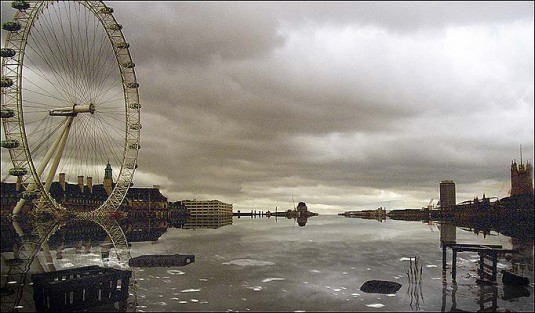
Both the New York Times and the Economist have recently referred to London as Reykjavik-on-Thames, since like the Icelandic capital London is home to a stricken financial industry which once underpinned the economy. But this is only one of many names that London has been given by commentators both here and aboard. In the late 1990s, as New Labour’s pact with the City with its light touch on regulation took effect, London become known as Manhattan-on-Thames to financiers and architects. For others, like the French anti-terrorist police who were angry at the alleged relaxed manner of dealing with Islamist extremists, it became known as Londonistan. Another name, Londongrad, was adopted in response to the influx of flamboyant Russians and the servicing of their extravagant lifestyles.

Yet, for all these pseudonyms, which reflect the many aspects of life in central London, Londoners should regard the metropolis as simply London-on-Thames. If anything, the issue to hand is that not enough Londoners identify with London, particularly those in the suburbs, where people talk about going “into” or “up to” London to work or shop, and do not think of themselves as actually living in London – when in truth these areas have long been captured by the great metropolis that London-on-Thames has become. The “doughnut effect”, with the inhabitants of predominantly white suburbia seeing themselves as separate and apart from multi-ethnic, multicultural areas of inner London, was successfully exploited by Boris Johnson in last year’s mayoral election.

This division between inner and outer London is strangely reflected in the postal codes for Greater London, which in the suburbs are still the old county codes for Kent, Surrey, Middlesex and Essex. Even one of Boris Johnson’s deputies, Ian Clement, has been apologetic about having a Kent postcode while representing London. So is it not time to put an end to this historical anomaly and change these postal codes to London ones? Well, that would be a change and a half and something developers would no doubt be keen on, as they are the agents of redefining areas as part of London more often then anyone else. It could perhaps make a symbolic contribution to undermining the mentality behind the doughnut effect.

That said, let’s be grateful that after their invasion in AD 43 the Romans moved the provincial administration from Camulodunum to Londinium, otherwise the capital might still be in Colchester, Essex, and almost certainly not the global centre we are today.