FROM LONDINIUM TO REYKJAVIK-ON-THAMES

london-on-thames

London in recent times has been given various names by admirers and critics.

Both the New York Times and the Economist have recently referred to London as Reykjavik-on-Thames, since like the Icelandic capital London is home to a stricken financial industry which once underpinned the economy. But this is only one of many names that London has been given by commentators both here and aboard. In the late 1990s, as New Labour’s pact with the City with its light touch on regulation took effect, London become known as Manhattan-on-Thames to financiers and architects. For others, like the French anti-terrorist police who were angry at the alleged relaxed manner of dealing with Islamist extremists, it became known as Londonistan. Another name, Londongrad, was adopted in response to the influx of flamboyant Russians and the servicing of their extravagant lifestyles.

Yet, for all these pseudonyms, which reflect the many aspects of life in central London, Londoners should regard the metropolis as simply London-on-Thames. If anything, the issue to hand is that not enough Londoners identify with London, particularly those in the suburbs, where people talk about going “into” or “up to” London to work or shop, and do not think of themselves as actually living in London – when in truth these areas have long been captured by the great metropolis that London-on-Thames has become. The “doughnut effect”, with the inhabitants of predominantly white suburbia seeing themselves as separate and apart from multi-ethnic, multicultural areas of inner London, was successfully exploited by Boris Johnson in last year’s mayoral election.

This division between inner and outer London is strangely reflected in the postal codes for Greater London, which in the suburbs are still the old county codes for Kent, Surrey, Middlesex and Essex. Even one of Boris Johnson’s deputies, Ian Clement, has been apologetic about having a Kent postcode while representing London. So is it not time to put an end to this historical anomaly and change these postal codes to London ones? Well, that would be a change and a half and something developers would no doubt be keen on, as they are the agents of redefining areas as part of London more often then anyone else. It could perhaps make a symbolic contribution to undermining the mentality behind the doughnut effect.

That said, let’s be grateful that after their invasion in AD 43 the Romans moved the provincial administration from Camulodunum to Londinium, otherwise the capital might still be in Colchester, Essex, and almost certainly not the global centre we are today.

Boris island won’t get off the ground

Labour’s environmental spokesman on the London Assembly will tomorrow dismiss Boris Johnson’s proposal to build an airport in the Thames Estuary as a fantasy that will struggle to get off the ground.

Speaking ahead of a meeting of the London Assembly’s environment committee, Murad said: "Boris’ fantasy island will remain just that: a distant dream that will struggle to ever get off the ground. It has been described variously as ‘mad’, ‘horrendous’ and a ‘dead duck’ by his Tory colleagues, ‘not credible’ by the government, and ‘potentially the single biggest of environmental vandalism ever perpetuated in the UK’ by environmental groups. It is a thirty year-old fantasy that just won’t fly.

"The Mayor talks a green game, but all his actions point to someone who cares little for air quality or public health. He has halved the congestion charge zone, suspended the low emissions zone, slashed City Hall’s environment team and now wants to build a brand new environmentally disastrous airport in the Thames.

"Boris’ opposition to a third runway at Heathrow is based not on environmental concerns but nimbyish political expediency – why else would he propose building a whole new airport in an area where no one can vote him out?"

Opposition to fantasy island:

RSPB: "An airport sited in the Thames Estuary would potentially be the single biggest piece of environmental vandalism ever perpetrated in the UK, damaging or destroying huge areas of legally protected habitat."

British Air Transport Association: "…this is merely a kite flying exercise by the Mayor of London and one that cannot be seriously pursued. It may seem attractive to some in City Hall at the moment, but upon closer investigation will prove to be a non-starter."

Theresa Villiers MP (Shadow transport minister): "this is not an option at which the Conservative party is looking"

Lord Adonis (Transport minister): "Immediately post-war it would have been very sensible to build an airport in the Thames Estuary"

Cllr Paul Carter (Leader, Kent County Council): "Environmentally and ecologically it’s a very bad idea to build an airport off one of the most beautiful coastlines in the South East. To say it will be an eyesore is the understatement of the year. It would be totally horrendous."

Cllr Nigel Holdcroft (Leader, Southend Council): "We have all been here before and we keep on hearing about these plans. It is not even a realistic option."

Gordon Henderson (Conservative candidate, Sheppey): "Boris Island is a dead duck before it’s even been hatched"

Cllr James Cottis (Conservative, Rochester): "The plans for building an airport, with rail and other infrastructure coming through this part of the county are mad."   

The London Assembly’s environment committee will meet to discuss London’s air quality tomorrow (4 Feb 2009) at City Hall at 10am.

Boris’s bad news for Londoners’ health buried under foot of snow

Murad Qureshi, Labour’s environmental spokesman on the London Assembly, has criticised Boris Johnson’s decision to suspend phase three of London’s Low Emissions Zone as "fatally bad news" for public health.

Murad Qureshi said: "It is shameful, but no big surprise, that Boris Johnson has attempted to bury his bad news under today’s snow. London’s air quality is already the worst in the UK and is responsible for over 1,000 deaths a year – more than are killed on our roads.

"Londoners will simply not believe that the Mayor is serious about improving the environment they live in while he continues to take such regressive decisions; decisions that are fatally bad for their health.

"I hope that the Mayor will look again at this and consider options like a mini low emissions zones on the London’s most polluted roads. These are just the kind of issues we will be looking at on Wednesday when the environment committee meets."

RESIGNATION FROM BBC APPEALS ADVISORY COMMITTEE OVER GAZA APPEAL

gaza-crisis-appeal2Last night I received news of a friend’s resignation from the BBC Appeals Advisory Committee after he had seen the Disasters Emergency Committee’s Gaza crisis appeal, which was rejected by the BBC as compromising its political neutrality, broadcast on Channel 4. (Resignation letter here.)

He argues persuasively that the DEC is itself a non-political body that provides an objective and transparent mechanism for international charities to debate and collectively decide on national media appeals, and that this external governance structure provides the BBC with more than enough protection of its political independence.
 
He notes that the BBC has in the past broadcast humanitarian appeals that have been potentially politically controversial. Live Aid appeals for aid to Ethiopia were broadcast in the 1980s despite concerns about the Mengistu regime, as was the 1982 DEC appeal by Sue Lawley for Palestinian and Lebanese victims of the Israeli invasion of Lebanon, the stated purpose of which was to drive out the Palestine Liberation Organisation.
 
I find it worrying that the BBC is unable to make the distinction between political bias and statements of fact, as pointed out by the Times editorial on Monday the 26th of January: “The death and suffering in Gaza is entirely the fault of Israel. That is a biased statement. The death and suffering in Gaza is entirely the fault of Hamas. That is a biased statement. There has been death and there is suffering in Gaza. That is a simple statement of fact.”
 
So, as you can imagine, l’ll be sending a letter of complaint to the BBC.

CHA WALLA HERO IN UK FILM HIT (SLUMDOG MILLIONAIRE)

slum-dog-millionaire

After hearing so much about the film from friends, l decided to go and see Slumdog Millionaire. And boy was it a treat, fully living up to its word-of-mouth reputation.

Slumdog Millionaire is a very rare combination of British social realism with the escapism of Indian cinema. The British realism meant that it dealt with the lives of folk in the slums of the mega-cities of South Asia, something South Asian politicians ignore at their peril and which Indian cinema has singularly failed to address. At the same time the film offers some hope in the form of a bit of Indian escapism with the central character winning a TV contest worth millions of rupees.

The film has a novel way of telling the story, with our hero Jamal Malik being asked to explain to the police how a common cha walla like himself could have won the TV contest in the first place, and each question answered involves an episode in his life. In my family we use the term cha walla as a term of endearment to encourage a fellow member of the family to make tea for the rest of us after a meal. Here it is used as a term of abuse and a means of keeping people like our hero Jamal down.

Slumdog Millionaire also broke some of the other rules of commercial cinema, with its use of subtitles which are generally discouraged, and by not having the narrative of the film explained by a white character, as would usually have been the case before in such films set in India. It not only failed to fit the Bollywood formula but Hollywood turned it down as well. Well their loss is certainly our gain.

So director Danny Boyle has done it again, with a film that is the equal of his earlier social realist portrayal of life on a Leith estate in Trainspotting. And Slumdog Millionaire can certainly look forward to winning more awards from the film world and beyond. For Boyle’s next project I would suggest a film adaptation of The Golden Gate by Vikram Seth, a novel in verse based in San Francisco.

HEATHROW – DECISION TIME

heathrow-airport-map

In the run-up to the GLA elections last year the London Assembly and its members across all the political parties adopted a resolution against the further expansion of Heathrow – a policy also supported by all the major mayoral candidates.

Since being re-elected to the London Assembly, I have been appointed as the Assembly’s representative on the Heathrow Airport Consultative Committee (HACC), where I have argued that we do not want a bigger Heathrow but a better one, particularly with regard to surface transport options for the users of the airport.

With the Government’s announcement on the proposed third runway at Heathrow airport imminent, it is useful to take stock of the position of the London Assembly on this issue and outline the arguments on which we base our stand.

In February 2008 the London Assembly Environment Committee, of which I am now deputy chair, submitted a formal response to the Department for Transport (DfT) consultation on Heathrow, objecting to expansion on the grounds of its impact on economic development, climate change, noise pollution and air quality. The Environment Committee remains unconvinced that the expansion of Heathrow is essential to the well being of the London and wider UK economy, or that the conditions placed on expansion by the government have adequately addressed the environmental costs and impacts of a third runway.

With regard to economic development we have taken the view that the DfT has not adequately considered the trends in passenger behaviour and the resulting growth of other airports serving London. Since 1990 the number of destinations from Heathrow has declined by 20 per cent but Gatwick for example now serves 20 more destinations than Heathrow. Between 2000 and 2006 passenger numbers increased by only 5% at Heathrow but by 18% in London airports overall. So while Heathrow’s capacity has been contained, until recently London’s financial sector has thrived. In failing to take account of these developments, the DfT has overestimated the importance of Heathrow to the London and UK economy.

On the issue of climate change it is difficult to see how the government’s new target of an 80 per cent reduction by 2050 in CO2 emissions can be achieved if the construction of a third runway at Heathrow is allowed. So it is for good reason that campaigners see the battle to stop expansion at Heathrow as the “iconic fight against climate change in the UK”. At the very least, expansion should not be considered till the Kyoto agreement includes aviation emissions as part of its binding criteria and the EU carbon emissions trading scheme has demonstrated its effectiveness in reducing UK and European emissions.

For Londoners, particularly in the west, the local environmental issues – noise pollution and air quality – are the most pressing issues.

On the noise front, it is quite clear that the 1986 Airport Act is inadequate and needs to be reformed or replaced with a more robust mechanism to enforce stringent environmental standards on noise levels. The conditional noise contour parameter should be increased to 50 decibels and effective measures introduced to encourage the adoption of quieter, cleaner engines.

As for air quality, the London Assembly has called on the DfT to give a guarantee that it will not seek an exemption for areas around Heathrow in implementing EU air quality standards in 2010. Before expansion should be considered vast improvements are required on surface and ground transport accessing the airport, as this is the biggest single factor causing the decline in air quality.

With the gloves soon off in the campaign against Heathrow’s extra runway, we can expect a package of transport measures to ease ministerial and backbench unease, such as a high-speed link with the North being built before a new runway is constructed, as part of a package to make Heathrow expansion acceptable.

I am confident that the climate change debate and European law will ensure that the third runway is never built. As already noted, Heathrow expansion on its own would scupper any government targets to cut CO2 emissions. In the meantime, Londoners will continue to switch their use of airports from Heathrow to others in Greater London.

LONDON’S LOST RIVER SECRETS

londons-rivers

As chair of the London Waterways Commission (LWC) l have noticed that Londoners’ interest in their waterways has been greatly enhanced in recent times. You only have to look at the great success of cultural events like the annual Thames Festival on the South Bank, the Canal Cavalcade in Little Venice and the Angel Festival in City Road Basin to appreciate that we are increasingly identifying with our waterways. Some have even suggested that this marks the revival of Londoners’ spiritual relationship with the Thames, as identified by Peter Ackroyd in his book Thames: Sacred River.

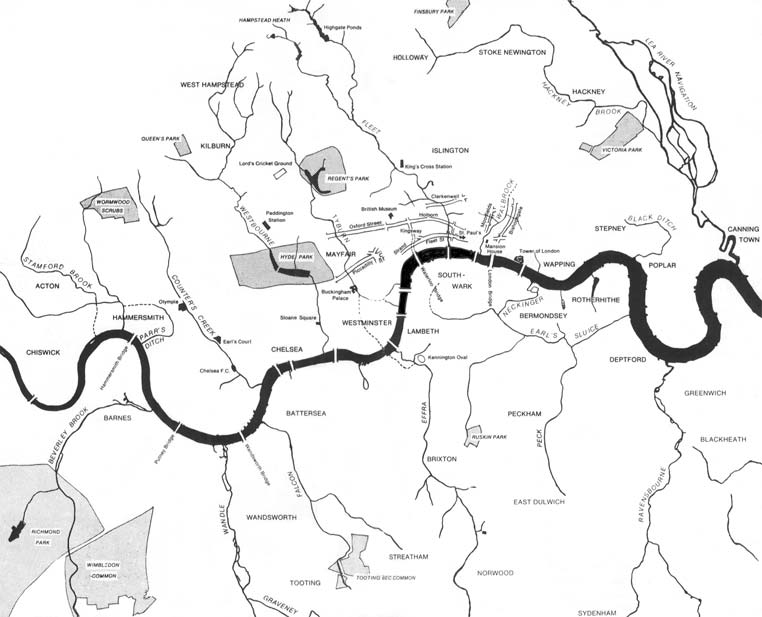
However, while Londoners have rediscovered the Thames and the canals, they are less aware of the lost rivers that run under our city. For example how many of us know that in central London the river Westbourne flows into the Serpentine in Hyde Park, as well as the River Tyburn into the Regent’s Park lakes? Or that the river Fleet runs from Hampstead Heath to the City? For that matter how many residents of Brent know that their borough is named after a river that runs beneath it? Since becoming chair of the LWC l myself have discovered rivers south of the Thames that I did not previously know existed, such as the Quaggy in Lewisham and the Wandle in Wandsworth.

Hopefully, we are now witnessing an awakening of interest in this issue. Last week l spoke at a public meeting organised by the Friends of Regents Canal, Islington branch, where the topic of discussion was the City Road Basin development, yet in a contribution from the floor we were urged not to forget the river Fleet as it flows through Camden and Islington and major interchanges like Kings Cross. In a recent letter to the Guardian, it was revealed that Housmans, the celebrated radical bookshop in Caledonian Road, regularly suffers the flooding of its basement due to its situation above the Fleet.

So l welcome the recent launch of the London Rivers Restoration Plan (LRAP) by the Environment Agency. Under this plan it is intended that we will have 15 km of river restored and 14 channels uncovered over the next six years. LRAP’s website will also become the “one point of contact” for all the river restoration works occurring in London, keeping Londoners informed about the various stages reached in their development. This will certainly help with the planning process and contribute to sustainable regeneration through the implementation of the Blue Ribbon policies within the London Plan.

Yet when LRAP is completed 70 per cent of London’s 600 km of river network will still be covered over. Perhaps it is time we identified these hidden rivers in some way, particularly the Westbourne, Tyburn and Fleet which flow unseen through central London boroughs like the City of Westminster, Camden and Islington.

My proposal is that these hidden waterways should be marked by simple blue lines along the course of the rivers, similar to the existing yellow or red lines on the roads. The blue line markings would tell Londoners where these waterways are and inform people about this important but neglected aspect of our urban landscape.

I trust l will get support from local people, so that some day soon we may have blues lines going through Central London showing clearly where the rivers are buried beneath our roads and buildings.

Finally, for those interested in the history of our lost rivers there is no better reference then Nicholas Barton’s excellent book The Lost Rivers of London.

Green500 – so much hot air?

Murad Qureshi AM, Labour’s London Assembly environment spokesperson, has called on Mayor Boris Johnson to ensure that business members of the Green500 initiative back up warm words with action to improve London’s environment.

Green500, the brainchild of former Mayor Ken Livingstone and Deputy Mayor Nicky Gavron, aims to provide member organisations with practical advice on how to reduce their carbon emissions and reward those that do so with recognition. Today’s City Hall event, hosted by Mayor Johnson, congratulated 17 members of Green500 who have reduced their carbon emissions.

Murad, who is vice Chair of the Assembly Environment Committee said: "Green500 has the potential to make a real difference for London in the battle against climate change so I’m pleased that the new administration has carried this forward. However, this needs to involve more transparency and evidence of clear actions taken. There are lots of unspecified ‘targets’ being met and back patting going on but to properly inspire London businesses and individuals to look at their own carbon footprint these organisations need to clarify what they are doing and give unambiguous evidence of their results."

He added: "This would make it easier for ordinary people to relate to – we all have a contribution to make to the environment and this programme needs to be more inspirational. For example, Chelsea FC are members of Green500 – what if they were to lead the way in getting all London clubs to travel to domestic matches by rail where possible, for example? Lots of football fans will relate to that and think about how they can make changes themselves. It’s a good start but we need to develop it with specific targets and actions, rather than just bland ‘carbon action plans’ which don’t mean much to the average member of the public."

LABOUR POLITICIANS CALL FOR ACTION OVER GAZA

Labour Friends of Palestine and the Middle East have sent a letter to Foreign Secretary David Miliband calling for action to stop the killing of civilians in Gaza. I am among the 53 signatories, who include Labour MPs, MEPs, peers and members of the Scottish Parliament, Welsh Assembly and London Assembly.

Dear David

Re: Gaza crisis

Three hundred people have lost their lives in Gaza over the last three days. In any conflict and any battle in today’s world such a wide scale loss of life would be met with deep despair and a sense of failure.

We are writing together with the new organisation Labour Friends of Palestine and the Middle East to thank you for your clear statement that the number of lives lost in Gaza over the last few days is unacceptable. We fully support your call for a cessation of violence and ask that you also make a statement as soon as Parliament resumes. We will be calling for an urgent debate, which I hope you will support, to enable the voice of the House of Commons to be heard.

The Israeli Defence Force has entered Gaza with extreme force and without apparent concern or apology for the loss of civilian life. We urge you to endorse the statement by the UN Secretary General that the Israeli government’s actions are “excessive”. On Monday the UN estimated the number of deaths at 320, of whom 62 were women and children, against two deaths on the Israeli side. More recent estimates have put the death toll at 347 with more than 800 wounded.

This development is deeply concerning both in itself and in the longer term. We believe that there can be no military solution and would further suggest that excessive military force of this kind is bound to be counterproductive and will inevitably sharpen the sense of injustice in the region.

The conflict in Gaza should not be seen in isolation. We are concerned by the continuing expansion of settlements in the West Bank and in East Jerusalem , by the confiscation of Palestinian land, by the proliferation of checkpoints and by other restrictions on Palestinian movement. In relative terms, the West Bank is peaceful at present, but further tensıons are being stoked up which could foreseeable overspill into violence.

As we enter this bleak period, probably the most dangerous since 1967, we ask you to continue to send a clear signal from this country that excessive military force is counterproductive and will not resolve the conflict. We also ask you to do all in your power to bring about an immediate ceasefire and to ensure that humanitarian aid is urgently allowed into Gaza. As a High Contracting Party to the Geneva Convention we also ask you to ensure that the UK takes a leading role in requiring international law to be upheld.

Yours sincerely

Martin Linton MP, Chair, Labour Friends of Palestine & the Middle East
Rıchard Burden MP, Chair of Policy Committee, Labour Friends of Palestine & the Middle East
Phyllis Starkey MP, Vice-chair, Labour Friends of Palestine & the Middle East
Janet Anderson MP
Roger Berry MP
Roberta Blackman-Woods MP
Frank Cook MP
Michael Connarty MP
David Drew MP
Paul Flynn MP
Hywel Francis MP
Roger Godsiff MP
Nia Griffith MP
Peter Kilfoyle MP
Mark Lazarowicz MP
Tom Levitt MP
Judy Mallaber MP
Christine McCafferty MP
Andrew MacKinlay MP
Nick Palmer MP
Jim Sheridan MP
Andrew Slaughter MP
Dr Howard Stoke MP
David Taylor MP
Joan Walley MP
Mike Wood MP
Jim Dobbin MP
Peter Soulsby MP
Lyn Brown MP
Brian Iddon MP
Jim Devine MP
Hywel Francis MP
John MacDonnell MP
Neil Gerrard MP
Lord David Lipsey
Baroness Brenda Dean
Lord Andrew McIntosh
Baroness Rosalie Wilkins
Richard Simpson MSP
Frank McAveety MSP
Marlyn Glen MSP
Alan Davies Welsh AM
Murad Qureshi GLA
John Biggs GLA
John Austin MP
Christine Chapman AM
Eric Ittsley MP
Rob Morris MP
Baroness Anne Gibson
Harry Cohen MP
David Chaytor MP
Lord Alf Dubs
Virendra Sharma MP
Sara Linton, Labour Friends of Palestine & the Middle East (Acting Secretary)
Michelle Harris, Labour Friends of Palestine & the Middle East
Mark McDonald, Labour Friends of Palestine & the Middle East

BNP-JAMAAT SMASHED IN BANGLADESH POLLS, AS ELECTORATE VOTES FOR SECULARISM

queues-at-polling-station

A source of major embarrassment for me since my election to the London Assembly in 2004 has been that the government in my ancestral home was a right-wing alliance between the Bangladesh Nationalist Party (BNP) and the Islamist political party Jamaat-e-Islami. So it was with much trepidation that l sent off over the Xmas break to assist the opposition in the general election there on the 29th of December. Little did l expect to see the landslide that resulted against this right-wing alliance, as Bangladeshis voted in their millions for the progressive secularism offered by the Awami League.

The election had been delayed by two years after the BNP-Jamaat alliance had attempted to rig the elections with a false electoral roll, providing an opening for the military to intervene and impose their caretaking government of technocrats. So there was great enthusiasm for a return to democratic rule. On the morning of the 29th of December, even before the polling stations opened at 8.00 am, people were queuing up to cast their vote. By the end of the day over 80 per cent of the Bangladeshi electorate had voted in what turned out to be one of the most peaceful elections in the country’s history, when people had feared much worse.

The BNP-Jamaat alliance tried to garner votes with their campaign to “save Islam“ but the electorate overwhelmingly rejected the claim that Islam was under threat. They turned instead to the Awami League, who promised to counter militancy and religious extremism and establish a liberal democratic society. This was particularly evident among the first-time voters who made up 30 per cent of the electorate. They were a key element in the political tidal wave that swept away the BNP-Jamaat bloc, with the Awami League and its allies winning 263 of the 299 seats in the Jatiya Sangsad, the Bangladesh parliament.

I spent polling day in Sylhet, the area of the country that most Bangladeshis in the UK come from. The district has 19 seats and the crucial battle was in Sylhet I with a contest between two former finance ministers, Saifur Rahman of the BNP and Abdul Muhith of the Awami League. On the morning of election day the Awami League were confident that they would win 12 seats, but when the results were announced in the evening they had taken all of 17. The real bonus was the election of Shafiqur Chowdhury of the Awami League, an NRB (non-resident Bangladeshi) from London, in the Sylhet II constituency, where he defeated a BNP “tough guy” by a majority of over 3,000. The Sylhet results proved to be no isolated victory, as at the same time news came through that we had won all 20 seats in the capital, Dhaka.

The voters had also overwhelmingly rejected alleged war criminals like Nizami and Saeedi, who contested the election on the BNP-Jamaat ticket. This was the result of successful campaigns in the vibrant civil society of Dhaka. These defeats brought the loudest cheer of the evening when the results were announced in the Hafiz Centre, Sylhet Town. Some will say that the trial of these war criminals is the first step to the recovery of a wounded nation and expectations are high that the government will finally deal with this albatross around the neck of the nation, once and for all.

The Bangladeshi electorate has left no one in any doubt what their choice is here, giving a near fatal blow to the Islamist political parties. Plainly put, this is an overwhelming mandate against religious fundamentalism in Bangladesh. The “Talibanisation” of the country, which some commentators aboard had identified as a threat in the past few years, is hardly a realistic prospect now, if it ever was. This is not to deny that the political assassinations that were attempted, such as the August 2004 grenade attack on a rally addressed by Awami League leader Sheikh Hasina, were dark chapters in the life of the previous government, but it would take a lot more than that to Talibanise the Bangladeshi democratic spirit.

The shift towards secularism will clearly have some impact on politics within the Bangladeshi community in the UK, which have for some years taken a predominantly conservative-religious form. This is now badly out of kilter with politics “back home”, which are represented by those of us from a secular-progressive background. Policy wonks in government at local, regional and central level should take note of this development urgently and not be taken for a ride by those supposedly representing the community.

Overall, the Bangladesh general election was a resounding endorsement of democracy and an emphatic victory for pluralism in the world’s second largest Muslim-majority country. Thus, for some, the vote was as historic as the vote in December 1970, which led to the liberation of Bangladesh from Pakistan. That was the election l watched as a small kid when my parents attempted to settle back in our ancestral home. So politics in Bangladesh have now come the full circle, back to where we should be, with the political optimism that greeted the formation of a new state nearly four decades ago now reborn in the 21st century.

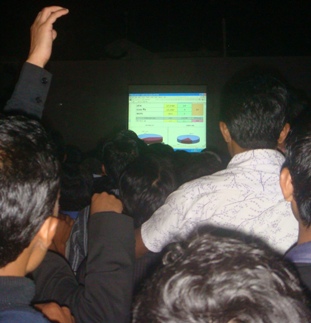
cheering-election-results
Awami League supporters cheer election results