Monthly Archives: March 2009

AMNESTY FOR IRREGULAR MIGRANTS: I’M BACKING BORIS!

murad-and-boris

Normally l’m knocking Boris on this blog, but I fully back the position he has taken over the issue of irregular migrants in London, as outlined in his interview on the Panorama programme “Immigration – Time for an Amnesty?” broadcast on the 9th of March.

That is, it’s impractical to expel the hundreds of thousands of irregular migrants already here and another solution is required. If they are making a contribution to society, we should regularise their status – as long as they have no criminal record, they have the ability to support themselves and their families, and they have been here for a considerable period of time.

Under instructions from the Mayor, GLA Economics has commissioned a study from the LSE on the economic impact of such an amnesty. It is as yet available only as an interim summary with a draft of the key Chapter 2, “Estimating the Size of the Target Population”, which puts the number of irregular migrants in London at around half a million.

With the Tory party leadership against an amnesty and his media backers like the Evening Standard opposed as well, it may seem surprising that Boris should have taken this stance.

No doubt it is part of his attempt re-brand himself as a friend of minority communities, after all the adverse publicity he faced during the mayoral election campaign last year over his comments about “piccaninnies” and “watermelon smiles”.

It should also be remembered that in deciding to commission a report on the economic impact of regularisation Boris was in large part responding to a motion in favour of an amnesty passed by the progressive alliance between Labour, the Greens and the Lib Dems on the London Assembly last October. The Tory Assembly Members voted against the motion along with the BNP’s Richard Barnbrook.

Nevertheless, credit where it’s due, Boris has taken the right line on this and his support for the principle of regularisation should be welcomed.

NOW WHAT FOR BROADLEY GARDENS?

murad-outside-broadley-gardens
Murad outside a boarded-up Broadley Gardens

Mayor Boris Johnson has now told Londoners which parks he will be funding to improve the local environment. But Broadley Gardens, on the south side of Church Street in Marylebone, is not one of them, after local expectations were raised so high. I could say l told you so, but instead l think the pressure now is on the City of Westminster to do something urgently.

We do not have many open spaces in Church Street ward, particularly one as popular with young families as Broadley Gardens. It has already been boarded up for several months, since well before Christmas. The onus is clearly on the council to get it open again as soon as possible, and local residents need to make this clear to them.

TFL PLAN FOR CIRCLE LINE WELCOME – NOW LET’S IMPROVE EDGWARE ROAD TUBE STATION

Circle_V1

Those of us who use Edgware Road tube station to travel west regularly will know full well how unreliable the Circle Line is. More often than not in order to reach destinations in West London beyond Gloucester Road you have to rely on other lines, like the District Line, even though this involves changing at Earl’s Court. It also appears that the Circle Line is stopped at the drop of a hat, when we have bad weather or the other lines are disrupted for any reason.

The new plan by Transport for London to extend the Circle Line to Hammersmith and increase the regularity of the service should mean that one of the worst lines on the tube map will get a whole lot better, but we could do with some other improvements.

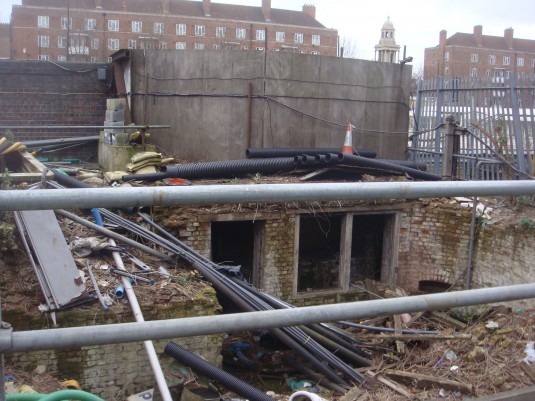
Edgware Road station is central to the new arrangement and many things need to be done in and around that particular station. It has been in a big hole in the ground for many decades and clearly neglected, with an adverse impact on both passengers and London Underground employees. There is a lot of rubbish at the back of the station that needs to be cleared immediately (see picture below). Staff are still working and resting in temporary accommodation in the form of portacabins. The entrance on the Marylebone Road should be kept open more often and the signage to the Bakerloo Line is pretty awful.

Let’s try and get this all done before the enhanced service begins in December.

edgware-road-rubbish1

TAXI RANKS GETTING LONGER?

taxi-queue2

Has anyone noticed how much longer the lines of taxis are getting on taxi ranks at rail stations? Passing through Marylebone station on a daily basis as l do, l have noticed queues of black cabs waiting for passengers going around the block. It is the same picture at Paddington station where going around the block involves passing over a bridge at the back of the station, along the Harrow Road and even up to the Edgware Road. And that’s a very big block indeed!

While this is clearly a sign of the times, we don’t want the black cab trade shooting itself in the foot. But that may well be the case with the recent increase in taxi fares announced by the Public Carriage Office. This at a time when many corporate accounts have withdrawn from hiring black cabs to send their executives around town. It was for this reason that l tabled a question to the Mayor on black cab fare rises to which I received an answer indicating that Boris has not seen the evidence on the ground. This is clearly an aspect of London life that we need to keep an eye on during the downturn of the economy.

taxi-rank

MUTINY IN BANGLADESH

bangladesh-mutiny

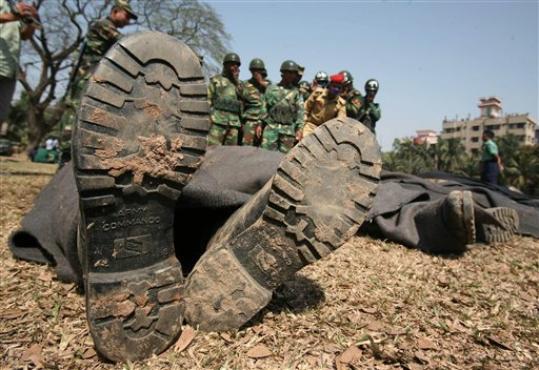
When “mutiny” is mentioned in the UK, the word usually conjures up images like the mutiny on the Bounty on the high seas. On the Indian sub-continent it is usually a reminder of the Sepoy mutiny of 1857, or rather the first war of independence as it is known to Indian nationalists. For Bangladeshis a mutiny sends alarm bells ringing, raising fears that the military have once again taken control of the country. Indeed it was in this vein that l initially responded to the news of the Bangladesh Rifles (border patrol) mutiny, coming as it did so soon after a successfully run election in December 2008 had brought back a civilian government with a huge mandate for change in the country.

As it turned out, this was a mutiny amongst the ranks against their officers over the terms and conditions of their employment, such as food rations and the opportunity to take UN assignments abroad as the army officers do. Nevertheless, the news is grim, with mass graves of officers and often their family members as well found in the heart of Dhaka, more bodies found in the sewerage system and many still missing. The mutiny also reflects the general alienation of public servants, though the lot of the Bangladesh Rifles living in a posh part of Dhaka is considerably better than that of civil servants, who have not risen up with them – nor, come to that, have other sections of the armed forces in the army and the navy. Far from being “underfunded”, as is claimed in the Guardian editorial of 2 March, the military has the best take of public resources in Bangladesh, as is the case in many other Asian countries. So to all intents and purposes it is a very localised conflict between the Bangladesh Rifles rank and file and the army officers. That has still has not stopped rumours going around that the mutiny could be party-political or even Islamist-inspired.

These past few days have been a real test for the civilian government led by Sheikh Hasina’s Awami League. Thankfully the army command has come out in support of the government, though differences exist over the promised amnesty for surrender and consideration of better terms and conditions of employment, while the army will push for the mutineers to be court marshalled – and we all know what the legal penalty for mutiny can be, though of course civilian courts too can impose the death sentence. While conflicts emerge around who has jurisdiction over the mutineers, it will all hang in the balance for a while yet, but a return to the barracks is the least we can expect.