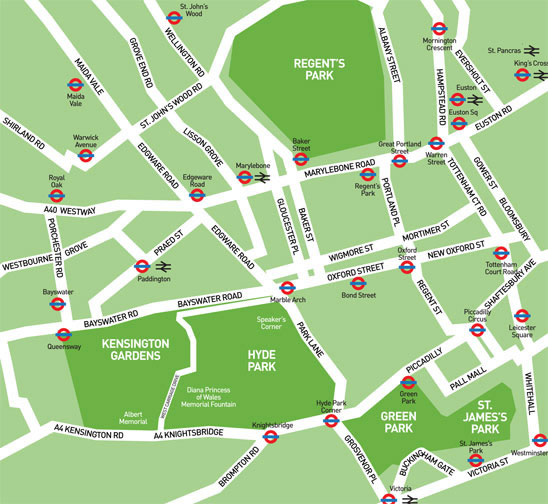
Is policing the Royal Parks a priority for the Met?

Royal Parks in central London

Following the criticism in the ES  about the Met not alerting users of Regents Park in the aftermath of the daytime rape in early June, made me wonder whether policing the Royals Parks was becoming less of a priority for the Met?  In particular after responsibility for policing the Royal Parks moved over the Met in 2004.  I decided to ask a few questions on this front.  In fact my intention was to ask the Police Commissioner similar questions about this matter at the last MOPAC but as he was instructed not to attend by the  Deputy Mayor for Policing, Stephen Greenhalgh so l was unable to ask him directly.  Instead, I had to resort to writing to him about the matter and I await his response.

In the meantime I tabled some written MQTs  and I now have the responses, in particular the figures for the number of reported crimes since the Met took over.   Since then, crime levels in the parks have moved up from the hundreds to the thousands from 916 for the whole of 2005 to some 2000 plus by 2011.  Whilst still in the control of the Royal Parks in the early part of the century, the figure stood at about 500 crimes annually then suddenly it jumps to around 1,000 crimes annually under the Met before reaching 2,000 plus by the end of last year.

The Met tell us that the increase in the number of crimes is attributable mainly to a more proactive policing approach of the parks particularly to drug related offences.  This has apparently stopped the Parks becoming free drug-taking and dealing zones, however the rising trend is at odds with the general trend which we are told is falling crime?

Clearly I’ll need to ask for more information like a break down of the type of crime broken down by Royal Parks.  This information together with the awaited response to my letter to the Police Commissioner may give a better insight into what’s been happening in our Royal Parks.  In the meantime, prima facie figures suggest to me that crime in the Royal Parks have not been a policing priority for the Met since they’ve taken over.

Cities for Clean Air – London 2012

Cities for Clean Air Conference panel in the morning session 14th July 2012 ( left to right ) Andrew of Cities for Clean Air, Alan Andrews of Client Earth; Dr Ian Mudway, Kings College; Jenny Bates, FoE

Last weekend, l was able to address an audience at the Cities for Clean Air conference in Central London on a panel which uniquely had lawyers,scientists,campaigners and the odd politican like myself!

I made my contribution by asserting that its the second biggest public health issue after smoking as if you check the figures in London from TfL its 20 times the killer of road fatalities annually in terms of premature deaths. Moreover those affected by it reduce their life expectancy by a minimum of six/eight months at least. Its harmful health affects also include respiratory and cardiovascular conditions, so for example its been suggested it doesn’t help the lung development of young people.  

At a recent Health & Environment Committee meeting we got an update on the poor air quality situation in London from Kings College across 100 monitoring stations across London over 2011. The new figures revealed that limits were breached at most monitoring sites near busy roads. In particular NO2 limits were breached at the majority of sites and locations in Central London; 5 locations further away on the roads of inner & outer London and those close to Heathrow as well. As for PM10 levels, these were over the limits on 2 kerbsides & 3 roadsides as well as one industrial site. This all illustrates the extent of the problems of poor air quality in Greater London.

In the Central London hotspot there is a consensus amongst Local Authorities like the City of Westminster, Camden & City of London of how to tackle the issues head on but the Mayor has yet to sign up to their suggestions. These include a better deployment of retrofitted buses in central London; age limits on taxis with the offer of a car scrappage scheme; and a fifth phase of the Mayor’s Low Emission Zone (LEZ) which would cover black carbon and PM 2.5’s for pollutants currently not registered.

But let us not forget this is not just a central London problem but affects the suburbans of London as well. Putney & Brixton have there own particular problems with Putney being the buses and Brixton just the level of traffic. In Neasden & Acton lane we have more industrial sources for the air pollution problems in the neighbourhood and finally of course we have Heathrow with the volume of traffic the airport attracts, its the second biggest hotspot in London after Central London.  

There is next to nothing in the Mayors manifesto for his relection in May that deals with poor air quality but it appears he is working on his 2020 vision. If he wants to make an impact, then he should sign up to the Central London LA s consensus; taken on board the House of Commons Environment Audit Committee recommendatiosn on public awareness; and finally the recommendation fo the London Assembly Health & Environment Committee.

Alarming jump in cycling casualties in Central London

At last week’s Transport Committee, we were able to talk about the alarming increase in cycling casualities in Cental London boroughs like City of Westminster, Camden, Islington as revealed by TFL figures recently issues for 2011. When seeing the figures first time l wondered could the different approaches to the London Cycle network(LCN) by boroughs in Central London be a contributing factor in the alarming increase of cycle casualities in London shown in the TfL figures recently released?

As the figures show, we have over 20 per cent increases in cycling casualities in central London boroughs like Westminster, Camden and Islington which under TfL definitions are statistically significant given we have over 200 instances. So something else is clearly happening other then the volume of cyclists having increased.

As someone who only cycles in central London, l have been aware that the different boroughs have different approaches to the London Cycle Network(LCN).  For example in the Royal Borough of Kensington & Chelsea (RBKC) we have a shared space approach, best and possibly only illustrated in Exhibition Rd. While in the City of Westminster, its very much soft surface segregation with cycle lanes but not much else. While in Camden its hard surface segregation with hard kerbs along with the cycle lanes. As you move between the boroughs the different approaches are very obvious to any regular cyclist.

Interestingly if you look at the figures for cyclist casualties in the RBKC  its actually dropped by 5 per cent, though we need to be reminded that the number of casualty events are less then 200, its not statistically significant.

So it appears in the central London context, while clearly we have more cyclists on the roads, its in the boroughs where we have some sort of segregation via lanes we have  the highest increases of cycling casualities. The exception to the rule is in RBKC where with its shared space notion it has actually gone down though the figures here are considered not statistically significant. So it will be interesting to see how the debate on what is the best way to offer protection to cyclists on the roads goes with these figures in the near future.

This all the while when the biggest increases in cycling casualities are actually in the surburbs as places like Waltham Forest and Croydon where we see alarming increases of around 50 per cent. But again these figures are seen not to be statistically significant. Time will tell us if that is the case but in the meantime, both boroughs need to look at the specific cases to see if a pattern is emerging and get dealt with through local measures.

So in merely posing a question about whether the different approaches to the London Cycle network(LCN) by boroughs in Central London maybe another contributing factor in the alarming increase of cycle casualities in London, l have yet to come to a statistically significant conclusion.

WCC selling family silver as Marylebone library goes to Luxborough St

Ideal location for temporary library site while refurbishing the Marylebone library

At tonights Cabinet Meeting of  Westminster Council proposals to sell off some of the family silver will be discussed and in particular agenda item 6, considers the selling off a local iconic landmark, Marylebone Library on the Marylebone Road while moving  it to a new site on Luxborough Street.

I welcome the aim to increase useage of the library to 500,000 per annum at Marylebone library, but l am surprised at the options being considered given the refurbishment cost has not been broken down to just for the library but the refurbishment of the whole of the Old Marylebone Town Hall at £25 million. In short we are told that a new library at Luxborough Street will cost £12.6 million and Moxon Street in the region of £15.9 to 19 million. So on a cost basis it has to be Luxborough St but the capital costs figures don’t compare like with like. As the £25 million refurbishment cost includes both the library and the Town Hall while the new build options do not have a Town Hall cost element at all  and even between them one has a range and the other a firm price figure. Why the different measuring sticks?

No further details of the nature of the deal with London Business School(LBS) is shown for example whether the Council would still get access to the Council Chambers or whether residents will get access to their library.  This could so critically turn the assessment to its favour but given these haven’t been mentioned it won’t surprise that such access has been suggested or offered by LBS.

As for the full cost-benefit analysis for Luxborough street, the loss of a playing amentity albeit a hard surface one in a City that very unfortunately does not have much playing space for young people to enjoy does not get a mention at all. I am sure this is something Sports England would take some interest and will need to be informed of this potential loss in any planning application anyway.

Alas we are seeing the continuing trend of the loss of public facilities like Marylebone library from local government and probably Marylebone police stations as well in the neighbourhood. I am not sure where this will all end as austerity in public finance increasing means selling off the family silver without anything else to replace it nor any clear evidence its going to help improve services and turn the economy around either.

West London flyovers & viaducts keep falling down?

 As yet another West London flyover or viaduct undergoes emergency repairs, inconveniencing many car drivers  in the process, questions need to be asked about their long term life; whether to rebuild or replace them and further, how to make the Highways Agency more accountable to Londoners.  

For some of us it’s come as  no surprise that we’ve had to endure a weekend when the Highway Agency have shut-off the M4 between junction 1 and 3 and in particular along the elevated M4 going through Brentford (Boston Manor viaduct).  This has resulted in a great deal of disruption to traffic in West London and my understanding is that problems have been ongoing since April.  The closure is set to continue until Thursday (12th) whilst the Agency undertake work, installing plates on hairline cracks in the concrete of the elevated M4.

The identification of a new crack on the damaged Boston Manor viaduct has forced the closure of the M4 between London and Heathrow airport – a key section along the Olympic Route Network – for up to five days, the Agency states.

The Agency said the new crack had been identified in a “sensitive location” following overnight works last night. Site workers were embarking on the final stages of the complex repairs to 15mm long hairline cracks discovered by chance in April in welds on the viaduct just west of junction 2 in Hounslow.

A 7.5t weight restriction on the damaged stretch had already been imposed since April, diverting coaches and lorries onto busy local roads.

The Agency said it expected to have the ongoing remedial work completed to enable the viaduct to open in time for the start of the Olympic Games later this month.  Lets hope so, as the affected section is on the Olympic Route Network and will be used to carry coaches travelling to and from Heathrow airport and the Olympic Park in East London.

Although these are the immediate concerns.  In the long term, we need to assess all the flyovers and viaducts particularly in West London as the engineers who have working on the repairs of the M4 are informally saying that it only has a further 5 year life span.  The Hammersmith flyover had to be repaired suddenly in March and April and now the elevated M4 in Brentford.  What next.  the Westway flyover going over North Kensington & Paddington?

If such critical infrastructure have come to the end of their working life, then we need to start thinking of how to replace or rebuild them properly to ensure theri longgevity.   For example, with the Hammersmith flyover, there have been suggestions of having a tunnel instead.  What ever the options, the Highway Agency must be up front about it to Londoners.  At the sametime, it should be accountable to us via the GLA set-up rather then to the Department of Transport as a quango.  This will allow elected London politicans to hold the Agency to account for their management and maintenance of critical infrastructure. I trust that isn’t asking for too much!


Which police stations will survive in Central London?

Police stations under threat in central London

The focus for the Met police has very much been on preparations for the Olympics, but from this autumn, we can expert some difficult decisions in central London relating to police front counter services.  Since the election, the Mayor has indicated that he is only committed to guaranteeing one 24 hour front counter per borough.  This is part of a drive aimed at meeting the financial challenge of the 2010  spending review whereby the Met needs to find £232m before it can balance the books (HMIC).  Can you imagine what this means for stations in Central London particularly as the real estate value of these sites are much higher then anywhere else in London?  So yesterday at the MOPAC, I asked the new Deputy Mayor for Police and Crime, Stephen Greenhalgh that very question.  The reply was rather dismissive but I remain sceptical, and of course only time will tell.  He did however give a taster of what’s to come when he said: “I do believe that if we focus on rationalising the property estate, significant savings and improvements to operational efficiency can be made”  Not much reading between the lines needed here.

The MPS had also previously indicated Borough Commanders would ultimately be given responsibilities for deciding when a counter will be closed after taking into account the needs of local residents.  For example, in the City of Westminster, the borough commander has indicated that he wants to organise police response teams from one base in the south of the borough. Operationally there is clear evidence this is happening already as criminal incidents in Paddington are being dealt with by Belgravia Police Station.  In the past, response teams would operate from Paddington Green and Charing Cross as well.  Can the Met seriously think that with the huge demands on policing in the City of Westminster which is home to 2/3rds of the West End, it can operate effectively and quickly from just one police station in Belgravia?  What about West End Central and Charing Cross stations? Surely these won’t be sold off given the demands of the West End on their door-step.  The other police stations in the City like Harrow Rd, St John’sWood & Marylebone in the North tend to serve City residents, and therefore their fate is probably a fait accompli!

The meeting today did not make any clearer what the likely casualties of the spending drive would be.  However, residents will want a clear indication as soon as possible what the effect will be for their wards in the centre and north of the City of Westminster and also for the Safer Neighbourhood Teams (SNT’s) in particular.  The latter is something residents now take for granted but more fundamentally, it will be difficult for residents to accept the demise of  their local police station which has served their community for many years.

A similar picture seems to be emerging in another borough which is home to the other 1/3rd of the West End; Camden.  Here Tory councillors are proposing a motion to the effect that one central police base alone, like Kentish Town station, will not be in the interest of  Camden’s residents and therefore, will oppose any such move.  Clearly this goes against the sentiments expressed by the Mayor since his re-election and puts up a line of defence against the closure and selling off of stations like West Hampstead, Hampstead & KentishTown in the North and Albany Street & Holborn in the South.

Finally, it will be interesting to see what the Deputy Mayor gets up to in his old patch in Hammersmith & Fulham?  There, we have three police stations in Fulham, Hammersmith & Shepherds Bush. With the Mayor’s vision of just one 24 hour counter per borough, this could mean losing two out of the existing three.  So, which ones are these going to be Stephen?

What ever the Deputy Mayor says about the fact that police stations closures will be determined by operational considerations rather then capital receipts, I suspect selling some of the central London ones will generate enough capital to save more police stations in the suburbs.  Call me a cynic perhaps but it will be very interesting to see how the map above will look by the end of the Mayoral term.  My hope is that community needs are put at the fore of the restructuring.  What we don’t want is front counter policing determined by the value of real estate capital receipts.

New figures revealed breaches of poor air quality across the capital

Poor air quality in Central London

At yesterday’s Health & Environment Committee we were supplied with the latest information on breaches of harmful air pollution around London in a briefing from Kings College.

Research at 100 monitoring sites around London found limits for harmful NO2 were being breached at the vast majority of locations close to roads, with the worst pollution levels -some three times the limit to be found in Putney and Brixton.  The NO2 limits were also breached at five locations further away from main roads in both inner and outer London and close to Heathrow as well.

All this after the EU refused the UK air pollution reprieve on NO2 in twelve areas in the UK.  A judgement will be made at a later date on government plans to delay meeting NO2 standards in major cities like London till well after 2020. Going by what the Kings College briefing on NO2 emissions in 2011 showed, there is very little chance of us getting there very soon with EU limits and even more pointless attempting to get a reprieve in the meantime.  

The research also found that the problem with PM10 were less severe but nonetheless two kerbside and three roadside plus one industrial monitoring  sites were regularly exceeded.  So all these figures are a reminder that our capital has a long way to go before it meets the limits devised to protect the public’s health.

Swim in Thames at your peril, Mr Mayor.

Swimming in the Thames in a by-gone era

Such is the colourful language in todays column in the daily Telegraph of the Mayor of London Boris Johnson, you would be forgiven for thinking he was not told of  restriction on swimming in the Thames by the authority that manages the river for us, Port of London Authority(PLA) was about in the first place.

The new byelaw, only controls swimming in the busiest part of the Thames between Putney Bridge & Crossness ( just before the Thames barrier) by making it necessary to get prior consent from the harbour master. This is so because its the busiest inland waterway in the UK. Added to this its the most dangerous stretch of the river, with strong tides and eddies that can drag a person underwater without warning.

Furthermore the new set of byelaws were confirmed by the Department for Transport after extensive consultation and designed to balance the the interests of all river users in the use of the Thames over five years. The byelaws are part of the work of the PLA to secure high standards of navigational safety on the tidal Thames which are essential to underpinning the continued growth of river use, whether for trade, travel, sport, leisure or tourism. They will be known as the Port of London Thames byelaws 2012 and been operational since sunday night, 1st of July 2012.

A further key change is the introduction of a mandatory speed limit of 12 knots within Central London that will apply to all vessels, other than in emergencies. That limit will also apply down river from below Tower Bridge and upriver from Lambeth Bridge to Wandsworth Bridge, unless certain strict operational criteria are met by operators. The speed limit will help to underpin the safety essential to the long-term growth of passenger travel on the river. 

But isn’t the real reason the Mayors complaining is that he was not handed over the PLA ( and thus control of the Thames & the Estuary) by his friends in government last term?  In early 2010, the Mayor made a bid for more power from his friends in the coalition government in his proposals for devolution. The document clearly states that given the critical importance of the Thames to the London’s prospersity the PLA should be devolved to the GLA group. The Mayor further states that the work of the PLA needs to be integrated with the mayors transport strategy and London plan, which l readily accepted at the time. But at the time he and his supporters like the Policy Exchange got their figures wrong when asking for some sort of funding transfer along with the PLA. The reality was and is that the PLA is self-financing and thus has no recall to public funding which explains to us why most Ministers let them get on with managing the Thames without any interference.

Finally the Department for Transport agreed the final form of the byelaws in late May and these were subsequently confirmed by the Secretary of State. The interesting thing about it all, is that it appears by his column that  Justin Greening, Secretary of State for Transport hasn’t bothered to informed the mayor about these changes or he didn’t notice when informed. One can only wonder why that could be the case.


Cuts in A&E units gets H & F residents rallying against them

Front door of Rivercourt Church at last nights rally against A&E cuts

Last night l was at a packed Rivercourt Methodist church meeting with more then 200 people in attendance to hear how they intend to fight plans to shut the accident and emergence departments ( A & E units ) at Charing Cross and Hammersmith in the London borough of Hammersmith & Fulham organised by local MP Andy Slaughter.

During the proceedings, we heard how getting to other hospitals like St Marys in Paddington and Chelsea & Westminster instead would be a nightmare and how many had relied on the services of the hospitals in Hammersmith & Fulham in critical moments of their families lifes.  

While not a resident of Hammersmith & Fulham, l for one was not reassured that people like myself in the City of Westminster and the Royal Borough of Kensington & Chelsea have been spared as residents from Hammersmith & Fulham are expected to go to St Marys and Chelsea & Westminster instead. At the best of times the A & E units at these hospitals can just about cope with the demands made on them particularly as attendances have soared in recent years. So l not sure both could cope with the additional demands made by residents of Hammersmith, particularly as we know London NHS is facing massive cuts anyway across the board.  This on top of the inaccessibility of these hospitals from Fulham & Hammersmith.

The consultation for the wholesale changes will begin from next monday for a three month period and NHS North West London can expect a very hard time over their recommendations outlined at their board meeting on monday night. Its important other residents in the North-West of London region also fight them along with the residents of Hammersmith & Fulham.  


Brunswick Sq statue controversy for B’deshis is all hot air

Image of proposed Sheikh Mujib Rahman statue in Brunswick Square

This evening a statue for the founding father of Bangladesh, Shiekh Mujibur Rahman in Brunswick Square will be discussed by Camden Council’s planning committee.  Whilst in planning terms,  it is pretty straight forward, it is more contentious for the UK’s Bangladeshi community, although arguably, the contention is little more than hot air.

Firstly, I am happy to declare that I have written to Camden in support of the planning application for the statue.  I believe it is right and proper for London through Camden Council which is home to over 15000 Bangladeshis to acknowledge the contribution of Shiekh Mujib Rahman in the formation of the state of Bangladesh in 1971.  This liberation was brought about in a struggle against the Pakistani army and represents the first triumph of linguistic nationalism in the world.  If you think about this achievement within the context of a capital city like ours where more than 300 languages are spoken, it brings home the extent of the achievment.

In London, we have a Bangladeshi community of over 200,000.  The Bangladeshi population is  concentrated in a few boroughs.  In Tower Hamlets , there are 86,300 Bangladeshis which is a third of the borough’s population. We have another 32,100 Bangladeshis living in Newham, thats  1 in 10 Newham residents and in Camden, the figure is 15,60, which is 1 in 14 Camden residents.  Therefore, it is a fitting tribute to the founding father of the ancestry home to be acknowledged in the form of a statue in Brunswick Square, providing even more of a sense of belonging in London.

So why the controversy for some Bangladeshi’s?  The reason is that we have members of the opposition in Bangladesh otherwise known as the BNP, and its allies like the Islamists, are still in denial about the history of the formation of the state of Bangladesh.  Needless to say, this party played no part in the formation as it had not been formed by then and the Islamists were openly against the idea committing some awful crimes of collaboration with the Pakistani army.  This of course does not stop them making claims, which to this day have yet to be backed up with evidence from the time.

So do expect some demonstrating tonight in front of Camden Town Hall along Judd Street. But, I’d like to reassure people, these views do not reflect the mainstream perspective of Bangladesh but is unfortunately, one aspect of party politics of the country.

Mercifully, the application has been reccommended for approval by officers though there have also been other dissenting voices from local amentity groups. To those voices, I would say that the proposals are subtle and tasteful and will greatly contribute to local use of the public space.  It is also in keeping with other similiar tributes in the gardens and squares of Camden like Mahatma Gandhi’s statue in Tavistock Square.

So while a lot of noise will be made tonight by “BNP” supporters, Camden council can be reassured that by permitting this statue,  it rightly acknowledges the critical role played by Sheikh Mujib Rahman in the formation of Bangladesh, supported by most Bangladeshis to which the party political opposition in Dhaka are still in denial.