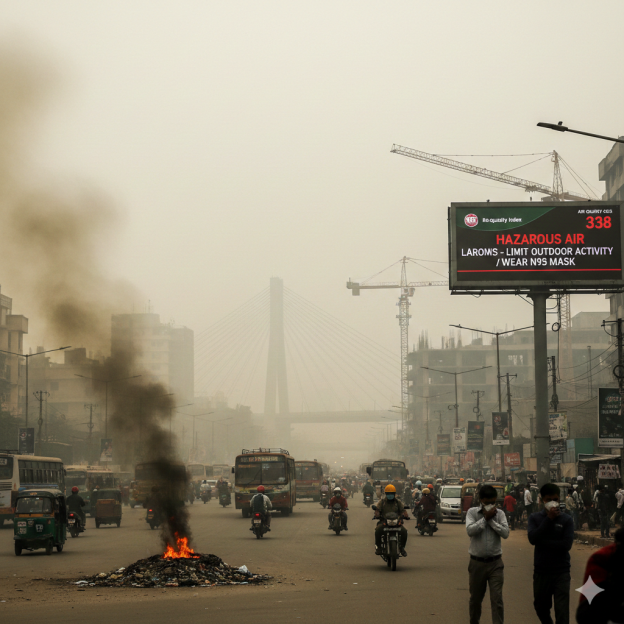
Dhaka is currently facing a severe air pollution crisis, frequently ranking as the most polluted city in the world. As of late February 2026, the city has seen Air Quality Index (AQI) scores exceeding 330, classifying the air as “hazardous.” This spike is largely due to the dry winter season, which traps pollutants like fine particulate matter PM_2.5 near the ground. The primary contributors include unregulated brick kilns, massive construction projects, ageing vehicle fleets, and the open burning of municipal waste.
To address this, the Bangladesh government has recently outlined the National Air Quality Management Plan (NAQMP) 2024–2030. Here is a breakdown of the short and medium-term measures required to clear the air.
1. Short-Term Measures (Immediate Impact)
These actions focus on containment and public safety during peak pollution months.
- Dust Suppression: Mandatory twice-daily water sprinkling on major roads and around large-scale construction sites (e.g., Metro Rail, Elevated Expressway) to prevent dust from becoming airborne.
- Enforced Waste Management: Strict bans on the open-air burning of municipal solid waste, which contributes significantly to local $PM_{2.5}$ levels.
- Transportation Restrictions: Implementation of “low-emission zones” in hotspots like Motijheel, Farmgate, and Mirpur, alongside stricter enforcement of fitness certificates for aging, black-smoke-emitting buses.
- Brick Kiln Shutdowns: Temporary suspension of traditional, highly-polluting brick kilns located in the Dhaka periphery (Savar, Gazipur) during the peak winter months.
- Public Health Advisories: Real-time data sharing via apps and digital billboards to warn citizens to wear N95 masks and limit outdoor activities when AQI exceeds 200.
2. Medium-Term Measures (1–3 Years)
These aim to reform the structural causes of pollution.
- Transition to Green Bricks: Phasing out traditional coal-fired kilns in favor of Auto Bricks or concrete blocks. The government is already pushing for 100% block use in public construction.
- Vehicle Fleet Modernization: Accelerating the transition to electric buses for public transport and expanding the CNG (Compressed Natural Gas) infrastructure to reduce reliance on high-sulfur diesel.
- Industrial Regulation: Installing Continuous Emission Monitoring Systems (CEMS) in factories around Dhaka to ensure they adhere to the Air Pollution Control Rules 2022.
- Urban Greening: A “pilot project” to cover bare land in Dhaka North and South with grass and native trees to reduce soil erosion and dust.
- Clean Cooking Initiatives: Reducing household emissions by promoting improved cookstoves (ICS) and LPG, as nearly 50% of households still rely on solid fuels like wood and dung.
3. The “Airshed” Challenge
It is important to note that about 30–40% of Dhaka’s pollution is “transboundary,” meaning it drifts in from the wider Indo-Gangetic Plain (India and Pakistan). Medium-term success will require regional cooperation to manage this shared air corridor.