Author Archives: Murad

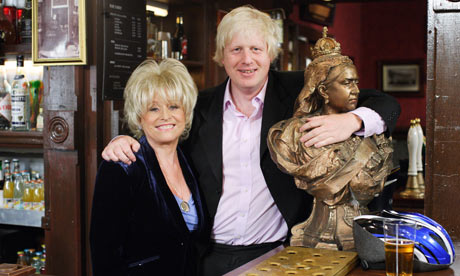
Statement on Mayor’s EastEnders cameo

Ahead of Boris Johnson’s appearance on EastEnders this evening, Murad Qureshi, a Labour member of the London Assembly, said today:

"The BBC should always be even-handed and consistent when dealing with political figures, not turning down some and promoting others. It’s a coup for Boris, being portrayed as pretty straight guy on such a popular show, but I would question whether it’s in the BBC’s remit to influence the public’s perception in this way."

BARNBROOK FOUND GUILTY

The Standards Committee took the right decision in finding Richard Barnbrook guilty of bringing both the London Assembly and Barking & Dagenham Council into disrepute.

Barnbrook’s claim that three murders had taken place over a 3-week period in Barking & Dagenham was shown to be completely false.

He engaged in the worst sort of scaremongering, playing on public perceptions of rising crime when in fact crime figures are coming down. In my opinion, Barnbrook has shown that he is unfit for public office.

In Barking and Dagenham, Barnbrook and his party won support on the basis of their “Africans for Essex” propaganda, falsely claiming that the council was offering £50,000 to Africans to buy homes in the borough.

This is how the BNP operates – by spreading lies and exploiting irrational fears.

Mayor and Local Authorities passing the buck around traffic accident hotspot

Murad Qureshi, London Assembly Member, calls upon the Mayor, Boris Johnson, to use his powers and act decisively to sort out a notorious accident hotspot.

Murad said: "Westminster, Kensington and Chelsea and Brent Councils are all failing their residents by not providing any pedestrian crossings at the junction of Harrow Road, Kilburn Lane, and Ladbroke Grove. Twenty-four people have been injured, four seriously, trying to cross the road at this junction. It is about time that Mayor Boris Johnson knocks heads together to come up with a solution to this pressing problem."

In written answers to Murad’s questions the Mayor ducks the issue and lays the blame on the three Local Authorities.

Rather than taking a lead to sort out this problem Boris takes a back seat and offers technical advice if asked.

Notes

BAA to introduce mixed mode at Heathrow by the back door

BAA are due to introduce controversial mixed mode flight operations at Heathrow in the next few months, Murad Qureshi AM has learned.

Murad Qureshi AM said: "When Geoff Hoon announced the cancellation of the 1952 Cranford Agreement in January this year, he specifically said this would not lead to mixed mode operations at Heathrow, but now BAA has quietly decided to operate take offs and landings on both runways simultaneously, which to my mind is mixed mode. BAA thinks that by redefining the term they can get round the ruling that prohibits it, but they’re merely playing with semantics."

Mixed mode is the standard operating procedure for all single-runway airports in the UK, whereby planes take off and land on one runway at the same time. Heathrow currently uses a segregated mode on its two existing runways, whereby at any one time one runway is used for take-offs and the other for landings, either to the East or the West, depending on the wind direction. On westerly operations, which occur some 70% of the time, they swap over at 3pm to give people under the flight paths some respite from the noise for part of the day.

However, for over 50 years, planes have been prevented from taking off from the Northern runway in an Easterly direction by the Cranford Agreement, established because of the proximity of the village of Cranford to the runway. This has in effect prevented mixed mode working at Heathrow – until now. When the Secretary of State decided to cancel the Cranford agreement in January this year to reduce the noise experienced by people in Windsor, Hatton and North Feltham, BAA seized on the opportunity to re-interpret the rules and introduce mixed mode working by the back door.

Ealing resident Margaret Majumdar, who has been campaigning for many years against the unacceptable noise from Heathrow said: “BAA may try to dress it up as something different, saying that the airport will only operate in this way for a small part of the day, probably in the late evening, but their plans constitute introducing what people have understood for decades to be mixed mode working and I find this totally unacceptable. There are no plans to consult local communities about this, beyond its statutory consultation with the Heathrow Airport Consultative Committee, it’s just another example of BAA doing whatever it wants with complete disregard for the people who have to put up with the awful and relentless noise levels around Heathrow."

Margaret continued: "Residents of Cranford, Heston, north and central Hanwell and north and central Ealing, who have not suffered noise from take-offs up to now, will suddenly find that they are suffering the appalling noise that people under the flight paths in current use have to put up with. There are already 700,000 local residents who suffer from Heathrow operation: now there will be even more. Research has shown that aircraft noise can affect the health of people who regularly suffer it, and that there is a detriment to schoolchildren’s learning in schools under the flightpaths. BAA needs to use the reduction in the number of flights caused by the recession to make the reduction permanent and start to reduce the imposition the airport places on local communities."

BAA reported plans to change operational working at Heathrow at a meeting of the Heathrow Airport Consultative Committee earlier this year, which could result in mixed mode landing and take-offs starting between February and May 2010.

Notes to Editors

  • Murad Qureshi AM is the Labour Group environment spokesperson on the London Assembly and Chair of the Assembly Environment Committee.
  • He is the London Assembly’s representative on the Heathrow Airport Consultative Committee.
  • Margaret Majumdar is Secretary of the Ealing Aircraft Noise Action Group (EANAG).
  • BAA’s presentation can be found at: http://tinyurl.com/lcygnm
  • The minutes from HACC’s meeting of 29th July 2009 can be found at: http://www.lhr-acc.org/documents/29Min29July.pdf

CO-OPERATION: THE WAY FORWARD

co-op-party-conferenceLast weekend l was in Edinburgh at the Co-op Party conference for the launch of its manifesto “A Co-operative Agenda for a Fourth Term” (pdf here). Now I have often thought that developing ideas for the future often means going back to old ideals and principles, particularly in light of the failure of the global capital markets. A manifesto to change the culture of our financial institutions is a must, and we can start by returning former building societies to the mutual sector. The remutualisation of the likes of Northern Rock will embed much needed stability in our economy.

The principle of mutuality is also applicable in other arenas like housing and energy. In housing it can mean mutual home ownership through housing co-ops and community land trusts holding and managing assets collectively, while residents are individually both tenants and shareholders. In the energy markets we could have co-operative energy schemes, whereby we enable local communities to buy their own energy collectively, saving them money and helping boost the take-up of green energy. More so after feed-in tariffs come into play next April.

Co-operation and mutuality maybe seen by some as retro, but their time has definitely come again.

MY EXPECTATIONS FOR COPENHAGEN

green-economy-initiative2Last Thursday evening I shared a platform with Lawrence Bloom, a leading light from the World Economic Forum, where I outlined my views about the forthcoming conference of the parties in Copenhagen for the post-Kyoto agreement on climate change.

First I expressed my concern that, whatever is agreed at Copenhagen, it is likely that the US will face difficulties in ratifying it, given the problems that are already occurring in the Senate with the Obama adminstration’s proposed cap-and-trade legislation. This indeed would be in line with what happened with the Kyoto agreement, where the US took the whole world down the yellow brick road of tradeable permits, only for Al Gore to be unable to get it ratified in the US. This time round it’s going to be a lot more difficult for the US to persuade the world to swallow market-based solutions anyway, given the paradigm shift away from the Washington consensus.

If there is to be a Plan B, l emphasised the importance of mega-cities like London working to limit the impact of climate change, as some 75 per cent of CO2 emissions comes from our cities and towns where over 50 per cent of humanity now resides. Nation states will meet in Copenhagen but there is a lot of scope for cities to collaborate and take their own initiatives, and even become a conference of parties themselves with international agreements at city level. There is a localised green economy effect possible, particularly in the transport and housing sectors, and with the right city level leadership it would help move us to a less carbonised world.

Finally l made a moral plea for some thinking beyond the box, in connection with climate refugees, because environmental degradation leaves the poor most vulnerable to natural disaster. Migration as an adaptative response to poverty, hunger and environmental disasters is a practice humankind has followed since the beginning when our species came out of Africa. Today’s environmental refugees should be acknowledged and assisted in the host countries by a similiar Geneva Convention to that for political refugees. Such a safety net is the least we in the developed world should offer, in recognition of our contribution to global environmental problems and our imposition of particular models of development on the developing world.

Murad Qureshi AM stands down from Barnbrook hearing

London Assembly Member, Murad Qureshi, has announced that he is withdrawing from the Standards Sub-Committee that is considering a complaint against the British National Party’s London Assembly Member, Richard Barnbrook.  

In a statement issued today, Murad said:

"I have agreed, with some reluctance, to withdraw from the Hearing Sub-Committee of the London Assembly Standards Committee that is considering a complaint against BNP London Assembly Member and Barking & Dagenham councillor Richard Barnbrook.

"This is the result of an objection to my membership of the Sub-Committee by Mr Barnbrook, on the grounds that I am ‘a consistent, forthright and bitter critic of the BNP’ and have attacked him personally on my blog. He implies that I am not able to hear the case without prejudging its outcome.

"The complaint against Mr Barnbrook does not however concern his membership of a fascist party or its racist politics, both of which I have publicly condemned. It arises from his statement in September 2008 that two people had been murdered on the streets of Barking & Dagenham, when this was not in fact true. I am of course capable of judging this case on its merits, regardless of his or my other views.

"However, I have received legal advice that because of comments I have previously made about Mr Barnbrook, there may be legal grounds for an appeal if the Sub-Committee were to uphold the complaint against Mr Barnbrook. For that reason I have decided to stand down from the Sub-Committee."

TORIES, TAXIS AND PUBLIC TRANSPORT

boris-and-taxiBoris is right to suggest that government ministers should get out of their cars (Daily Telegraph, 31 August 2009), certainly in central London. But he’ll have more trouble persuading his fellow Tories to use public transport than he cares to imagine.

While the quotation attributed to Margaret Thatcher that anyone who travelled by bus was a failure in life may be apocryphal, it accurately reflects the philosophy of Tory politicians, many of whom are hooked on their perks such as taxi expenses. Here at City Hall, Brian Coleman has become notorious for his use of taxis, both as London Assembly Member for Barnet & Camden and as Chair of the fire authority LFEPA. Indeed Boris’s own expenses claims for taxis last year didn’t look too good either.

Maybe Boris needs to get his own house in order before he starts telling colleagues in parliament how to go about travelling when carrying out their political responsibilities.

Olympic Route Network – we need answers says Qureshi

London Assembly Labour Group environment spokesman Murad Qureshi has today called for answers on the impact of the Olympic Games on ordinary Londoners, amid fears that roads on the Olympic Route Network (ORN) could face traffic increases of 25% and residents could find their parking bays suspended.

Murad is raising concerns over the lack of information available on how the ORN will actually be implemented; including what London Boroughs will be required to stump up for.

"I went to the Beijing Games", Murad explains, "and they had a number of specially dedicated IOC lanes. But Beijing’s roads feature a number of new motorways, and London’s roads simply aren’t large enough to emulate this type of scheme. The consultation document itself stated that traffic at certain times of day could increase by 25% – although it also asserts that 80% of journeys will be unaffected – something London Councils disputes."

Murad gives the example of the Marylebone Road: "If you isolate one lane for Olympic use, plus the existing bus lane, that only leaves one lane for ordinary traffic. This could have a huge and negative impact on road users in the area – including pedestrians and cyclists. The fear is that ordinary Londoners will be banned from using certain traffic lanes on the ORN and face hefty fines if they stray into one."

Concerns have also been raised over how refuse collections and street cleaning on the affected roads will continue, and whether boroughs will have to pay themselves for things like traffic signal upgrades on borough roads or the enforcement of parking contraventions on the route.

"It seems, as London Councils have stated, that very little information is available on how the scheme will be implemented in practical terms, who will pay for it and so on", added Murad.

"In January this year, the Assembly passed a motion calling for non-commercially sensitive sections of the technical manual on the ORN to be made public", he went on. "But all that happened was that the ODA allowed Assembly Members to see the manual on a strictly ‘need to know’ basis – provided they signed a pledge of confidentiality. I’m concerned that the implementation will be done behind closed doors with very little information about it being released until it is presented as a fait accompli with little scope for anyone to do anything about any issues. Given that some of those issues could be highly sensitive and affect traffic levels and issues like residents’ parking, this is worrying. I want the ODA to start explaining how they are going to deal with this properly and openly without delay. Personally I see no reason why the IOC officials can’t just use taxis in the normal bus lanes!"

Ends.

Notes

1. The ORN will need to carry this high number of people between the Olympic Park and other venues such as Greenwich Park, Horse Guards and Wimbledon, as well as between accommodation venues, training venues and Heathrow Airport.

2. A summary of London Councils concerns about the ORN’s implementation is reproduced here:

  • It is difficult to assess the full impact of the ORN without knowing which measures will be applied to which roads
  • We feel the ODA is being optimistic when they say that "80% of journeys will be unaffected"
  • We do not accept that the ODA will be able to find additional parking availability to make up for any losses caused by temporary suspensions
  • It is unclear who will pay for the civils works on borough roads’ traffic signals upgrades
  • The ODA will need to consider the long-term impact of any permanent changes to borough roads, in terms of traffic management and streetscene
  • Little mention has yet been made about who will foot the bill for enforcement of any temporary measures, particularly parking contraventions on the ORN
  • We do not agree that Games sponsors should be included on the list of people eligible to use the ORN
  • The ODA have not yet considered the impact on street management activities, like cleansing, refuse collection and routine maintenance, that the ORN will have
  • The needs of all road users, including pedestrians, cyclists and public transport users, need to be considered alongside those of car drivers

HOPE FOR FIRE SAFETY PLAN IN WAKE OF DEAN STREET

soho-fireFollowing the fire in Dean Street on July 10, I wrote to the Fire Commissioner Ron Dobson in my capacity as a London Assembly representative on the London Fire and Emergency Planning Authority, asking for his comments on the concerns raised by constituents.

Press reports had indicated that the Soho fire station in Shaftsbury Avenue was unmanned when the fire broke out, with its appliances and firefighters away attending another fire. It had also been suggested that the computer system which calls in a standby fire engine from the nearest available station had been overridden, resulting in a delay in appliances arriving from the Euston and Knightsbridge fire stations.

The commissioner promptly wrote back to me with a detailed response to the points made. He confirms that the appliances from Soho fire station were attending two other incidents at the time the call was received to the fire at Dean Street – one at Covent Garden Underground station and another at the Carlton Club in St James’s Street.

As the commissioner points out, the situation can arise where the appliances and firefighters from a particular fire station are already attending a prior call at the time that a potentially more serious call comes in. However, because fire cover is provided strategically across London, rather than from the local station alone, when this is the case appliances are mobilised immediately from the nearest stations.

This is what happened in response to the Dean Street fire. Appliances from Knightsbridge and Euston were ordered to attend the fire as they were the closest available at the time. In addition one of Soho’s appliances did attend the fire at Dean Street later on when the incident commander requested additional resources.

The worrying claim that the mobilising computer at the Soho fire station was overridden have been investigated and the commissioner informs me that this was found not to be the case. The appliances from Knightsbridge and Euston were ordered to the Dean Street incident in the normal way without any delay.

I had been hoping to raise the Dean Street fire at the meeting of LFEPA on July 16.

However, quite understandably the Camberwell fire with its civilian fatalities dominated the proceedings. However, I hope that the concerns of residents and employees in the West End have been addressed.

The commissioner has assured me that in the Dean Street incident the first engine from Knightsbridge got there within six minutes and the second from Euston in less than eight.

I shall be asking LFEPA to examine the concentration of fire incidents in and around Dean Street.

Hopefully after investigation a safety plan can be drawn up that puts preventive measures in place, which hopefully will allow us to avoid the use of fire engines in the first place.

Published in the West End Extra, 21 August 2009