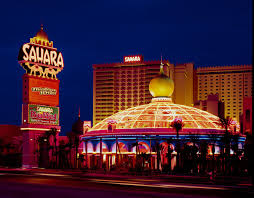
Whats the Mayor say about 24 hour casino’s in London?

Is London ready to have 24 hour Las Vegas type casinos?

Is London ready to have 24 hour Las Vegas type casinos?

Last Friday l put in my letter of objection to LBKC on the proposal of building a 24 hour casino on the lower grounds of the Holiday Inn behind Gloucester tube station along Cromwell Road, South Kensington.

After hearing local resident concerns late last year, l also put in some questions to the Mayor to find out where he stood on the issue but the response didn’t make things any clearer to me or to local residents.

Does the London Plan contain a specific policy which addresses proposals for casino development? The clear answer to this is that the Mayor’s London Plan does not include a specific policy for casinos

What London Plan policies are usually relevant during considerations of planning applications for casino development? Clearly some parts are relevant like entertainment uses; retail and related facilities & services but not directly.

Do any of the Supplementary Planning Guidance (SPG) documents include guidance which addresses proposals for casino development? The Town Centres SPG recognises casinos as a ‘main town centre use’ in line with the National Planning Policy Framework but clearly South Kensington is not a Town Centre but part of Central London so l am not sure how relevant that will be.

How many strategic planning applications which included a casino have you considered in your current term in office?  You would think he’s had to deal with the issue but clearly not yet so far making how this particular application is handle very critical for London as it will set a precedent.

Now l hear the Mayor is doing a SPG for Central Area Zone (CAZ) and wonder if it will cover the issue. My question to him on this front will hopefully give him the opportunity to assist the borough and its residents for the rejection of the application, as its sure to be pushed very hard by the backers of the casino, Genting UK.

Whilst l await his response to this question, its quite clear he’s not ready to respond to the challenged posed by this mega  24 hour casino down on Cromwell Rd as his much lauded London Plan doesn’t contain a specific policy which addresses proposals for casino development. Furthermore anything he puts in place through SPG may well be too late in the day as the big business interests behind the 24 hour Las Vegas will have to be dealt with immediately. And anyway as we know this Mayor doesn’t really put up a fight against them at all. So its highly likely then that he’ll be letting down the good folk of Kensington & the borough in their battle against the proposal.

Action needed to stop “scandal” of Londoners dying because they can’t afford to heat their homes

cold homes week

It is deeply worrying that the Mayor of London does not have a strategy for tackling fuel poverty despite entering office in 2008. With 5,405 households in Kingston-upon-Thames now living in fuel poverty. Cold Homes Week highlights the need for urgent action to get a grip on this silent killer.

The capital’s cold homes crisis is hitting an increasing number of families in Kingston-upon-Thames, with the latest Government figures revealing that 8.9% of households in the borough cannot afford to adequately heat their homes. Across London as a whole nearly 280,000 families now live in fuel poverty, unable to afford the cost of properly heating their homes. Analysis of ONS figures shows that on average between 2008 and 2013 cold homes were to blame for 853 excess winter deaths each year in London. That means that across the five year period 4,266 Londoners are estimated to have lost their lives as a result of cold and damp housing. In Kingston-upon-Thames 23 people are estimated have died each year from the effects of excess cold.

Despite fuel poverty levels in Kingston-upon-Thames remaining significant at 8.9%, there are concerns that energy companies are failing to meet their obligations to help make homes more energy efficient. The ‘Energy Company Obligation’, which was introduced in 2013, places a legal obligation on large energy companies to deliver energy efficiency measures to homes across the UK but thus far in Kingston-upon-Thames just 0.2% of households have benefitted from the scheme.

London Assembly Member, Murad Qureshi AM said an urgent Londonwide plan was needed to address the numerous factors contributing to and perpetuating fuel poverty in the capital.

With 23 people dying each year in Kingston-upon-Thames as a result of cold homes, the first step is to deliver a long-overdue strategy to address this silent killer. In a modern city like London it is utterly scandalous that people are still dying because they cannot afford to properly heat their homes.

London’s cost of living crisis and rising energy bills have seen many households in Kingston-upon-Thames plunged in fuel poverty. If he is to fulfill his promise to be a Mayor ‘for all of London’ then Boris must take immediate and tangible steps to protect the most vulnerable people in our city.

It is deeply worrying that, seven years into his mayoralty, Boris Johnson is yet to come up with a real strategy for tackling fuel poverty.

Hammersmith and Fulham’s ticket offices start to close this month

Bush Ticket office

I am condemning this month’s ticket office closure at Shepherd Bush which marks the start of a project to close several ticket offices across Hammersmith and Fulham. The move will leave passengers in Hammersmith and Fulham paying more money for less staff support.

The closure comes after it was revealed that the Mayor of London’s plan to close all the capital’s tube ticket offices will cost taxpayers almost £134m.  The cost is staggering and £134m of building works and ticket machines won’t make up for the loss of 897 station staff.

This month’s closure marks the start of a process to close ticket offices in 13 stations in Hammersmith and Fulham. The closures will also see almost 900 staff cut from London’s tube stations. I am particularly concerned about the impact the staff cuts will have on disabled and elderly passengers.

Amongst other things the £134m will fund additional ticket machines in 27 stations, four new customer receptions and the conversion of 181 ticket offices for other uses.

I am very concerned about the ramifications of this month’s ticket office closures. This argument isn’t about whether staff are based in ticket offices or not. It is about whether there are enough staff in stations to provide the good service people in Hammersmith and Fulham have come to expect, particularly the elderly and disabled who often rely more on station staff for assistance.

The truth is a staggering £134m of building works and ticket machines won’t make up for the loss of 897 station staff. No matter how user friendly a ticket machine is they cannot provide the same level of advice and customer service that staff could. Coming after tube fares were hiked for the seventh year running many passengers will wonder why they are being asked to pay more money for less staff support on their journey.

Heathrow spending down on the tubes

heathrowticketbarrier

If you like me have been wondering how much Heathrow Holdings Ltd  must be spending on the tube to market their expansion plans with adverts on bill boards and ticket barriers at Westminster tube station etc, please see the response l got from TfL on that very question.

The response reveals in the month of March 2013 alone, Heathrow Holdings spent £233,700. More recently in May £66,016 was spent and it had been kept at that level monthly up and till November. I will now have to find out what was spent in December 2014 and January/February 2015!

Lets hope its money going down the tubes for them!

Sub-prime is back with a vengenance

subprime

A good friend in the US told me to read and weep when reading the story the link to this Bloomberg story. He commented further by saying;

“Nothing new to observe that Wall Street, and finance capitalism in general, benefit from crisis.  That is why we will have more and deeper swings with less time to recover before each government bailout.  Savings and Loan crisis to Sub Prime was, what, 20 years?  Sub prime to this?  Seven?”

He adds

“There is a bit in it about how “this time it won’t end in disaster” as the issuers “will have skin in the game” as they will hold the riskiest tranches.  Yeah, that’s how they are going to get it past the regulators. I guarantee you, within 30 minutes of getting the green light, the issuers will figure out a way to shovel this shit out the door.  They won’t be stupid enough to call it a “credit default swap” this time.  “Inverse credit yield distribution,” might work and I can already see the AAA rating.  Whenever your read the word “credit” substitute “debt,” and suddenly everything is crystal clear.”

And finally

“Proprietary Trading” is another term cooked up to mean exactly the opposite of what it is and allow the regulators sleep in peace.  “Proprietary” implies that it is the “bank’s” own money.  And while technically it is “theirs” and they are the “proprietor” (can’t you just see the wise, cautious business owner?) it is also highly leveraged and essentially backed up with government insured deposits as these banks are too big to fail.  And then there is “trading.”  Isn’t “trading” that quaint thing that goes on down at the farmer’s market where the crusty local fishmonger haggles with you to unload his catch of the day?  Trade is a good, healthy thing, part of the multiplier effect that grows our economy, right?  When you read “proprietary trading” substitute, “Reckless market manipulation, creating unnecessary instability, often with varying degrees of insider knowledge, using taxpayer insured third party deposits.”

This is the same fellow who told me about sub prime mortgages in California many years ago on a trip to San Francisco and the dangers it posed to global financial markets. He was right than and l don’t doubt that he’s right again this time.


Ticket office closure at Queensway Station

"Queensway tube station" by Billy Hicks - Own work. Licensed under CC BY-SA 3.0 via Wikimedia Commons

“Queensway tube station” by Billy Hicks – Own work. Licensed under CC BY-SA 3.0 via Wikimedia Commons

Labour London Assembly Member Murad Qureshi has spoken out to condemn today’s ticket office closure at Queensway Station saying that passengers in Westminster will be paying more money for less staff support. The closure comes after it was revealed last week that the Mayor of London’s plan to close all of London’s tube ticket offices will cost taxpayers almost £134m. Murad Qureshi AM described the cost as “staggering” and said that “£134m of building works and ticket machines won’t make up for the loss of 897 station staff.”

The £133,925k funding to close 301 London underground ticket offices and install new equipment in ticket halls was detailed in papers for January’s TfL Finance and Policy Committee meeting. Alongside the ticket office closures, 897 staff are also set to be axed with many stations seeing significant cuts in their staffing levels. The plan to close of all the capital’s tube ticket offices comes despite the Mayor previously pledging to protect all ticket offices from closure.

Today’s closure marks the start of a process to close ticket offices in 31 stations in Westminster. The closures will also see almost 900 staff cut from London’s tube stations. Murad Qureshi AM has expressed particular concern about the impact the staff cuts will have on disabled and elderly passengers.

Amongst other things the £134m will fund additional ticket machines in 27 stations, four new customer receptions and the conversion of 181 ticket offices for other uses.

Murad Qureshi AM, London Wide Assembly Member, said:

I am very concerned about the ramifications of today’s ticket office closure. This argument isn’t about whether staff are based in ticket offices or not. It is about whether there are enough staff in stations to provide the good service people in Westminster have come to expect, particularly the elderly and disabled who often rely more on station staff for assistance.

“The truth is a staggering £134m of building works and ticket machines won’t make up for the loss of 897 station staff. No matter how user friendly a ticket machine is they cannot provide the same level of advice and customer service that staff could. Coming only weeks after tube fares were hiked for the seventh year running many passengers will wonder why they are being asked to pay more money for less staff support on their journey.”

Disquiet at MCC over star rating for election

MCClogo


The next AGM at Lords for members of the Marylebone Cricket Club (MCC) should certainly be an interesting affair, as we hear about dismay over the star rating of candidates in the Committee elections. Some are suggest that its synonymous to the ballot form being marked with stars to tell you how to vote in the elections and certainly not in keeping with the “spirit of cricket”.

Now starring of candidates in Committee elections is permitted by the Rules of the Club, but it has moved on from the practice of the 60s and 70s when the Committee used to star (i.e. recommend Members to vote for) all the vacancies when there were more candidates than vacancies.

The impact of giving a star to a candidate has been that he (or she) is virtually certain to be elected – of 53 candidates who have been starred in the history of Committee Elections 51 have been elected!

In recent years starring has been used rarely, if at all. In the past twenty years only three candidates have been starred for the specific skills that they would bring to the Committee table – Robert Griffiths QC in 2002 and Nigel Peters QC in 2004 (legal skills) and Tony Alt last year (finance). And in 2009 a Working Party on the Committee Election reinforced this practice by recommending that starring only be used ‘sparingly’ and in any event for no more than two candidates in an election.

What happens now is that Members are provided with more information about the candidates, together with 100 word statements by the candidate and by one of his or her supporters. This ought to provide for a fair election with a level playing field. Suddenly this year the Committee decided to star four candidates for four vacancies leaving three candidates on past form with little or no chance of being elected. In effect the Committee decided to fix the election.

There is a view that the unstated reason for doing this was to ensure that one or perhaps two of the un-starred candidates did not get elected on the grounds that they had opinions on the matter of ground development that run counter to the present Committee’s view. If so, this is doubly shocking, since to be healthy a Committee needs on it a wide range of opinions to enable it to debate and make good decisions.

It will not have escaped your notice too that this attitude towards what should be a democratic election has been taken by an organisation that owns and promotes the ‘Spirit of Cricket’ brand worldwide and ought to be an exemplar on such matters throughout the game and beyond.

The only remedy to this, in the view of many others, is to run a Resolution at the AGM that will force the Committee to re-run the election without the use of any stars. Thats is get rid of the star rating system altogether. This will surely make this year’s AGM of the MCC an eventual one as much as when it discussed accepting women as members for the first time.