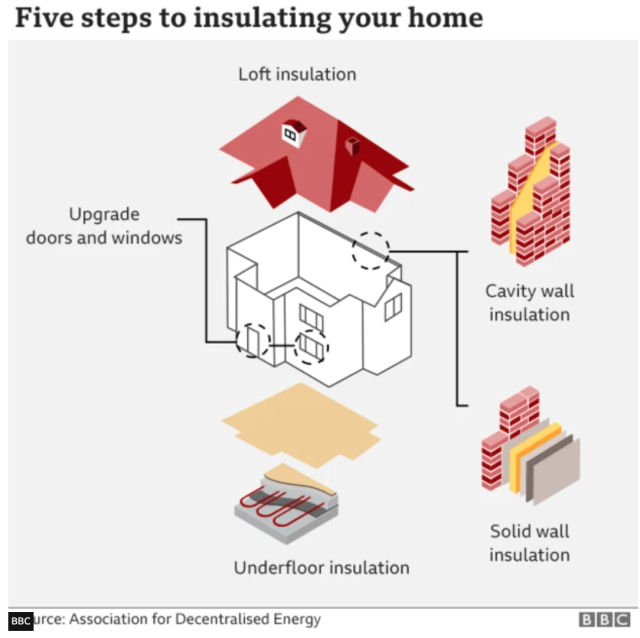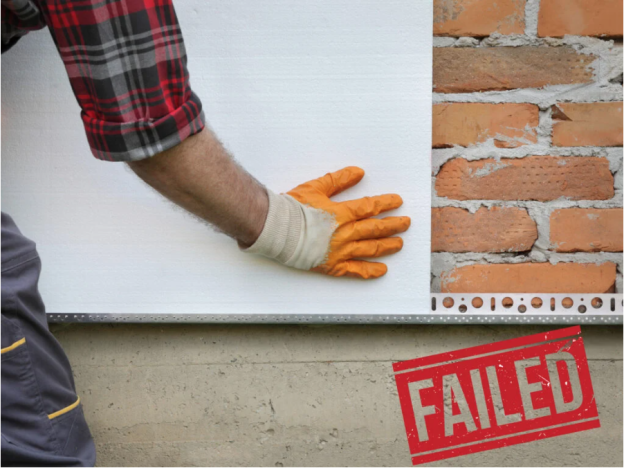
On the radio this morning we heard that recent audits and parliamentary investigations, particularly by the National Audit Office (NAO) and the Public Accounts Committee (PAC), have severely criticised UK government-backed home insulation programmes—specifically the Energy Company Obligation (ECO4) and the Great British Insulation Scheme (GBIS)—describing them as a “catastrophic failure” and a “broken system”.
Criticism of government insulation programmes in 2025 and early 2026 focuses on “systemic failures” that have left tens of thousands of homes with severe defects, including damp and black mould.
The primary criticisms involve:
1. Extreme Failure Rates
External Wall Insulation (EWI): A “damning” National Audit Office (NAO) report in October 2025 found that 98% of homes (approximately 23,000) that received external wall insulation under the Energy Company Obligation (ECO) scheme require remedial work.
Internal Wall Insulation: Roughly 29% of homes with internal insulation (up to 13,000 properties) also need significant repairs.
2. Poor Oversight and Design
Weak Regulation: Critics, including the NAO and consumer groups like Which?, blame “weak government oversight” and a “complex web of organisations” that allowed installers to “game the system”.
Unskilled Workforce: Substandard work is attributed to businesses “cutting corners” and using uncertified subcontractors who lacked the skills for complex materials.
Failed Protection System: The government-endorsed TrustMark scheme was criticised for failing to flag these issues until late 2024, after major media reports had already exposed the crisis.
3. Fraud and Financial Loss
Falsified Claims: Ofgem estimated that businesses may have falsified claims for as many as 16,500 homes, potentially defrauding energy suppliers of between £56 million and £165 million.
Cost to Homeowners: Some families have been left with unmortgageable properties or repair bills exceeding £100,000 for damages caused by botched work.
4. Health and Safety Risks
Severe Damp/Mould: The botched insulation frequently traps moisture, leading to “toxic” mould growth that has been linked to deteriorating health, particularly in vulnerable residents.
Immediate Hazards: About 6% of EWI cases posed immediate safety risks, such as blocked boiler ventilation or exposed electrical cabling.
The current government has described the situation as a “broken system” inherited from previous administrations. In January 2026, ministers committed to:
Remediation: Requiring original installers to fix all faulty solid wall insulation at no cost to the consumer.
Suspensions: As of January 23, 2026, 39 businesses have been suspended from government insulation schemes.
Reform: Establishing a new Warm Homes Agency to provide centralized oversight and simplify consumer protection