BRIEFING: Economic and Social Stagnation in the Church Street Ward
To: Relevant Stakeholders & Local Authority Leadership & Scrutiny Committee of the 5th of February 2026
Subject: Analysis of Economic Generation Failure and Public Realm Management
Date: February 4th, 2026
1. Executive Summary
Church Street Ward remains one of the most starkly deprived areas in the City of Westminster, characterised by a persistent “regeneration gap.” Despite numerous masterplans, the area continues to suffer from a lack of economic vitality. This is most visible in the decline of the Church Street Market, the fragmented retail offer on Edgware Road, and the chronic under-management of Broadley Street Gardens. The symbolic epic centre of this inertia is the former public toilet block on Church Street, which has remained vacant for over five years despite repeated attempts to convert it into a coffee shop—a microcosm of the ward’s inability to attract and sustain small-scale commercial investment.
2. The Church Street Market: A Declining Anchor
Once a thriving hub of antique trade and fresh produce, the Church Street Market is currently experiencing a dangerous loss of economic momentum.
Occupancy & Curation: Large sections of the market are plagued by empty pitches. A recent 2025/26 Scrutiny Committee report highlighted that these gaps encourage antisocial behaviour and dilute the market’s “draw” for visitors from more affluent neighbouring wards.
Logistical Failures: Traders continue to cite inadequate storage and van parking as primary barriers. While the “Site A” regeneration promises infrastructure upgrades by 2030, the “meanwhile” period is seeing a hollowing out of the traditional trader base.
Economic Disparity: With an average annual income of £27,000 compared to the £56,000 seen in nearby Marylebone, the market lacks the local purchasing power to sustain higher-margin stalls, yet fails to provide the curated “destination” appeal required to bring in external spend.
3. Edgware Road: The Marylebone-Maida Vale Dead Zone
The stretch of Edgware Road between the Marylebone Flyover and Maida Vale acts as a physical and economic barrier rather than a gateway.
Retail Fragmentation: Unlike the southern “Little Cairo” end of Edgware Road, this northern stretch suffers from high turnover and “low-value” retail (betting shops and transient electronics stores).
The Flyover Effect: The Marylebone Flyover creates a hostile pedestrian environment. Plans for a “green corridor” and “rain gardens” remain largely theoretical, leaving the street sparse, polluted, and uninviting.
Anti-Social Behaviour (ASB): Recent placemaking strategies (2024-2025) note that community seating—vital for retail footfall—is frequently opposed by residents who fear it will attract street drinking and drug use, creating a “catch-22” where the street cannot be made welcoming enough to support new business.
4. Broadley Street Gardens: Maintenance vs. Reality
Broadley Street Gardens is intended to be the “Green Spine” of the ward, yet its current management reflects a disconnect between council targets and resident experience.
Maintenance Deficit: While Westminster reports high “grounds maintenance” satisfaction scores (95%+), the actual state of Broadley Street Gardens often tells a different story of litter, poorly maintained play equipment, and aging infrastructure.
Management Silos: The division of responsibility between Pinnacle (cleaning/grounds), Continental Landscapes, and the Council’s tree teams results in a “not my job” culture regarding minor repairs and holistic care.
Safety Concerns: Poor lighting and overgrown shrubbery have led to the gardens being perceived as unsafe after dark, further reducing the “public value” of the ward’s limited green space.
5. The “Toilet Block” Symbolism: A Case Study in Failure
The most damning indictment of the ward’s economic paralysis is the old public toilet block.
The 5-Year Void: For over half a decade, this site has been touted as a prime opportunity for a “boutique coffee shop.”
Lease Paralysis: Similar to the Broadwick Street toilets in Soho, lease agreements (including those with potential operators like “Lift Coffee”) have repeatedly stalled. By 2025, the site was again being marketed “on behalf of the Council” after previous deals “went down the pan.”
Implication: If the Council cannot successfully let a small, high-visibility unit in a “regeneration zone” after 60 months of trying, it signals to the wider market that the ward is too high-risk for independent entrepreneurs. It reflects a terminal lack of agility in the Council’s property department and a failure to de-risk the area for small businesses.
This when other coffee shops in the neighbourhood have been successfully launched like Irene on Bell Street and SipSlow along Lisson Grove.
6. Recommended Next Steps
To break this cycle, the Council must move beyond “2030 visions” and focus on immediate tactical urbanism:
- Direct Intervention on the Toilet Block: Offer a “rent-free” period or a “pop-up” license to a local social enterprise to prove the site’s viability.
- Market Curation: Move from a “first-come, first-served” pitch model to a curated approach that incentivises quality and provenance.
- Broadley Street “Deep Clean”: Consolidate garden management into a single, accountable “ward warden” team rather than fragmented contractors and moving towards Green Flag accreditation.
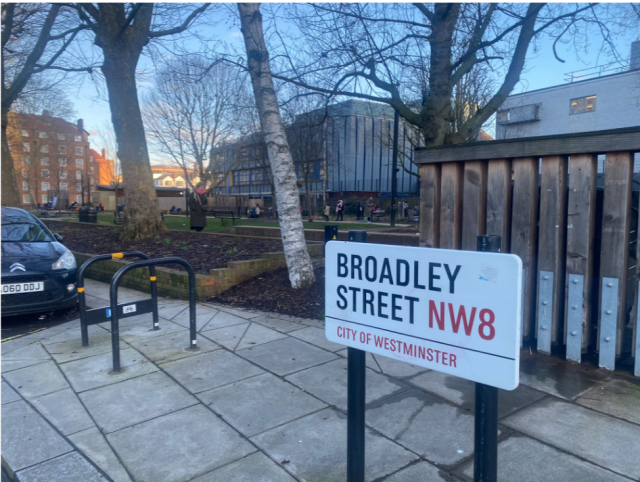
When will Broadley Street Gardens ever get accredited with a Green Flag?