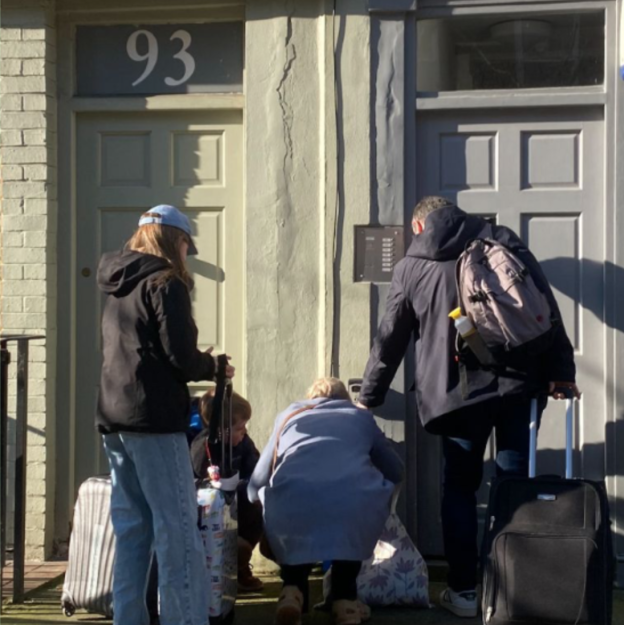
One of the major bonuses for London in the last budget was the Tourist Tax for the major cities of the UK. The question which immediately arises is how that new Tourist Tax is apportioned between the Regional government and their local councils. Now the impact of tourism on Central London councils is a complex “balancing act.” While tourism is the lifeblood of the local economy—generating £95bn in economic output (GVA) in Westminster alone—it creates significant “hidden costs” that councils often struggle to fund. So we need a breakdown of the impact across various sectors.
Most stay in hotels but increasingly in short term lets (STLs) as well. There is of course a massive disparity in how these two types of accommodation hotels and short-term lets (STLs) contribute to council coffers. Hotels are major contributors to local finances through Business Rates. They are regulated, provide predictable employment, and generally manage their own waste and security within their premises. While STLs on platforms like Airbnb have created a fiscal headache. Many STLs operate under the threshold for business rates and pay only standard Council Tax (or nothing if they are “hollowed out” secondary homes). In London, it is illegal to let a whole property as an STL for more than 90 nights a year without planning permission. However, 2025 data shows that over 50% of STLs in Westminster consistently breach this limit. Councils like Westminster City Council spend significant resources on “digital detectives” to track down illegal lets, as platforms have historically been slow to share data, thus in enforcement costs.
The most severe impact of tourism on councils is the depletion of the Private Rented Sector (PRS). Supply Depletion: In 2025/26, roughly 1 in 32 homes in London are used as short-term lets. In Central London boroughs like Westminster and Kensington & Chelsea, this ratio is much higher. So because so many long-term rentals have been converted into more profitable STLs, councils have fewer places to house homeless families. London councils currently face a £740 million annual shortfall in spending on temporary accommodation. This forces councils to move residents further away from their communities, increasing social care and transport costs.
Central London councils bear the brunt of maintaining the “stage” for the UK’s tourism industry without receiving a direct cut of the VAT generated. The operational pressures of the “tourism premium” can be outlined as below across services in Waste & Cleaning; Noise & Anti Social Behaviour;
| Impact Category | Local Council Responsibility | The Tourism Strain |
| Waste & Cleaning | Street sweeping and bins. | Enormous footfall in the West End requires near-constant cleaning. |
| Noise & ASB | Environmental Health teams. | High volumes of complaints from residents living next to “party flats” (STLs). |
| Public Realm | Paving, lighting, and signage. | High wear-and-tear on infrastructure that residents ultimately pay to fix. |
| Policing | Local safety teams. | Managing night-time economy crowds and tourist-targeted crime (pickpocketing). |
Therefore, one major indicator for the apportionment of the new Tourist Tax, would have to be the combined nights tourist ( serviced and short-term) sleep in the varies boroughs particularly in Central London where most tourist stay and use the facilities of London predominately serviced by the local councils.
Obtaining the figures of occupancy of hotels and short-term lets, would suggest the following apportionment to local councils, judging by where the tourists stay in Greater London.
| Borough | Combined nights (serviced + short-term) | % of London total |
|---|---|---|
| Westminster | 44,780,140 | 26.93% |
| Camden | 20,995,119 | 12.63% |
| Kensington & Chelsea | 17,632,432 | 10.60% |
| Hillingdon | 11,506,260 | 6.92% |
| Tower Hamlets | 7,857,709 | 4.73% |
| City of London | 6,686,811 | 4.02% |
| Southwark | 6,423,939 | 3.86% |
| Newham | 5,323,306 | 3.20% |
| Hammersmith & Fulham | 5,070,381 | 3.05% |
| Lambeth | 4,719,194 | 2.84% |
| Hounslow | 4,332,421 | 2.61% |
| Islington | 4,019,968 | 2.42% |
| Croydon | 2,854,003 | 1.72% |
| Brent | 2,680,775 | 1.61% |
| Ealing | 2,522,684 | 1.52% |
| Greenwich | 2,268,916 | 1.34% |
| Hackney | 2,132,638 | 1.26% |
| Richmond upon Thames | 1,905,422 | 1.15% |
| Barnet | 1,640,281 | 0.99% |
| Wandsworth | 1,548,031 | 0.93% |
| Redbridge | 1,439,010 | 0.87% |
| Kingston upon Thames | 1,341,819 | 0.81% |
| Enfield | 868,597 | 0.52% |
| Harrow | 795,481 | 0.48% |
| Waltham Forest | 675,882 | 0.41% |
| Merton | 639,691 | 0.38% |
| Havering | 637,748 | 0.38% |
| Bexley | 632,464 | 0.38% |
| Bromley | 626,011 | 0.38% |
| Barking & Dagenham | 624,069 | 0.38% |
| Lewisham | 493,820 | 0.30% |
| Haringey | 359,560 | 0.22% |
| Sutton | 266,054 | 0.16% |
Now let us see how the negotiations go between the Treasury, London Councils & the GLA go now for the 2026/27 contribution of this new tax on Tourists in London, to the services of local government in Central London. These percentages in the above table would be useful starting points for discussion. The percentages along for Central London boroughs make their case quite clear to all.