The UK government, under the current administration, has significantly updated the roadmap for energy efficiency in the rental sector. The primary goal is to shift the minimum standard from the current Band E to Band C to reduce fuel poverty and carbon emissions.
As of early 2026, here are the key proposed changes and the expected timeline:
1. The Core Requirement: EPC Band C
The government is proposing that all privately and socially rented homes must achieve an Energy Performance Certificate (EPC) rating of C or equivalent. This replaces the previous administration’s decision to scrap such targets and forms a core part of the “Warm Homes Plan.”
2. Implementation Timeline
The transition is planned to be phased to allow landlords time to budget for upgrades. So from 2028, all new tenancies must meet the EPC C requirement.
By 2030, all existing tenancies (regardless of when they started) must meet the EPC C requirement.
3. The 2026 EPC Reform
A major overhaul of the EPC system itself is scheduled for the second half of 2026. The way “efficiency” is calculated is changing:
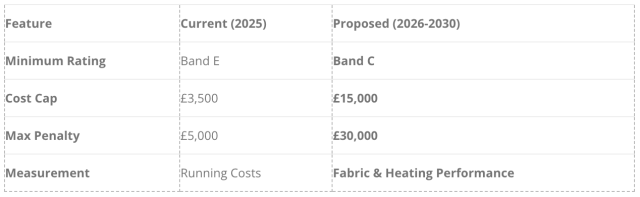
From Cost to Performance: Instead of measuring how much it costs to run a home (which often favoured gas over electricity), the new system will focus on fabric performance (how well the building retains heat) and heating system efficiency (prioritising low-carbon options like heat pumps).
Dual Metrics: Landlords will likely be assessed on a “Fabric First” approach, ensuring insulation and windows are upgraded before moving to high-tech heating solutions.
4. Financial Caps and Penalties
To prevent “unlimited” costs for landlords while ensuring compliance, the following thresholds are proposed:
Increased Cost Cap: The maximum amount a landlord is expected to spend on energy improvements is set to rise from the current £3,500 to £15,000 (inclusive of VAT).
New Exemptions: If a landlord spends £15,000 and the property still doesn’t reach Band C, they can apply for a 10-year exemption.
Stricter Fines: Penalties for renting out a non-compliant property are proposed to increase from £5,000 to up to £30,000 per property.
5. Support: The Warm Homes Plan
To help with these costs, the government has introduced the Warm Homes Plan, which aims to offer grants and low-interest loans for insulation and low-carbon heating. This is intended to mitigate the financial impact on smaller landlords and prevent them from exiting the market.