Category Archives: News

If Mexico City can do it, why not in London?

If we can have hanging gardens under elevated highways in Mexico City, l can not see why this can not also be done under the #Westway in West Central in places like  under the Marylebone Flyover ? If Mexico City, can do it, why not London? 

For some time, l have not been able to get figures of air pollution coming from the Westway into Paddington. This includes not getting figures not only when the Westway goes through the City of Westminster but also Royal Borough of Kensington & Chelsea whilst we have monitoring stations on the side of the Westway when going through the London Borough of Hammersmith & Fulham. This is by far the biggest highway into Central London with many HGVs from the West coming into Central London via this route. Some efforts have been made on this front, albeit not enough with the green wall along the side of the Edgware Rd Tube station (Bakerloo line).  

This image is more than an urban design project. It’s a reminder of how progress can be redefined. Mexico City didn’t tear the highway down. It didn’t wait for perfect conditions.
It transformed what already existed into something that gives back. That’s a powerful lesson for business and leadership. True innovation isn’t always about building something new.

Often, it’s about rethinking what’s already there and asking a better question:
Can this system create value beyond its original function?

In business, the same principle applies. Yet we have not heard anything from TfL in this respect of what its doing on the Westway apart from the urgent repairs.  Yet it suggests reducing air pollution is a core to its business now. Sustainable growth comes from integrating responsibility into the core not treating it as a side initiative.
In business, the same principle applies.


So when infrastructure cleans the air, when strategy serves both performance and people, efficiency and ethics stop being opposites.

That’s not idealism. That’s long-term thinking for you. 

Sylheti – dialect or language?

It is very funny that in all my trips to Sylhet, Bangladesh since 1971, l have never seen Sylheti Nagari script. There are plenty of signs in Bangla and English but never in the Sylheti Nagari script. And yet the first time, that l had seen it was in London at the front entrance of Channel S studios in Walthamstow. 

First of course, we have to acknowledge that Syloti is a separate language in itself and not a dialect of Bangla, as it often thought. It is an Eastern Indo-Aryan language spoken mainly in the Sylhet region of Bangladesh, and the neighbouring Barak Valley in the Indian state of Assam. 

It has 33 characters ( 5 vowels and 28 consonants) when compared to 51 of Bangla, and uses very few conjuncts characters. 

So it is clear Sylheti is linguistically independent with its own sound system including tones absent in Bangla and a grammar and morphology diverging from standard Bangla. Quite simply dialects don’t evolve their own scripts but languages do. 

It is thought that the Nagri language came with the companions of Shah Jalal who invaded Sylhet in 1303 AD and the language emerged a couple of centuries afterwards. The language is closely related to Bangla and most speakers are bilingual in Sylhoti and Bangla. 

Finally a trip to the studios of Channel S, is worth it just to see the Syloti script and the history of the region. All credit goes to them for putting all this history up on panels in their reception area. It beats going to a dusty further education library to see it all. 

Impact of EPC on property market in the UK

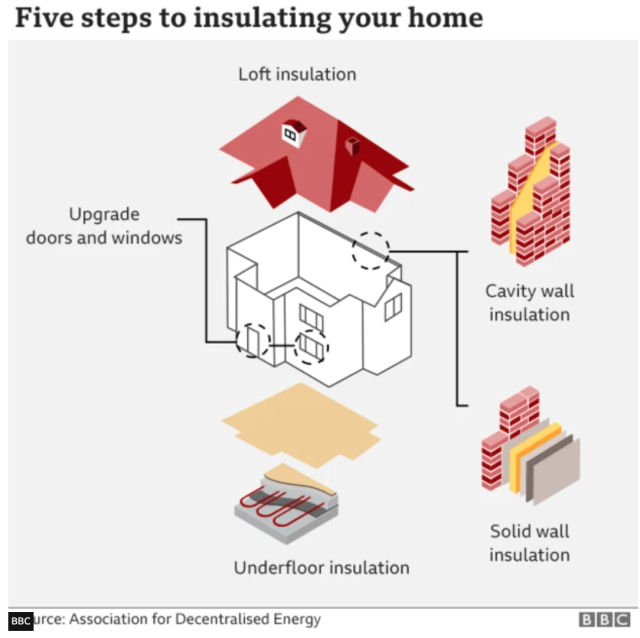
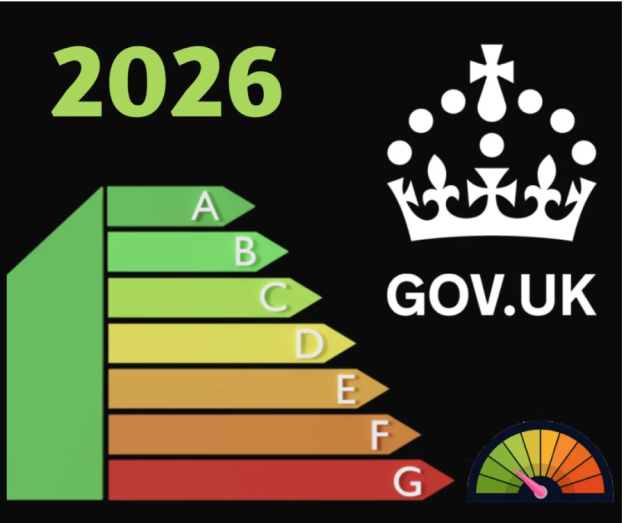
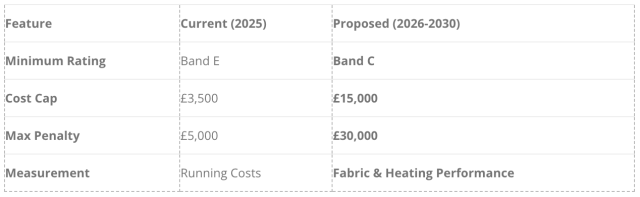
An Energy Performance Certificate (EPC) in the UK rates  a property’s energy efficiency from A (most efficient) to G (least efficient), showing potential fuel costs and carbon emissions, and is required when selling, renting, or building a home. It provides a visual rating, similar to a fridge’s sticker, plus recommendations for improvements, like better insulation or efficient lighting, with potential cost savings, and is valid for 10 years.

So the EPC shows Energy Efficiency Rating with a letter grade from A (best) to G (worst) based on the building’s fabric and services. And on the energy use front, the estimated energy consumption and costs.

The improvement recommendations have specific, cost-effective ways to boost efficiency, with potential ratings and savings listed. So you may need one when selling a property; when renting out a property (as a landlord) and when a new building is constructed. This whilst an EPC is valid for 10 years.

So its purpose it quite clear, to help prospective buyers or tenants understand running costs and environmental impact and its a legal requirement – Failing to get one when required can lead to fines.

The question then to be asked is whether EPC  has any impact house prices, indicating the housing market responds to the energy efficiency and climate change matters? 

There is growing evidence that the Energy Performance Certificate (EPC) rating of a property in the UK does tend to be reflected in its price. That said: how much it matters depends a lot on context (location, property type, buyer priorities, etc.). Here’s a breakdown of what research and market data show, and where the limits lie.

Why and when do EPC tend to affect property price needs to be asked. Here  a large-scale academic study — tracking over 333,000 dwellings sold more than once — found a positive relationship between energy efficiency (as measured by EPC rating) and sale price per square metre. The effect was especially noticeable for flats and terraced houses.

For Wales , a recent study of ~192,000 transactions showed that homes rated in bands A/B had a ~12.8% premium, and C-rated homes ~ 3.5% premium, compared with D-rated homes. Meanwhile, homes in poorer bands (E, F) carried statistically significant discounts (–3.6% and –6.5% respectively).

More recent analyses confirm the trend: a report by Oxford Economics (2024) finds that buyers are willing to pay on average ~ 3.4% more for a high efficiency home (A/B) compared with D-rating, and expect discounts for poor-performing houses.
Real-world market analyses show similar size effects: according to one survey, improving a property’s EPC from a low band to a higher one could add ~£13,000 in value on average, all else being equal.

In short: energy efficiency (and thus lower running costs) appears to factor into what people are willing to pay. This makes sense: lower bills and more modern, efficient homes tend to be more attractive — especially in the context of high energy prices or environmentally conscious buyers.

But it’s not the only or always the main factor, as the same research shows that other variables often dominate price — location, size, property type, local amenities, market conditions. EPC is often a secondary factor. The premium or discount attributable to EPC also tends to shrink when you move within the middle bands (e.g. C vs D) as opposed to the extremes (A/B vs E/F).

Some research and industry commentary emphasise uncertainty or variability: improvements needed to bump an EPC rating (insulation, heating upgrade, etc.) can be costly — so not every buyer will pay a premium high enough to reflect those costs.

For certain markets (older properties, rentals, or where EPC isn’t heavily considered), the “green premium” may be weaker or negligible.

So if you’re buying or selling: EPC is a real factor, especially in the current market where energy costs and environmental awareness influence buyer behaviour. Improving EPC rating (or buying a property with good EPC) can reasonably expect a price benefit, though exact numbers vary.

If you own a property rated low (e.g. E, F, G), you may see a discount relative to similar homes with better ratings. Conversely, investing in insulation, heating improvements, or other eco-upgrades may yield a respectable return — but only if potential buyers value those improvements.

If you’re a landlord or investor: the importance of EPC is rising, especially as regulation and tenant demand push for energy-efficient homes. Good EPC could make a property more attractive to renters, and may also support a higher resale value when you come to sell.

The wider context tells us the size of the premium depends heavily on region, type of dwelling, and what raters have assumed about the property’s structure. For instance, flats and terraces tend to show stronger EPC-price correlations than detached houses. So caveats need to be made. 

The research for Wales suggests that discounts for low-EPC homes are statistically significant, but not always massive — meaning other features (floor plan, location, condition) still matter a lot.

So not all homes with high EPC will sell at premium — and EPC isn’t always the deciding factor. Buyers may prioritise other factors (neighbourhood, size, layout, condition) especially if energy cost savings don’t offset the price difference.

All properties in the UK have EPC. To what extent do they affect the house prices, if at all?

All properties in the UK have EPC. To what extent do they affect the house prices, if at all?

The death of the Car Club in London

One of the immediate costs of Britain’s big experiment with taxing EVs  has been the loss of one of the big car club operators – ZipCar. It is currently in the process of ceasing all its UK operations by the end of December 2025 with bookings will be suspended beyond December 31, 2025.

The decision to withdraw from the UK market was influenced by several factors, including rising operational costs and the introduction of a new daily congestion charge for EVs in London starting in January 2026, and which would have increased prices for customers almost immediately and then we would have the tax of electric vehicles by mileage to help offset a fall in fuel duty from petrol cars, in April 2028, nationally.

This when London has the largest car club market in the UK with a significant fleet and membership of 250,000. Many of us who sold the car and took to cycling, joined these car clubs to have the safety of knowing there was a car always available around the corner for the odd car trip, with our car club membership. Alas this will no longer be the case certainly in London, as l work out how to do the trip to visit my mum on Christmas day without public transport and a car now, as it is too far away to be done by cycling. Clearly being multi-modal has its limits. 

Solar power booming in the UK

So far in 2025, the UK has experienced record-breaking solar panel installations and solar energy generation, driven by high energy prices and government incentives.

Some Key Statistics for 2025

Installations: Over 120,000 certified solar panel systems were installed in the first six months of 2025, a 36-37% increase compared to the same period in 2024. Nearly 100,000 of these were domestic systems.

Total Capacity: As of April 2025, the UK had a total operational solar capacity of 18.1 GW across approximately 1,780,000 installations.

New Capacity Added: The UK is expected to add between 3 GW and 3.5 GW of new solar capacity in 2025 alone. Over 2 GW of new capacity was completed in the first half of the year, a record start to the year for a decade.

Energy Generation: The first half of 2025 saw record solar generation of 9.91 TWh, a 32% rise. Solar energy accounted for 11.6% of UK electricity generation in May 2025, a record monthly share.

Market Share: Around 1.6 million homes in the UK now have solar panels, representing about 5.5% of households.


The surge in installations is attributed to:

Lower energy bills: Solar panels can significantly reduce household electricity costs.
Government Initiatives: Schemes like the Future Homes Standard (making solar mandatory on new homes from 2027) and the 0% VAT rate on installations have made renewable technology more accessible. The government also published a “Solar Roadmap” in June 2025 to accelerate deployment.

Falling Costs: The average cost per kW of a home solar installation has been trending downwards since mid-2023.

Energy Independence: Homeowners and businesses are increasingly seeking ways to achieve energy independence and protection from volatile energy prices.

Conclusion 

For a typical 4kW residential solar panel system in 2025, the average installed cost is around £6,500. Prices can vary based on system size and location, generally ranging from £3,000 to £25,000. For more information on solar panel installations and potential savings, visit the Energy Saving Trust. Official data and statistics on solar deployment are available from GOV.UK.

Ukraine War & impact on Energy bills

The Russia-Ukraine conflict spurred a global energy crisis, leading to significant price surges. As a result we are entitled to ask ourselves, when the Ukrainian War ends to our energy bills. 

In short, if the Ukraine war ended, oil prices would likely come under downward pressure fairly quickly (more supply, weaker risk premium), but European gas prices would probably fall much less — and slowly — because Europe has already diversified away from Russian piped gas and political, contractual and infrastructure limits make a rapid return unlikely. The UK would see some relief in wholesale prices over months, but household bill changes would depend on contract timing and policy.

So whats the mechanics of it all? Oil is a globally traded commodity. An end to hostilities that leads to easing of sanctions (or higher Russian exports) instantly increases expected future supply and removes a “risk premium” priced into oil — this pushes global oil prices lower. Markets often price this in before/while talks proceed.

Gas is more regional and infrastructure-dependent. Europe’s ability too rapidly take large volumes of piped Russian gas depends on pipelines, contracts and political will — all of which are constrained. Europe has rebuilt supply diversity (LNG, pipeline re-routing, storage, demand reduction, renewables), so a peace deal doesn’t automatically restore the pre-2022 gas flows. That mutes the price reaction for European gas relative to oil.

As for LNG & global gas markets, any incremental Russian volumes that reach the market (pipeline or seaborne) would ease global LNG tightness, lowering spot LNG prices and feeding into European TTF over time — but timing is phased and depends on how Russia decides to sell and which buyers accept those volumes.

So with these global market mechanics in mind, we have three realistic scenarios (and their likely price outcomes)

In the first scenario, of fast full reintegration as sanctions eased. That is Western sanctions on Russian energy are rapidly eased, Russian oil and (to a lesser extent) gas flows return to pre-crisis channels with OPEC & Russia possibly coordinate, their response. 

The likely impact for oil is a noticeable fall in oil prices (removal of risk premium + extra volumes). With gas, there would be some downward pressure globally, but modest in Europe because pipeline reversals and acceptance by buyers take time. In short, we would have short-term market swings and the medium term depends on OPEC reaction. The market commentary already shows oil softening when peace talks progress.

The second scenario, is a partial unwind / ceasefire with limited trade normalisation. Here the fighting stops or reduces with limited relaxation of trade, but most sanctions or buyer reluctance remain. Russia sells more crude to discount markets (ie traders/third parties) but big European flows stay low. The likely impact here is oil modestly lower (some extra supply, but not a full restoration); European gas largely unchanged or slightly down — LNG supplies and storage remain main drivers. This is the most probable immediate outcome.

With a ceasefire only and political obstacles persist, the hostilities pause but sanctions and political barriers to buying Russian gas/oil remain. Russia may sell into distant markets but not reverse Europe’s diversification. As the likely impact here is oil may dip on sentiment but quickly stabilise; European gas barely changes — prices continue to reflect LNG flows, storage and weather. This is plausible and consistent with analysts saying Europe won’t quickly reverse course.

Globally oil markets will have the strongest and fastest impact. Prices will generally fall if the war ends and sanctions ease because global supply expectations rise and risk premia shrink. Though the magnitude is uncertain as markets will also react to OPEC+/Russia policy, as they may cut prices production to defend prices. Recent trading shows oil already sensitive to peace-talk headlines. Globally the gas / LNG market effect is slower. Additional Russian seaborne gas/LNG would ease global LNG tightness and lower spot LNG prices; but re-routing and commercial acceptance take time.

Europe

Wholesale gas (TTF hub in Netherlands) prices are likely only modestly lower in the near term. Reasons being 

(a) Europe has diversified (LNG, inter-connectors),

(b) pipeline infrastructure (Nord Stream) was damaged or politically unusable,

(c) many buyers and governments have explicit policy against resuming dependence.

This while storage levels and weather are still the dominant short-term drivers. The market reaction to peace-talk headlines has already been modest.

The wholesale electricity market follows gas but with lag, so power prices should soften if gas weakens materially.

As for industry and competitiveness, cheaper oil does reduce transport/fuel costs globally. Whilst lower gas helps energy-intensive industries if wholesale falls persist.

United Kingdom

What will happen here in the UK? Wholesale prices, would likely trend down if global oil and (to a smaller extent) LNG soften. The UK is part of the integrated European gas & power system, so a sustained fall in European wholesale would reach UK markets.

As for household bills, pass-through will depend on when fixed contracts roll, the price cap mechanism, and government interventions. So consumers won’t see an instantaneous proportional cut. A UK parliamentary briefing shows wholesale falls feed into price cap decisions with a lag.

Whilst sentiment moves fast, the fundamentals take months. Oil often reacts quickly to news; while gas in Europe is governed by physical constraints and storage, so the real effects are slower.

Yet policy & politics matter. Even if the war ends, political reluctance in the EU/UK to resume old energy ties (or conditions attached) would limit flows — that’s a key reason gas prices probably won’t crash back to pre-2022 levels. So consumers: expect gradual, not instant, bill reductions — check the timing of fixed tariffs and the Ofgem price cap cycles as well. 


So the likely timeline of impact is immediately in the days and weeks ahead, oil reacts down on optimism while gas reacts limitedly. In the short–medium – (1–6 months) – if sanctions/flows change materially, oil settles lower while LNG flows and contract resales gradually lower global gas prices.

Whilst in the medium–long (6–24 months): structural change dependent on formal trade normalisation and infrastructure (contracts, pipeline repairs, new shipping routes). Here Europe is likely to continue its diversification measures, so gas prices may not revert fully to old norms.

Finally the quick policy and market implications for businesses would be if your an energy-intensive industries you’ll have to monitor forward curves and LNG availability and consider hedging if you expect gradual price decreases but high near-term volatility. 

Budget 2025 – Energy bill measures

Budget 2025 introduced a shift of environmental and social levies from household energy bills to general taxation. This measure is expected to reduce typical dual-fuel bills by around £134–£154 from April 2026. Several alternative measures were proposed during debate but not adopted.

VAT on Domestic Fuel

A reduction or abolition of the 5% VAT rate would deliver an immediate and visible reduction in bills. However, the measure has substantial fiscal costs (estimated in the low billions annually) and is poorly targeted, with higher-income households receiving the same benefit as lower-income households. Additionally, the measure has a one-off price impact rather than improving structural affordability. For these reasons, the option was rejected.

Curbing Excess Profits / Windfall Tax Expansion

Further windfall taxation or direct interventions to cap supplier profits were considered. Such measures could generate revenue and respond to public concern, but they do not translate directly into lower retail prices because Ofgem’s price cap is cost-reflective. Additional taxation also risks deterring investment in network infrastructure and new generation capacity. Given the need for long-term stability, this was not pursued.

Reforming Ofgem’s Price-Cap Methodology

Proposals included amending standing charge calculations and altering how wholesale costs are passed through. While reforms may have merit, Ofgem’s methodology is technically complex and changes require extensive consultation. Rapid alterations risk destabilising the supplier market, as seen during the 2021–22 market failures. Government therefore maintained regulatory independence and avoided immediate structural changes.

Energy-Efficiency Schemes and Levy Reform

The Budget reallocates the cost of green levies to general taxation, improving fairness for low-income households who spend a higher share of income on energy. The government cited past delivery failures under ECO and committed to simplified, taxpayer-funded alternatives. Well-targeted efficiency programmes remain the most effective means of delivering durable reductions in household energy costs.

Conclusion

The government prioritised fiscal stability, structural fairness, and long-term regulatory predictability. Alternative measures each carry material drawbacks: VAT abolition is costly and poorly targeted; expanded windfall taxation risks investment; and rapid price-cap reforms risk market instability. Well-designed efficiency programmes represent the most sustainable path to lower bills.

Budget Day – impact on refurbishment & retrofit works

As today is the long anticipated Budget Day to be undertaken by Rachel Reeves, Chancellor of the Exchequer, we are entitled to ask what is the impact of VAT on refurbishment and retrofit works and what is the Budget is likely to include based on recent speculation and government direction? 

VAT Impact on UK Refurbishment & Retrofit Today

The Problem is the standard VAT rate on most repair, maintenance, and general renovation work remains at 20%. This is the core issue that industry groups (like the Federation of Master Builders) have campaigned against for years, as it creates an incentive to demolish and rebuild (which is zero-rated) rather than to retrofit. The 20% VAT is still a barrier clearly. 

Energy-Saving Materials (ESMs): Zero-Rated (0% VAT)

The installation of most Energy-Saving Materials (ESMs)—including insulation, heat pumps, and solar panels—is currently zero-rated (0% VAT). The current status of this relief was put in place until March 31, 2027, and directly benefits energy-efficiency retrofitting. It covers both the labour and the materials when installed by a contractor.

Rachel Reeves’ Budget: Signs on VAT and Retrofit

There are strong indications that Chancellor Rachel Reeves is focusing her Budget not on a broad VAT cut for all refurbishment, but on targeted financial support and adjustments to energy pricing mechanisms to reduce bills and promote retrofitting.

Key signs & speculation of the focus will be on subsidies over broad VAT cuts. The government has repeatedly stressed fiscal responsibility. A blanket cut to 5% VAT on all general renovation (dropping the 20% rate) would be a massive, expensive change that could be seen as breaking the party’s manifesto pledge not to raise the main rates of VAT (though a cut wouldn’t break the pledge, it costs revenue).

The government’s core strategy for greening homes, the Warm Homes Plan, has been focused on direct funding and subsidy schemes (like the Boiler Upgrade Scheme and insulation grants), which can be precisely targeted towards low-income and fuel-poor households.

There is strong speculation that the Chancellor is looking at measures to move environmental levies (like those funding clean energy and some efficiency schemes) off household electricity bills and into general taxation.

This would immediately make electricity cheaper relative to gas, making the running costs of heat pumps (a key retrofit technology) much more attractive and helping to drive the transition away from gas boilers. This is viewed by some as a more effective, structural way to encourage electrification than a broad VAT cut.

At the same time targeted adjustments to Existing Schemes. Reports suggest the Chancellor may be restricting eligibility for certain subsidies, such as the Boiler Upgrade Scheme (for heat pumps), so that they are more focused on households receiving benefits or with lower incomes, in a move to make the funds stretch further and target those in greatest need.

Conclusion on VAT for Refurbishment

While many industry experts (and the construction sector) continue to lobby the Chancellor to scrap the 20% VAT on all labour for refurbishment to genuinely “level the playing field” with new builds and meet climate targets, the current focus is on:

  1. Maintaining the 0% VAT on specific energy-saving materials (like heat pumps and insulation).

  2. Using direct grants/subsidies for deep retrofitting.

  3. Making structural reforms to electricity pricing to encourage the switch to low-carbon heating.

Londoners deserve a “Freezing of Fares” as well

After the Chancellor froze train fares today in her long awaited budget speech for the rest of the country, there is a very good of the same happening in London as well. 

Now the simplest interpretation of this would be TfL keeps fares at current levels rather than implementing the planned 3.6% rise.

A transparent back-of-the-envelope calculation on what a TfL fare freeze would roughly cost begins with TfL passenger (fare) revenue was £5.0 billion in fiscal 2024/25. (This is TfL’s passenger revenue level reported in recent finance material / credit commentary).

Here the calculation would be Passenger revenue × planned increase = cost of not taking that rise. That is  £5,000,000,000 × 0.036 = £180,000,000. So its approximately £180 million per year (rounded) of foregone revenue if passenger revenue is £5 billion and the avoided increase is 3.6%. A useful comparator here is when the Mayor previously identified £123m of GLA funding to freeze fares for a year in an earlier package. 

Alternatively, if TfL instead matched a higher national rail-style freeze (say 4.6% which applies to some regulated fares), and you conservatively treat the whole passenger base as affected by the calculation £5,000,000,000 × 0.046 = £230,000,000. So we have approx £230 million per year in lost revenue in that (pessimistic) case.

Some caveats will of course need to be made, as the real number can differ. Firstly not all fares move by the same % (some are nationally regulated; some TfL sets itself), thus the total loss depends on which fare types are frozen.

Secondly we have the ridership effects — fare freezes can slightly increase journeys (or limit passengers lost to higher fares), changing the yield but l won’t be surprised if TfL’s passenger income is also sensitive to journey counts and ticket mix.

Thirdly, TfL’s published “gross service income” is split by mode (Underground, buses, Elizabeth line, etc.); a more accurate model would apply different % changes to those mode-specific revenues. The 3.6 / 4.6% figures are applied here as a single average for simplicity.

And finally the figures above are annual ones — a one-year freeze costs roughly the amount calculated for that year, as of course multi-year freezes multiply the impact unless offset by other measures (savings, grants).

So in summary a TfL fare freeze that simply cancels a 3.6% planned rise would cost roughly £180m/year, using a £5.0 billion passenger income baseline. If larger regulated increases (4–5%) were avoided across the board the cost could be in the £230m/yr range, or higher if you use a larger passenger income base. This has of course been done before by the Mayor and during a cost of living crisis, you would think it is doable again. It is just a question of what level one should implement against the national trend now set by the Chancellor. 

Furthermore, with TfL projecting a net income of £75 million in the first full financial of ending of the EV exemption from Congestion Charge from the 2nd of January 2026, here is another source of monies to be able to freeze tube fares in London. 


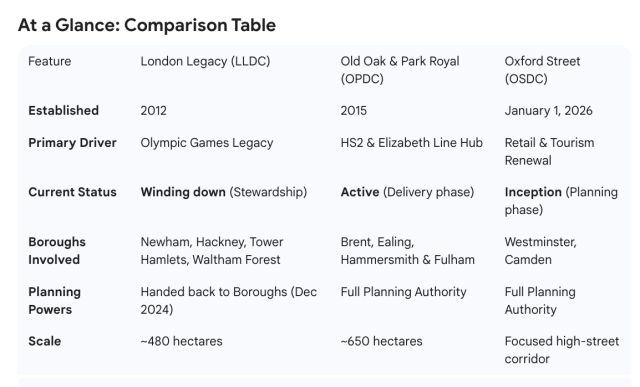
Lisson Green Estate Tower – whats going on?

With consultations for the masterplan of the site Lilestone Street occurring right now around Church St including the WAES facilities, it is worth remembering what was said and promised earlier on in the development process. 

The Masterplan presents Lilestone Street dedicated primarily to the Health & Wellbeing Hub, with a homes target of 50 for the site.  In the Cabinet Member report of 9/4/25 which signs off what is termed the ‘Lisson Grove Programme by local councillor Matt Noble as Cabinet Member for Regeneration ( no longer in post).  It mentions a target of “between 250-300 new homes across Orchardson Street and Lilestone Street”.


The attached table above lists all Masterplan development sites that demonstrates how the housing target figures have shifted over time. As the maximum number of homes agreed by Cabinet is 300 across both sites I entered the original figure for the site originally called “Lisson Grove” at Regent’s Canal: 200 and increased the figure for the development on Lisson Green to 100.

A number of questions arise from what has so far emerged about this site:

1. Do the drawings which include envisaged tower blocks for both sites actually depict 300 homes or a higher number?
2. Why were we not consulted about the plans for a 20+ storey tower (never depicted or mentioned previously) in June or July before they went out for consultation?
3. Why did the consultation focus on layout and function of the hub and not also on the very considerable residential part of the development?
4. If such a massive development, requiring the demolition of two existing blocks and the existing community centre, is indeed planned to take place right at the heart of Lisson Green estate, shouldn’t Lisson Green residents have a say?

Now Hunters Architects have set the gold standard for co-designing sites B and C with the local community, communicating clearly and transparently about all aspects of the development. By contrast, why then with Lisson Grove plans (which diverge enormously from the Masterplan), are being presented in a way that avoided key groups in Church St, in such a manner?

All local stakeholders concerned strongly object to the plans. They especially do not want to see a tower block which reduces the floor space available for the hub. They presented good reasons which the Council should respond to in any plans presented at future workshops. Interestingly the report mentions TARA (Tenants and Residents Association) among the consultees though not the Church Street Ward Neighbourhood Forum, which l am a member. 

In the meantime, some other sites have presented themselves in the locality.  With the recent fires at St Marylebone Sub-Stations along Orchardson St, NW1 has been inactive. The site is really not ideal and should be designated for housing particularly when we have the much bigger St Johns Wood sub-station, along Lisson Grove.  It should probably accommodate between 150-250 homes as well.  While Burne House has been around a lot longer, where its quite clear BT don’t really know what to do with it at all, as it holds a lot of old antiquated equipment in it still! I would of thought a site like that could accommodate a few hundred properties, if not another large hotel on this junction of Marylebone flyover and Edgware Rd should not go amiss. 

As other sites present themselves – St Marylebone Sub-Station &  Burne House just off Bell St – does all the increased density in the ward have to be piggy banked on ones which already have social housing on them? Not withstanding the questions, of how the increased density is going to be managed in the long run anyway in the most densely packed ward in the country.  I would of thought a site like that could accommodate a few hundred properties, if not another large hotel on this junction of Marylebone flyover and 

So finally staff members who tend to give short shrift to stakeholders’ concerns about over-densification, would do well to take on board these considerations urgently.